Spirit Animal
Zebra Spirit Animal
Zebra spirit animal meaning, traced to San Bushmen rock art, Roman circus hippotigris exhibitions documented by Dio Cassius, and the 1883 extinction of the quagga subspecies, a conservation-context bookend to the living plains, mountain, and Grévy's zebras.
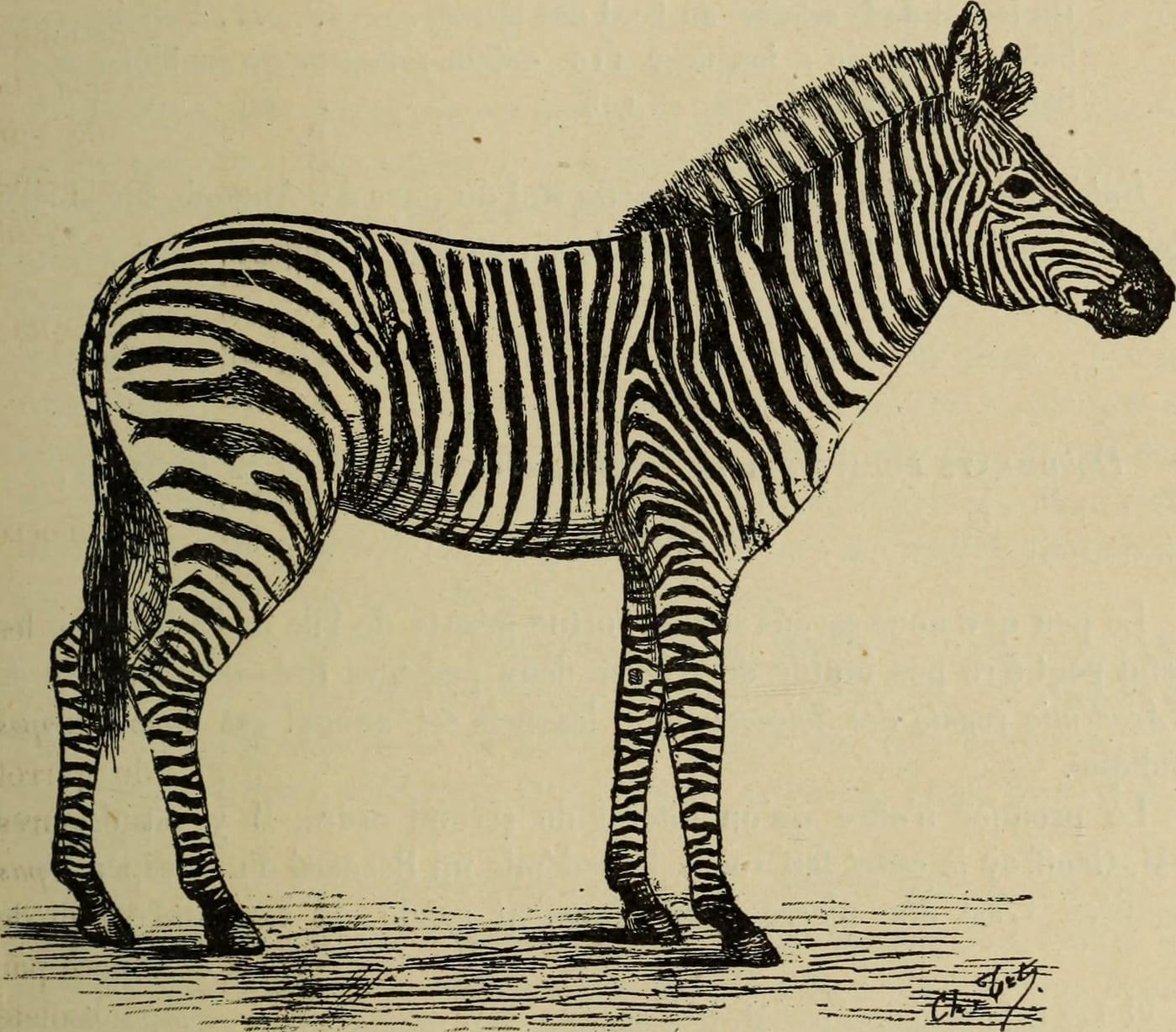
In modern pop-spiritual usage, the zebra stands for individuality within community (the unique stripe-pattern of each animal), balance of opposites, and social herd-cooperation. The deeper traditions are African and classical Mediterranean. San Bushmen rock art depicts zebras alongside eland and giraffe in trance-ritual contexts. Roman imperial spectacles exhibited zebras (Greek hippotigris) at the circus, documented in Dio Cassius's Roman History 77.6. The quagga (Equus quagga quagga), the South African plains-zebra subspecies, went extinct in 1883 with the last captive individual dying at Amsterdam Zoo; it was the first animal extinction to be scientifically documented in real time.
On August 12, 1883, the last captive quagga died at Artis Royal Zoo in Amsterdam. The quagga was the first animal extinction to be scientifically documented in real time, the last individual was photographed before her death, making her disappearance provable to a degree that earlier extinctions were not. That date is one of the darker milestones in the history of conservation biology.
San rock art
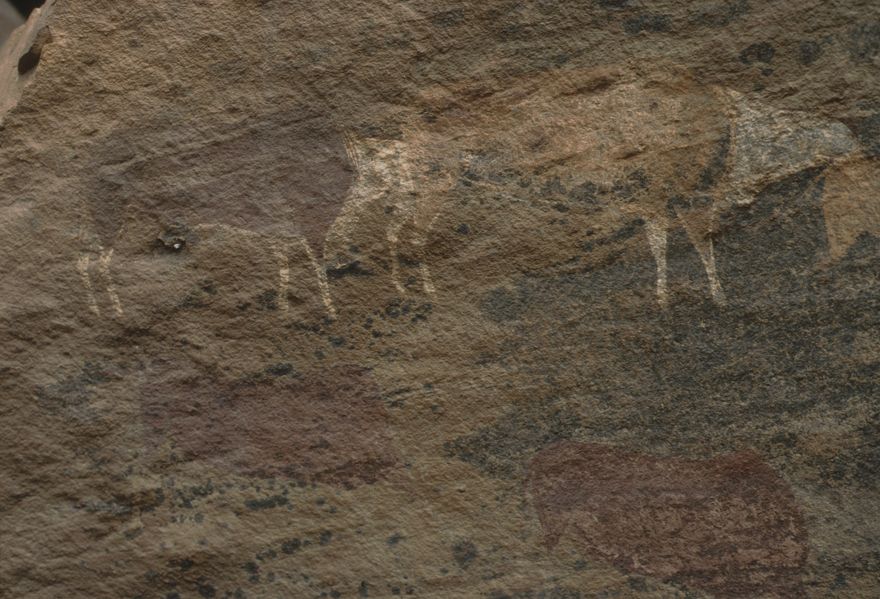
The San peoples of southern Africa have lived alongside zebras for tens of thousands of years, and the zebra (along with the eland, elephant, and lion) appears in the San rock art record extensively. David Lewis-Williams’s The Rock Art of Southern Africa (Cambridge, 1983) and his later work on San rock-art interpretation treat the zebra in the context of San trance-ritual and rain-making ceremonies. The Bleek-Lloyd Archive at the University of Cape Town, which preserves 19th-century /Xam San narratives collected by Wilhelm Bleek and Lucy Lloyd, is the primary documentary source for pre-colonial San symbolic traditions.
The San reading of the zebra is not the same as the modern pop-spiritual reading. The zebra in San tradition belongs to a specific cosmological and ceremonial context connected to rain-making and the trance states of shamanic practitioners, not to individuality or identity.
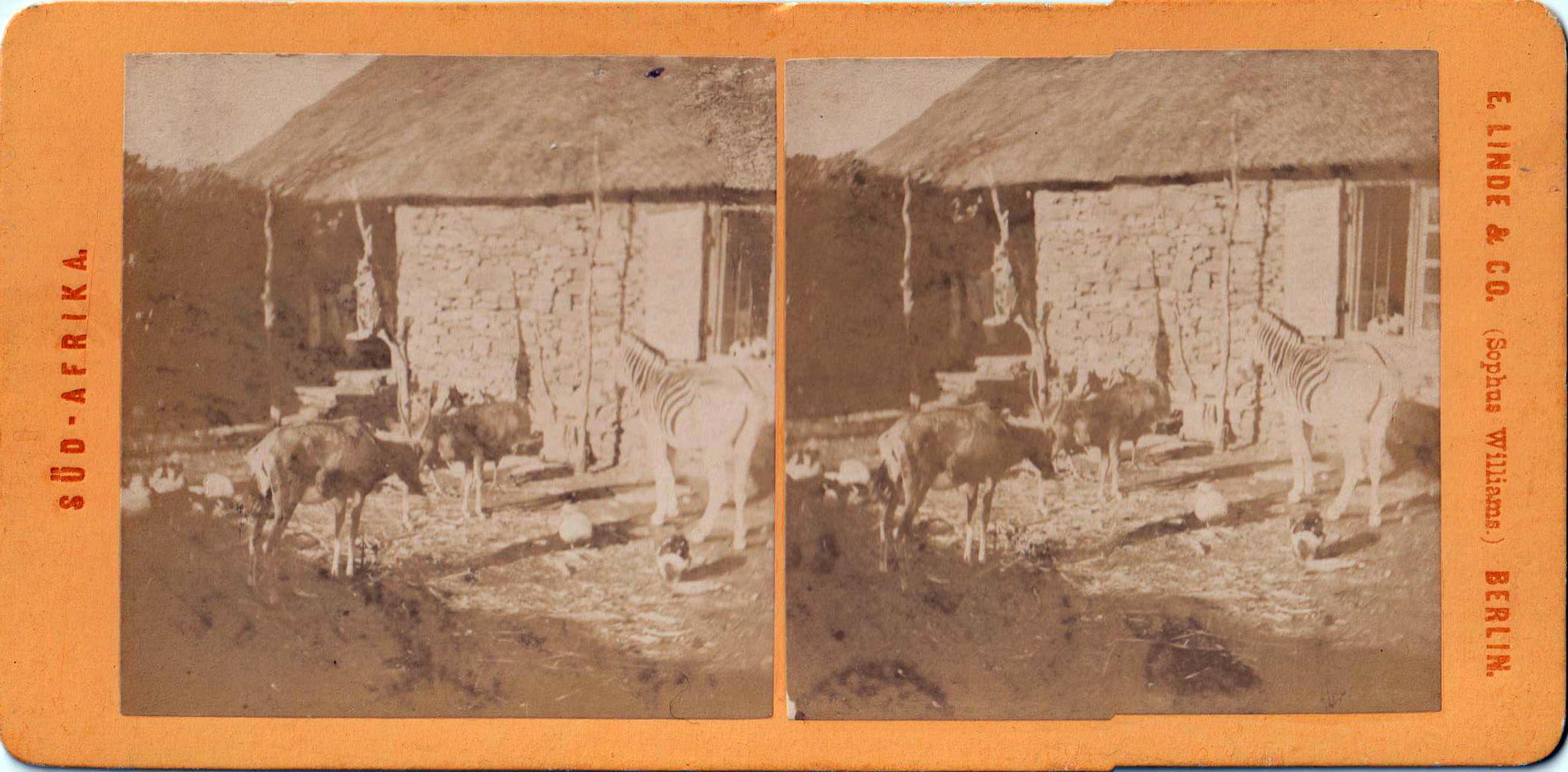
The Roman hippotigris
The Romans encountered zebras through the North African and Nubian trade networks that brought exotic animals to Rome for the circus and for imperial display. Pliny the Elder in Natural History 8.27 describes the zebra, and Dio Cassius in 77.6 records the Roman circus display. The Greek and Roman name was hippotigris (“horse-tiger”) because the striped horse reminded Mediterranean observers of the tiger’s stripes. The Romans did not have a spiritual tradition around the zebra; it was an exotic display animal, a demonstration of the empire’s reach.
The quagga and extinction
The quagga (Equus quagga quagga) was a South African subspecies of plains zebra, distinctively brown-striped only on the front of the body, with the rear fading to a plain brown. It was hunted to extinction by European settlers for its meat and hide; the last wild individual was shot around 1870, and the last captive individual died in Amsterdam in 1883. The Quagga Project, an ongoing South African conservation initiative using selective breeding of surviving plains zebras with quagga-like coloring, has produced individuals that approximate the quagga’s partial-stripe pattern. Whether these animals are truly “quagga” in any meaningful sense is contested.
Andrews 1993
Andrews reads the zebra as individuality within community, the unique stripe pattern of each individual within the herd. This is grounded in actual biology: no two zebras have identical stripe patterns, much as no two human fingerprints are identical. The reading is honest to the biology but carries almost no connection to any specific documented tradition.
Across traditions
San Bushmen (rock art)
Southern African San rock art includes numerous zebra depictions, typically alongside eland and giraffe in the broader trance-ritual contexts documented by David Lewis-Williams. See our giraffe and antelope pages for the broader San rock-art framework. Zebra-specific material appears in Lewis-Williams's Discovering Southern African Rock Art (David Philip, 1990) and in the Bleek-Lloyd /Xam archive at the University of Cape Town.
- PEER-REVIEWED David Lewis-Williams, Discovering Southern African Rock Art — David Philip, 1990.
- ARCHIVE Bleek-Lloyd Archive
Roman (hippotigris in the circus)
Roman imperial spectacles exhibited zebras (Greek hippotigris, 'horse-tiger') at the Circus Maximus and Colosseum. Dio Cassius's Roman History 77.6 describes Caracalla's zebra-exhibitions in the early 3rd century CE. Earlier references appear in Pliny the Elder's Natural History 8.27. The animals were brought from Nubia and the Horn of Africa through the imperial trade networks.
- PRIMARY Dio Cassius, Roman History 77.6 — Cary trans., Loeb Classical Library.
- PRIMARY Pliny the Elder, Natural History 8.27 — Rackham trans., Loeb Classical Library.
Quagga extinction (1883)
The quagga (Equus quagga quagga), the South African plains-zebra subspecies with reduced striping on the hindquarters, went extinct on August 12, 1883, when the last captive individual died at Artis Royal Zoo in Amsterdam. The quagga was the first animal extinction to be scientifically documented in real time, with the last individual photographed before her death. The Quagga Project, a selective-breeding program based in South Africa, has since the 1980s attempted to recreate the quagga's appearance through breeding from living plains zebras.
The 1883 date is historically significant: the first extinction humans could watch happen, with contemporary scientific-press awareness. Any 2026 spiritual reading of the zebra sits alongside this extinction memory. The three surviving zebra species (plains zebra E. quagga, mountain zebra E. zebra, and Grévy's zebra E. grevyi) are all IUCN-classified as Near Threatened to Endangered.
- MUSEUM Artis Royal Zoo, quagga historical records (Amsterdam)
- PEER-REVIEWED Peter Heywood, 'The Quagga and Science' — Journal of Natural History 47:23–24, 2013.
- REFERENCE Quagga Project
Ted Andrews (1993)
Andrews's 1993 zebra is the individuality-in-community figure drawn from the observable stripe-pattern biology. The San, Roman, and quagga-extinction contexts are absent.
- REFERENCE Ted Andrews, Animal Speak — Llewellyn, September 1993.
Frequently asked
- What does a zebra symbolize spiritually?
- In modern pop usage, individuality within community (each zebra's stripe-pattern is unique), balance of opposites, and herd-cooperation. The deeper traditions are African and classical Mediterranean. San Bushmen rock art depicts zebras in trance-ritual contexts. Roman imperial spectacles exhibited zebras at the circus (Dio Cassius, Roman History 77.6; Pliny NH 8.27). The 1883 quagga extinction is a historically significant conservation-memory bookend.
- What was the quagga?
- The quagga (Equus quagga quagga) was a South African plains-zebra subspecies with reduced striping on the hindquarters. It went extinct on August 12, 1883, when the last captive individual died at Artis Royal Zoo in Amsterdam. The quagga was the first animal extinction to be scientifically documented in real time, with the last individual photographed before her death. The Quagga Project has since the 1980s attempted to recreate the quagga's appearance through selective breeding from living plains zebras.
- Did Romans have zebras?
- Yes. Roman imperial spectacles exhibited zebras (Greek hippotigris, 'horse-tiger') at the Circus Maximus and Colosseum. Dio Cassius's Roman History 77.6 describes Caracalla's zebra-exhibitions in the early 3rd century CE. Earlier references appear in Pliny's Natural History 8.27. The animals were brought from Nubia and the Horn of Africa through imperial trade networks.
Sources
- PEER-REVIEWEDDavid Lewis-Williams, Discovering Southern African Rock Art — David Philip, 1990.
- ARCHIVEBleek-Lloyd Archive
- PRIMARYDio Cassius, Roman History 77.6 — Loeb Classical Library.
- PRIMARYPliny the Elder, Natural History 8.27 — Loeb Classical Library.
- MUSEUMArtis Royal Zoo, Amsterdam
- PEER-REVIEWEDPeter Heywood, 'The Quagga and Science' — Journal of Natural History, 2013.
- REFERENCEQuagga Project
- REFERENCETed Andrews, Animal Speak — Llewellyn, September 1993.