Spirit Animal
Whale Spirit Animal
Whale spirit animal meaning, traced from the modern wisdom-and-memory reading back through Ted Andrews's Animal Speak to the Book of Jonah, the Inuit Sedna narrative, the Māori Paikea (whale-rider) tradition, the Greek Ketos of Perseus and Andromeda, and Herman Melville's Moby-Dick.
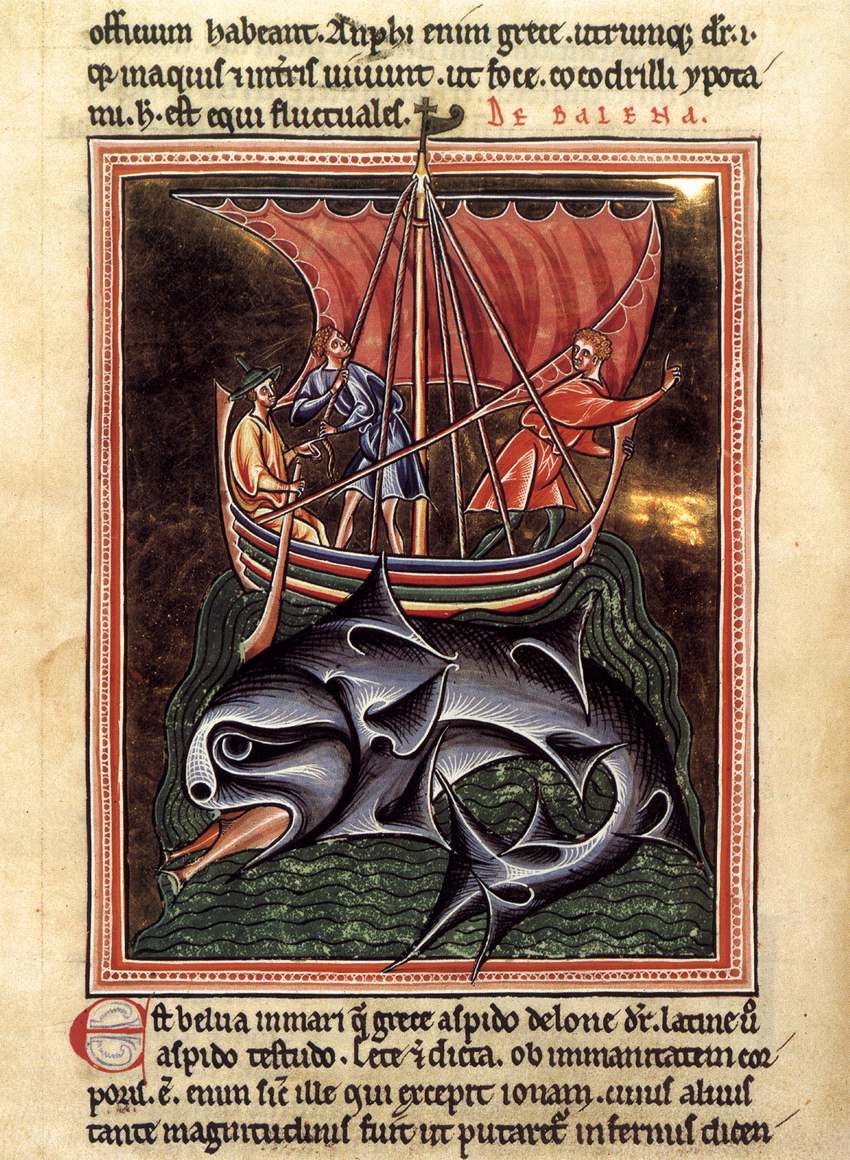
In modern American "spirit animal" usage, the whale stands for ancient wisdom, song, emotional depth, and the cosmic memory of the ocean itself. That reading comes through Ted Andrews's Animal Speak (Llewellyn, 1993) and the broader late-20th-century environmental whale-song discourse. The older traditions are specific. The Book of Jonah (c. 5th–3rd century BCE) has Jonah swallowed by a 'great fish' (Hebrew dag gadol); Matthew 12:40 specifies a whale (Greek ketos). The Inuit Sedna narrative, documented by Franz Boas's 1888 Central Eskimo fieldwork, has the sea-goddess whose severed fingers became the sea mammals including whales. The Māori Paikea tradition, narrated in Apirana Ngata's 20th-century collected waiata and popularized by Witi Ihimaera's 1987 novel The Whale Rider, names the ancestor who crossed the Pacific on a whale. And the Greek Ketos is the sea-monster Perseus slays to save Andromeda.
Roger Payne went to Bermuda in the late 1960s with a hydrophone and recorded something no one had recorded before: the songs of humpback whales. Long, structured, seasonally-repeating patterns that functioned as music in any reasonable sense of that word. Payne’s 1970 Capitol Records release Songs of the Humpback Whale sold hundreds of thousands of copies. His 1971 Science paper with Scott McVay presented the technical analysis. Within a decade, the global anti-whaling movement had acquired one of its most effective cultural arguments: these animals have language, of a kind.
That recording is, more than any other single source, where the modern pop-spiritual whale comes from. Ted Andrews’s 1993 “wisdom, song, cosmic memory” reading is downstream of Payne. It is a real reading and a genuinely modern one. It is also the newest of the five traditions covered here, by about 2,400 years.
The four older traditions
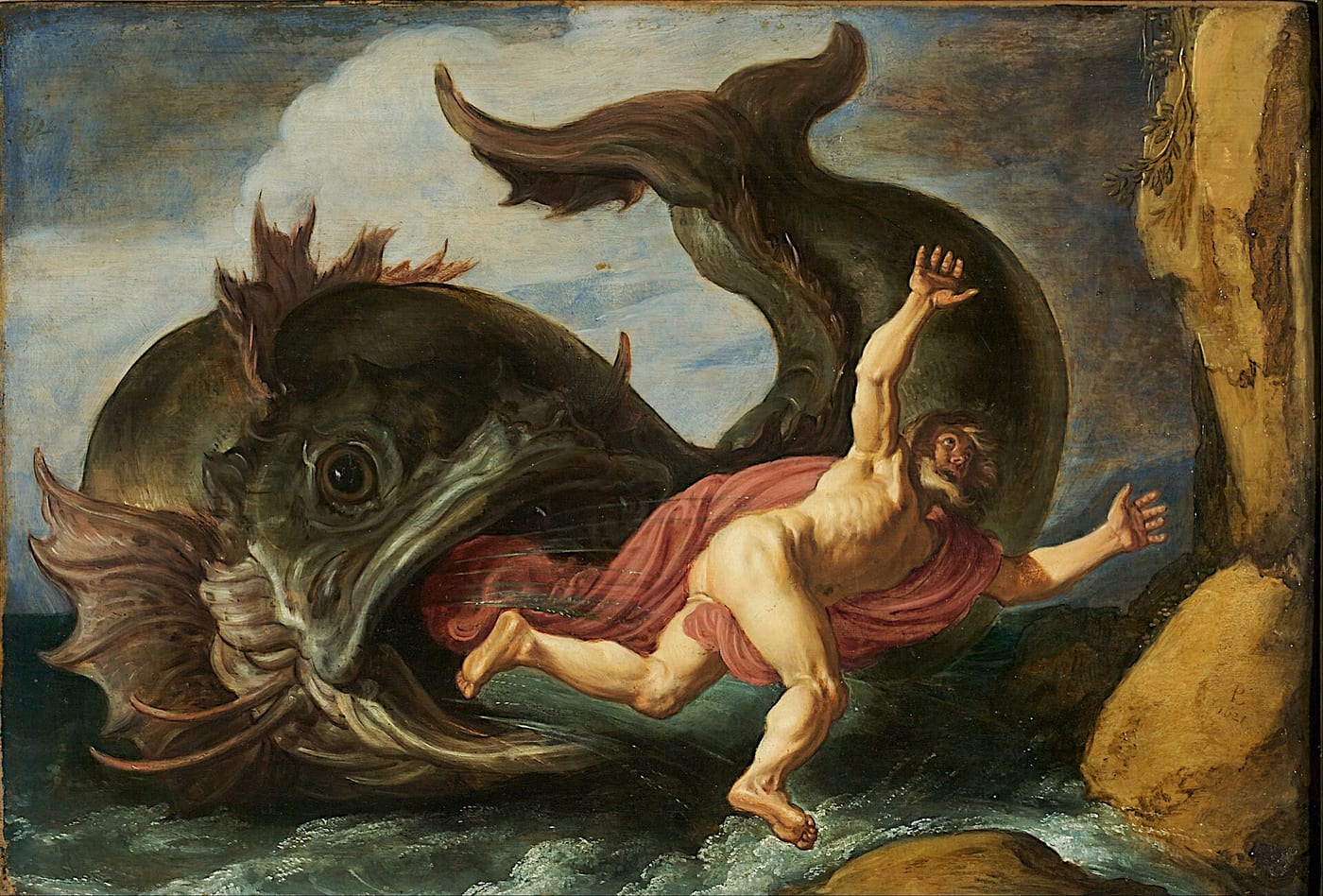
Jonah. Biblical. A “great fish” (Hebrew dag gadol) in Jonah 1:17 and 2:1, translated as ketos in the Septuagint and as ketos again in Matthew 12:40, which became “whale” in English. The prophet survives three days in the belly; Christian typology turned this into a prefiguring of Christ’s three days in the tomb. Every English-language “Jonah and the whale” image descends from this specific translation chain.
Sedna. Inuit. The sea-goddess whose severed fingers became the sea mammals, including whales. The narrative was recorded in detail by Franz Boas on Baffin Island in 1883–84, published in 1888 as The Central Eskimo. Knud Rasmussen’s 1921–24 Fifth Thule Expedition produced far more material from Greenland to Alaska. The tradition is alive in contemporary Inuit printmaking (Cape Dorset, Pangnirtung) and in throat-singing.
Paikea. Māori, specifically Ngāti Porou. The ancestor who crossed the Pacific from Hawaiki on a whale’s back. Apirana Ngata’s 20th-century waiata collection preserved the traditional song-form. Witi Ihimaera’s 1987 novel, and Niki Caro’s 2002 film, made it globally visible. The carved Paikea-on-a-whale pou is a widely-recognized Ngāti Porou symbol.
The Greek Ketos. Perseus’s sea-monster, Andromeda’s threat, Heracles’s antagonist. A generic sea-monster in the Greek vocabulary. The Septuagint translators used ketos for the Jonah-fish, which is how the Jewish-Greek-Christian chain arrives at the English “whale.”
What the traditions share and what they don’t
What they share: the whale (or its Greek-generic kin) is a boundary-creature between the human world and something vastly larger. Jonah crosses into the fish’s interior; Sedna is the vast sea-mother; Paikea rides the whale across an ocean; Perseus’s ketos is the sea’s threat to the bride. The whale in each tradition is a scale-of-being larger than the human witnessing it.
What they don’t share: Jonah’s whale is a correction-device, God’s way of turning a recalcitrant prophet back to his mission. Sedna’s whales are family, made from a daughter’s body. Paikea’s whale is an ancestor-vehicle, the one who carried a founder-figure across the Pacific. The Greek Ketos is a monster to be killed.
The Andrews 1993 reading flattens all of this into “wisdom, song, ancient memory.” The actual traditions, read on their own terms, each have specific shape and specific theological weight.
Across traditions
Hebrew Bible / Christian (Jonah)
The Book of Jonah (c. 5th–3rd century BCE in its current form) narrates the prophet Jonah's attempt to flee from God by sea, the storm the Lord sends, his being thrown overboard and swallowed by a dag gadol (Hebrew, "great fish") in whose belly he survives three days before being vomited up on shore. Jonah 2:1–10 is his prayer from inside the fish. The Hebrew term does not specify whale; the Greek Septuagint uses ketos, a generic sea-monster.
Matthew 12:40 in the New Testament specifies that Jonah was in the belly of a ketos for three days and three nights, a typological prefiguring of Christ's three days in the tomb. This is the primary channel through which the whale enters Western religious imagination. Every subsequent Jonah-and-the-whale image, from medieval manuscripts to Sunday School illustrations, descends from this Matthean identification.
- PRIMARY Book of Jonah (Hebrew Bible) — BHS Masoretic text; JPS 1985 English trans.
- PRIMARY Matthew 12:40 (New Testament) — NA28 Greek; NRSV trans., 1989.
- PRIMARY Septuagint, Book of Jonah — Rahlfs-Hanhart critical edition.
Inuit (Sedna, Nuliajuk)
Sedna (also Nuliajuk, Talailayuk, and many other regional names across Inuit Greenland, Nunavut, Alaska, and Chukotka) is the sea-goddess whose body produced the sea mammals including whales, seals, and walrus. The narrative, recorded by Franz Boas in The Central Eskimo (Smithsonian Bureau of American Ethnology Annual Report 6, 1888) from Inuit informants in Baffin Island, tells of a young woman whose father, in a boat-storm, cut off her fingers one joint at a time as she clung to the gunwale; each finger-joint became a different sea mammal.
Knud Rasmussen's 1921–24 Fifth Thule Expedition across the Canadian Arctic produced extensive additional documentation. The Sedna/Nuliajuk tradition is alive in contemporary Inuit art, particularly in Cape Dorset (Kinngait) and Pangnirtung printmaking traditions, and in contemporary Inuit throat-singing practice.
- PRIMARY Franz Boas, The Central Eskimo — Smithsonian BAE Annual Report 6, 1888.
- PRIMARY Knud Rasmussen, Report of the Fifth Thule Expedition 1921–24 — Copenhagen, 1927–32.
- PRIMARY Kenn Harper, Give Me My Father's Body: The Life of Minik, the New York Eskimo — Steerforth Press, 2000.
Māori (Paikea, the whale-rider)
Paikea is the ancestral figure of the Ngāti Porou iwi of New Zealand's East Cape, said to have crossed the Pacific from Hawaiki to Aotearoa on the back of a whale (tohorā) after his half-brother Ruatapu attempted to drown him. The traditional narrative is preserved in waiata (song), whakapapa (genealogy), and carved pou (house posts) at the Te Kani a Takirau meeting-house and other Ngāti Porou marae.
Apirana Ngata's 20th-century collected waiata preserved the tradition in writing. Witi Ihimaera's 1987 novel The Whale Rider (Heinemann, subsequently Niki Caro's 2002 film adaptation) brought the story to international audiences. The carved figure of Paikea on a whale is a widely-recognized symbol of Ngāti Porou identity.
- PRIMARY Apirana Ngata (compiler), Ngā Mōteatea (songs collection) — Māori Purposes Fund Board, 1959–70.
- PRIMARY Witi Ihimaera, The Whale Rider — Heinemann, 1987.
- PEER-REVIEWED Anne Salmond, Two Worlds: First Meetings Between Maori and Europeans, 1642–1772 — Viking, 1991.
Greek (Ketos)
The Ketos (κῆτος, plural kētē) in Greek tradition is a generic sea-monster that covers whales, sharks, seals, and mythological sea-creatures without strict biological distinction. Apollodorus, Library 2.4.3, narrates the Ketos sent by Poseidon to devour Andromeda, slain by Perseus. Homer, Iliad 20.147, describes a Ketos threatening Heracles in a related mythological episode. The ketos appears on thousands of Greek vases, Roman mosaics, and medieval bestiary illustrations.
The Septuagint translators used ketos for the creature that swallows Jonah, and Matthew 12:40 continues the usage, which is how the Greek-Jewish-Christian textual chain arrives at the modern English "whale" for the Jonah-fish.
- PRIMARY Apollodorus, Library 2.4.3 — Frazer trans., Loeb Classical Library.
- PRIMARY Homer, Iliad 20.147 — Murray trans., Loeb Classical Library.
- PEER-REVIEWED John Boardman, The Archaeology of Nostalgia: How the Greeks Re-Created Their Mythical Past — Thames & Hudson, 2002.
Ted Andrews (1993)
Andrews's 1993 whale is the late-20th-century environmental-ethereal whale: ancient wisdom, deep memory, song, the cosmic scale of the ocean. The reading draws heavily on Roger Payne's 1970 discovery that humpback whales produce long structured songs (published on the LP Songs of the Humpback Whale, Capitol Records, 1970), the subsequent whale-conservation movement, and the broader 1970s–80s popular discourse on cetacean intelligence. The Jonah, Sedna, Paikea, and ketos traditions are all more specific.
- REFERENCE Ted Andrews, Animal Speak — Llewellyn, September 1993.
- PEER-REVIEWED Roger Payne and Scott McVay, 'Songs of Humpback Whales' — Science 173:3997, 1971.
Frequently asked
- What does a whale symbolize spiritually?
- In modern pop usage, ancient wisdom, song, emotional depth, and the cosmic scale of the ocean, the Andrews 1993 reading. Older traditions are specific. The Book of Jonah has Jonah swallowed by a 'great fish' (Matthew 12:40 specifies ketos, translated 'whale'). Inuit Sedna is the sea-goddess whose severed fingers became the sea mammals. Māori Paikea is the ancestor who crossed the Pacific on a whale's back. Greek Ketos is the sea-monster Perseus slays.
- Was it really a whale that swallowed Jonah?
- The Hebrew text (Jonah 1:17, 2:1) says dag gadol, 'great fish,' which does not specify whale. The Greek Septuagint uses ketos, which is a generic sea-monster covering whales, sharks, and mythological creatures. Matthew 12:40 in the New Testament continues the ketos usage. Medieval and modern English translators standardized on 'whale,' partly on the basis of Matthew's specification. The whole English-language 'Jonah and the whale' tradition descends from this translation chain.
- Who is Sedna?
- Sedna (also Nuliajuk and many other regional names) is the sea-goddess of Inuit tradition across Greenland, Nunavut, Alaska, and Chukotka, the sea-mammal-mother whose body produced whales, seals, and walrus. The earliest detailed English-language documentation is Franz Boas's 1888 The Central Eskimo (Smithsonian BAE Annual Report 6), with substantial additional documentation from Knud Rasmussen's 1921–24 Fifth Thule Expedition. The tradition is alive in contemporary Inuit art and throat-singing.
- What is the Paikea story?
- Paikea is the ancestral figure of the Ngāti Porou iwi of New Zealand's East Cape, said to have crossed the Pacific from Hawaiki to Aotearoa on the back of a whale after his half-brother Ruatapu attempted to drown him. The narrative is preserved in Apirana Ngata's 20th-century collected waiata. Witi Ihimaera's 1987 novel The Whale Rider (Heinemann) and Niki Caro's 2002 film brought the story to international audiences. The carved figure of Paikea on a whale is a widely-recognized symbol of Ngāti Porou identity.
Sources
- PRIMARYBook of Jonah — BHS / JPS 1985 trans.
- PRIMARYMatthew 12:40 — NA28 Greek / NRSV 1989 trans.
- PRIMARYSeptuagint, Book of Jonah — Rahlfs-Hanhart.
- PRIMARYFranz Boas, The Central Eskimo — Smithsonian BAE Annual Report 6, 1888.
- PRIMARYKnud Rasmussen, Report of the Fifth Thule Expedition 1921–24 — Copenhagen, 1927–32.
- PRIMARYApirana Ngata, Ngā Mōteatea — Māori Purposes Fund Board, 1959–70.
- PRIMARYWiti Ihimaera, The Whale Rider — Heinemann, 1987.
- PRIMARYApollodorus, Library 2.4.3 — Loeb Classical Library.
- PRIMARYHomer, Iliad 20.147 — Loeb Classical Library.
- PEER-REVIEWEDRoger Payne and Scott McVay, 'Songs of Humpback Whales' — Science 173:3997, 1971.
- REFERENCETed Andrews, Animal Speak — Llewellyn, September 1993.