Tradition · Japan
Japanese Yōkai and Shinroku: Animal Messengers of the Kami and the Edo Bestiary Tradition
Japanese animal-messenger and yōkai traditions: kitsune (Inari's messengers), shinroku (divine-messenger deer at Kasuga), Yatagarasu (three-legged sun-crow), kawauso, kappa, and the Edo-era yōkai catalogs of Toriyama Sekien.
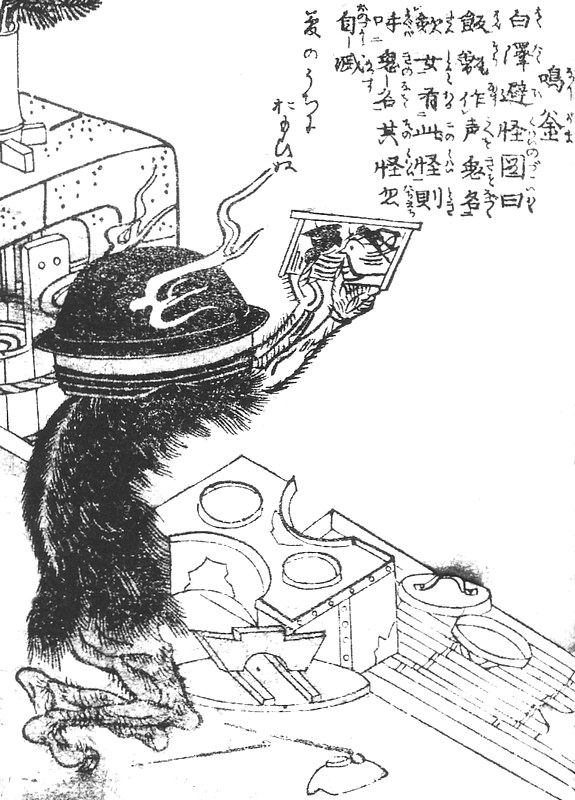
Japan preserves two overlapping animal-spirit traditions: the shinto animal-messenger system (shinroku, 'divine messengers') in which specific animals carry the spirits of specific kami, and the folkloric yōkai tradition documented in the Kojiki (712 CE), Nihon Shoki (720 CE), Konjaku Monogatari (c. 1120 CE), and the Edo-era bestiary catalogs of Toriyama Sekien (1776–1780). Kitsune are Inari's messengers; the Kasuga sika deer are Takemikazuchi's shinroku; the Yatagarasu (three-legged crow) guides Emperor Jinmu in the Nihon Shoki. Michael Dylan Foster's The Book of Yōkai (University of California Press, 2015) is the standard contemporary English-language treatment.
Japan preserves two overlapping animal-spirit traditions: the Shintō shinroku (divine-messenger) system, in which specific animals carry specific kami, and the folkloric yōkai tradition documented from the Kojiki (712 CE) through the Edo-era bestiary catalogs of Toriyama Sekien.
The Shintō shinroku system
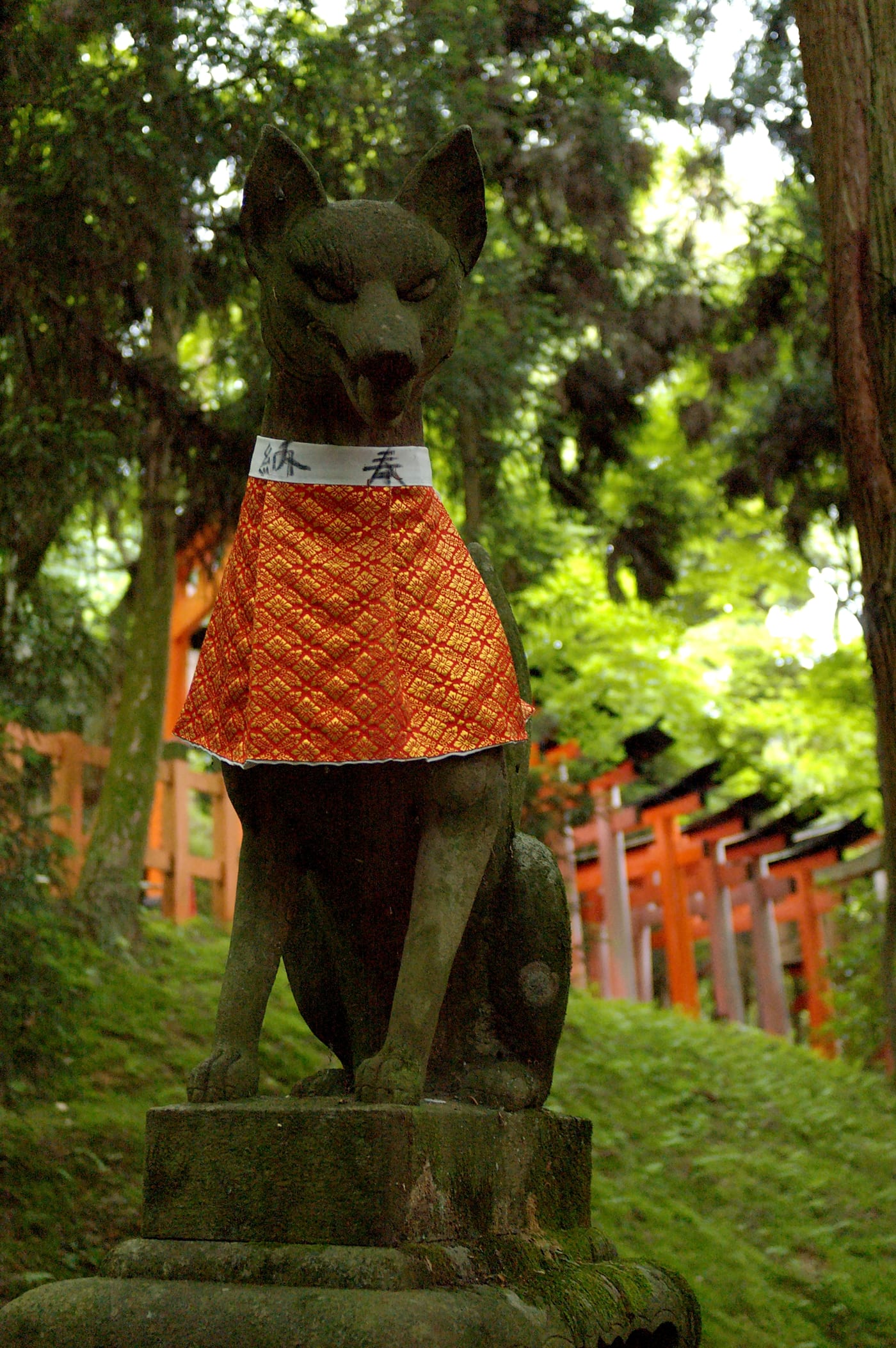
Inari and the kitsune. The fox-messengers of Inari Ōkami, over 30,000 shrines across Japan. The fox spirit-animal entry covers the full kitsune tradition.
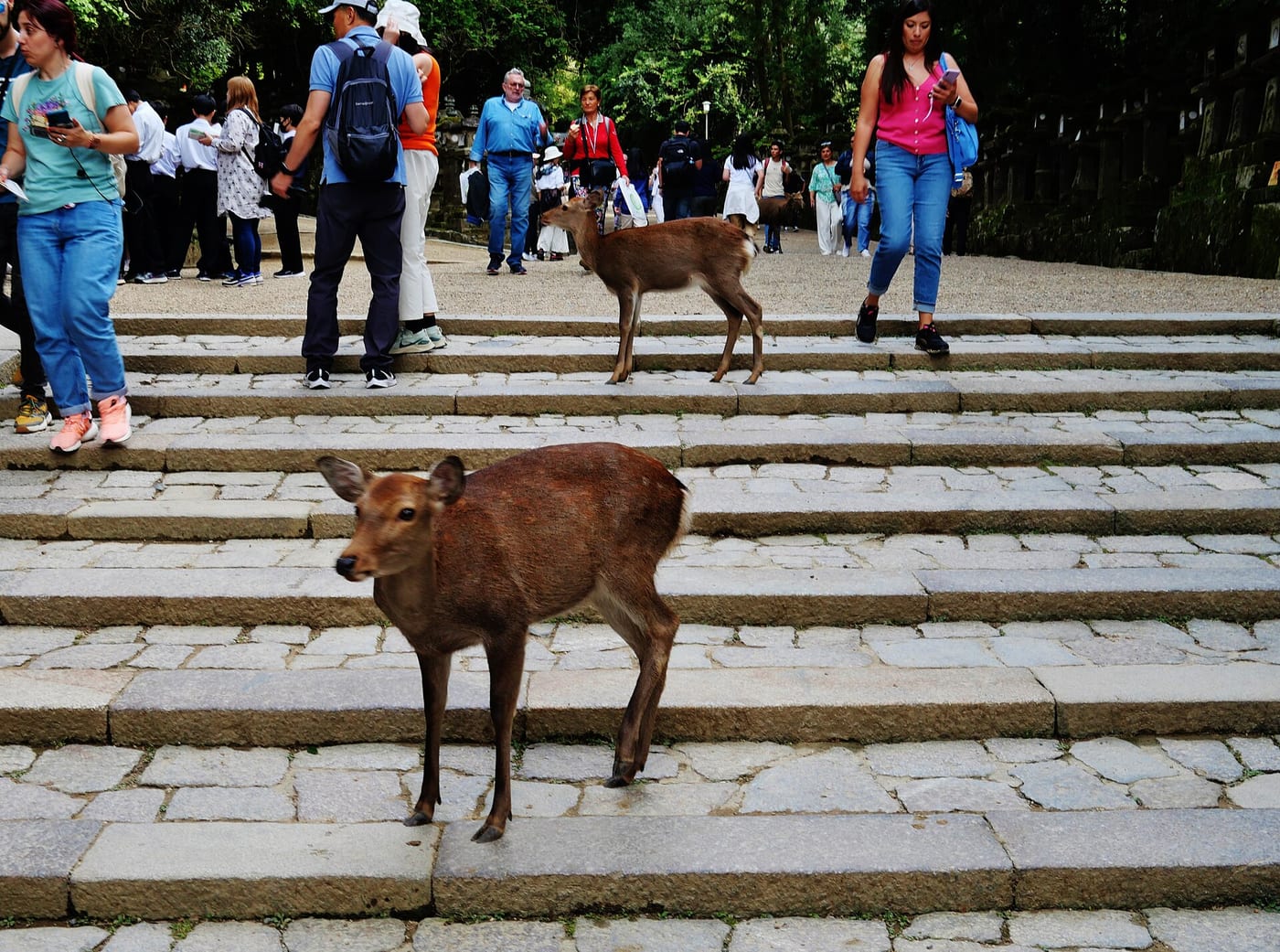
Kasuga and the sika deer. Divine messengers of Takemikazuchi since the 8th century; roughly 1,200 free-roaming deer in Nara Park today. The deer spirit-animal entry covers the Kasuga-deer tradition.
Yatagarasu. The three-legged sun-crow guiding Emperor Jinmu in the Kojiki and Nihon Shoki. Enshrined at Kumano Hongū-taisha; on the Japan Football Association crest. The crow spirit-animal entry covers the yatagarasu.
The yōkai tradition
The classical corpus. Kojiki (712 CE), Nihon Shoki (720 CE), Konjaku Monogatari (c. 1120). Essential early sources.
The Edo-era catalogs. Toriyama Sekien’s four-volume yōkai bestiary (1776–1784) is the canonical illustrated catalog. Matt Alt and Hiroko Yoda’s 2017 University Press of Mississippi translation is the standard.
Specific yōkai. Kitsune (fox-spirits), tanuki (raccoon-dog shape-shifters), kawauso (otter shape-shifter, see the otter spirit-animal entry), kappa (water-sprite), akkorokamui (giant octopus-spirit, see the octopus spirit-animal entry), jorōgumo (spider-woman, see the spider spirit-animal entry).
Lafcadio Hearn. The Greek-Irish-American writer (1850–1904) who settled in Matsue and naturalized as Koizumi Yakumo. His Kwaidan (1904) and Glimpses of Unfamiliar Japan (1894) were the main vehicles by which Japanese yōkai traditions reached English-speaking readers.
Contemporary significance
The tradition is alive. Yatagarasu on the national football team. Kasuga deer bowing to tourists. Inari fox-statues at 30,000+ shrines. Modern Japanese pop culture (anime, manga, video games) continuously recycles yōkai material, often with specific Sekien-bestiary references. Michael Dylan Foster’s The Book of Yōkai (UC Press, 2015) treats the continuity.
Key terms
- kami (神)
- Shintō deity or spirit. Kami can inhabit natural phenomena (mountains, trees, rivers) as well as ancestors and specific figures.
- shinroku (神鹿)
- 'Divine deer' or 'divine messenger.' The Kasuga sika deer are the paradigmatic case.
- yōkai (妖怪)
- 'Strange apparition.' The folkloric supernatural-being tradition, including animal shape-shifters (kitsune, tanuki, kawauso), water-sprites (kappa), and many others.
- henge (変化)
- 'Shape-change.' Animals with the power to take human form; kitsune, tanuki, and kawauso are the classical examples.
Frequently asked
- What are kitsune?
- Kitsune (狐) are fox-spirits, semi-divine shape-shifters who serve as messengers of Inari Ōkami. The oldest textual layer is the Nihon Ryōiki (c. 822 CE); the Konjaku Monogatari (c. 1120) expands the corpus. Over 30,000 Inari shrines exist across Japan. The kitsune spirit-animal entry covers the full tradition.
- What is the Yatagarasu?
- Yatagarasu (八咫烏) is the three-legged sun-crow who guides Emperor Jinmu from Kumano to Yamato in the Kojiki (712 CE) and Nihon Shoki (720 CE). Enshrined at Kumano Hongū-taisha in Wakayama; on the Japan Football Association crest since 1931.
- Why are the deer of Nara sacred?
- The Kasuga Gongen Genki E (14th-century illustrated scroll) records that the kami Takemikazuchi arrived in Nara riding a white deer in the 8th century; from that day the sika deer of Kasuga were declared shinroku (divine messengers). Killing one was a capital offense until the Meiji Restoration. Roughly 1,200 free-roaming sika deer still occupy Nara Park today.
- Who was Toriyama Sekien?
- Toriyama Sekien (鳥山石燕, 1712–1788) was an Edo-period artist whose illustrated yōkai catalogs established the canonical Japanese bestiary tradition. His four main works — Gazu Hyakki Yagyō (1776), Konjaku Gazu Zoku Hyakki (1779), Konjaku Hyakki Shūi (1781), and Gazu Hyakki Tsurezure Bukuro (1784) — catalog and illustrate over two hundred yōkai. Matt Alt and Hiroko Yoda's translation Japandemonium Illustrated: The Yokai Encyclopedias of Toriyama Sekien (University Press of Mississippi, 2017) is the standard English edition.
Sources
- PRIMARYKojiki (712 CE) — Philippi trans., University of Tokyo Press, 1968.
- PRIMARYNihon Shoki (720 CE) — Aston trans., Tuttle, 1972 (originally 1896).
- PRIMARYKonjaku Monogatari (c. 1120 CE) — Ury trans. (selections), University of California Press, 1979.
- PRIMARYLafcadio Hearn, Kwaidan and Glimpses of Unfamiliar Japan — Houghton Mifflin, 1894–1904.
- PRIMARYToriyama Sekien, Gazu Hyakki Yagyō and subsequent yōkai volumes (1776–1784) — Alt & Yoda trans. (Japandemonium Illustrated), University Press of Mississippi, 2017.
- PEER-REVIEWEDMichael Dylan Foster, The Book of Yōkai: Mysterious Creatures of Japanese Folklore — University of California Press, 2015.
- PRIMARYKasuga Gongen Genki E (14th century illustrated scroll) — Imperial Household Agency collection.
- PEER-REVIEWEDAllan G. Grapard, The Protocol of the Gods: A Study of the Kasuga Cult — University of California Press, 1992.