Spirit Animal
Shark Spirit Animal
Shark spirit animal meaning, traced from the modern ferocity-and-survival reading back through Ted Andrews's Animal Speak to the Hawaiian shark 'aumakua and Kāmohoaliʻi, the Fijian shark-god Dakuwaqa, the Solomon Islands shark-calling tradition, and Māori mako culture.
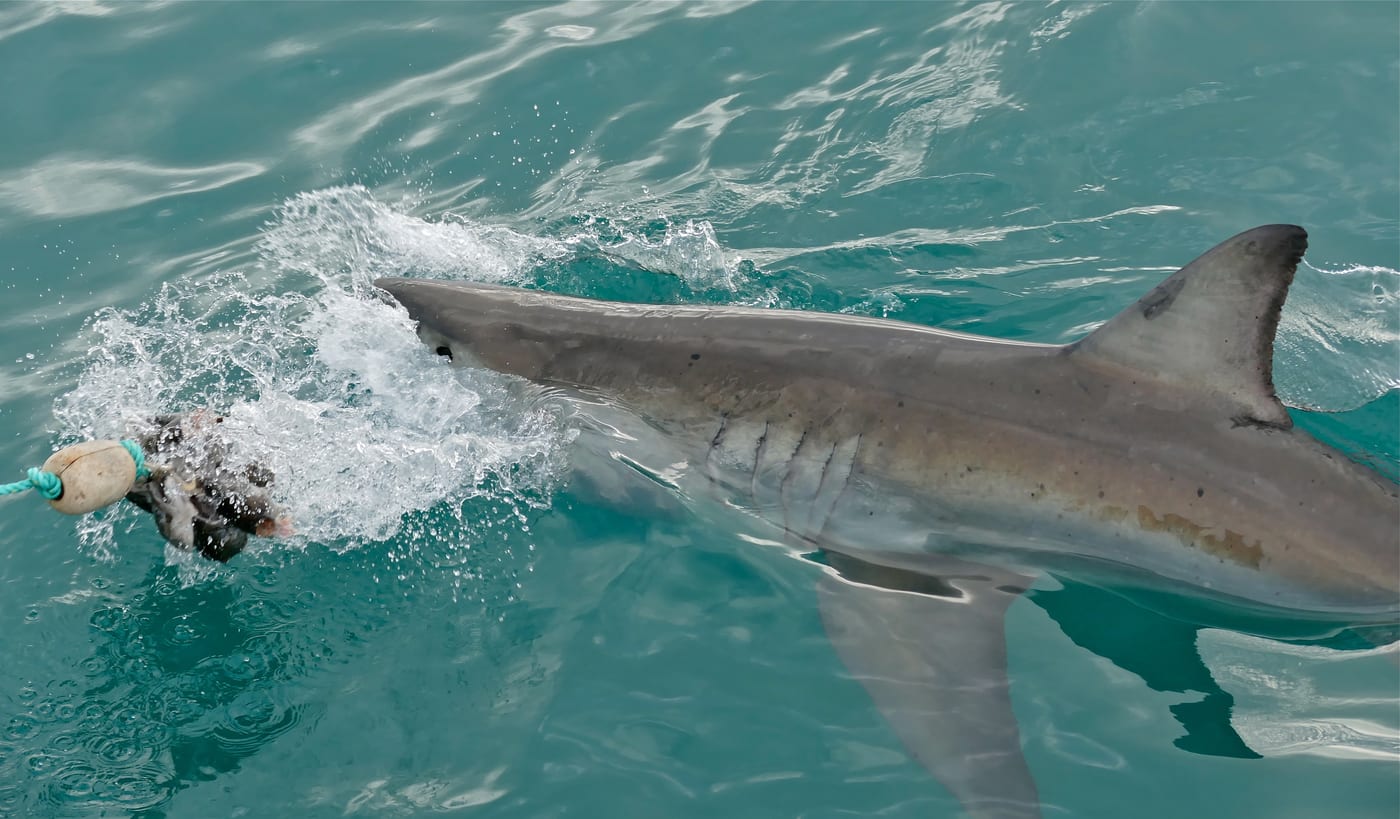
In modern American "spirit animal" usage, the shark stands for ferocity, survival, forward momentum, and an unsentimental predatory clarity. That reading comes through Ted Andrews's Animal Speak (Llewellyn, 1993) and the broader 20th-century American shark-in-pop-culture tradition (Jaws, Shark Week). The deeper traditions are Pacific. The Hawaiian shark 'aumakua and the god Kāmohoaliʻi (elder brother of Pele) are documented in Martha Beckwith's Hawaiian Mythology and Mary Kawena Pukui's Nānā I Ke Kumu. The Fijian shark-god Dakuwaqa is the guardian of the reefs of Rewa and Kadavu. The Solomon Islands have a documented tradition of shark-calling, in which specific men entered a hereditary relationship with specific sharks, recorded in Harold Scheffler's 1960s Choiseul Island fieldwork. And Māori mako (shortfin mako shark) culture is treated in Te Rangi Hīroa's (Peter Buck's) 1926 The Material Culture of the Cook Islands.
The American image of the shark was largely created by two things. The first was Peter Benchley’s 1974 novel Jaws and Steven Spielberg’s 1975 film adaptation, which in a single year dropped the water-attendance rates at American beaches by a measurable percentage. The second was Discovery Channel’s Shark Week, launched in 1988, which has run every year since. Between them, those two cultural events shaped the “shark as apex monster” reading the typical American reader carries into a Google search for “shark spirit animal.”
Ted Andrews’s 1993 Animal Speak took that reading and softened it for personal-spirit use: ferocity, survival, forward momentum. The Pacific traditions that actually know the shark do something completely different.
The Hawaiian shark ‘aumakua
In Hawaiian tradition, specific families hold sharks as ‘aumakua, ancestral guardian spirits that can take living animal form. The theology is reciprocal. The family honors the shark ‘aumakua. The shark protects family members from drowning and from other sharks. The relationship is lineage-bound: a shark ‘aumakua belongs to a specific family, not to “Hawaiians” generally. Martha Beckwith’s Hawaiian Mythology (UH Press, 1940) and Mary Kawena Pukui’s Nānā I Ke Kumu (1972) preserve the family-specific records.
Kāmohoaliʻi, the shark-god, is the eldest brother of the volcano-goddess Pele. He is the most widely-cited shark ‘aumakua figure in the Hawaiian corpus. Importantly, the relationship is not a fear-relationship. It is an honor-relationship.
Dakuwaqa and the octopus of Kadavu
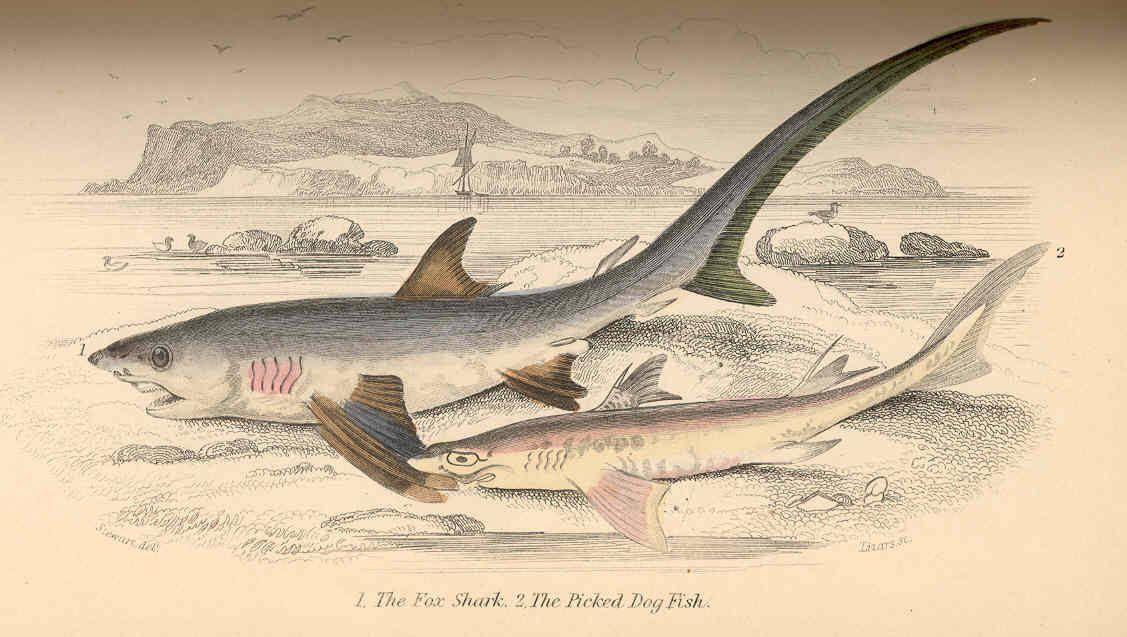
In iTaukei (indigenous Fijian) oral tradition, the shark-god Dakuwaqa is the guardian of the reefs of the Kadavu and Rewa regions. His defining narrative is a fight with the octopus-god Rokobakaniceva of Kadavu, which the shark lost when the octopus wrapped eight arms around him and forced him to promise never to eat humans in Kadavu waters. A.M. Hocart’s Lau Islands, Fiji (Bishop Museum Bulletin 62, 1929) is the foundational ethnography; Asesela Ravuvu’s Vaka i Taukei (1983) is the contemporary iTaukei-scholar standard.
The tradition is alive. In 2026 Kadavu villages, shark sightings are still sometimes read as Dakuwaqa’s presence.
Solomon Islands shark-calling
One of the most specific human-shark relationships documented anywhere. A man, usually holding the role hereditarily, could call a specific shark to a ritual feeding by chanting, rattling coconut shells, and offering a pig. Harold Scheffler’s 1965 Choiseul Island Social Structure (UC Press) documents the tradition; Beatrice Blackwood’s earlier Bougainville fieldwork (Both Sides of Buka Passage, Clarendon, 1935) records the adjacent practice. Dennis O’Rourke’s 1982 film Shark Callers of Kontu, shot in Papua New Guinea, records surviving practitioners.
Missionary and colonial pressure through the 20th century substantially reduced the tradition. It has not entirely vanished.
The Māori mako-tooth rank-sign
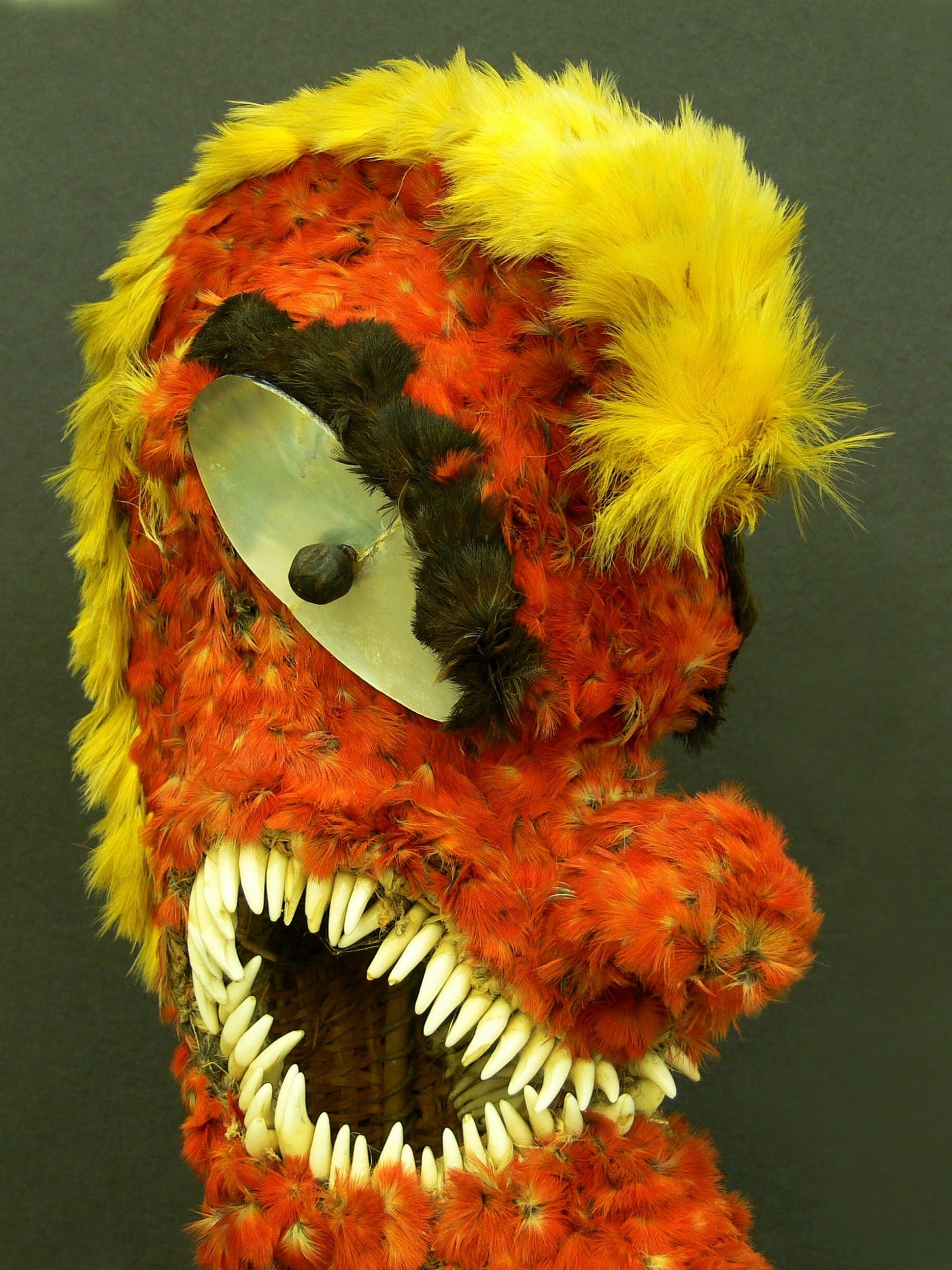
In Māori culture, mako shark teeth were worn as pendants by chiefs and warriors as a sign of rank. Te Rangi Hīroa (Peter Buck), the Māori physician and anthropologist who served as director of the Bernice P. Bishop Museum in Honolulu in the mid-20th century, documented the practice in The Coming of the Maori (1949). Elsdon Best’s earlier The Maori (1924) records mako fishing as a specifically regarded practice with its own karakia (incantations).
What the pop reading loses
The Andrews 1993 shark is a solitary predator, survival instinct, forward movement. That is the Jaws shark with spirit-animal coloring. The Pacific traditions are not solitary-predator readings. They are relationship traditions: ‘aumakua bond, god-guardian, caller-and-called, chief’s rank-sign. The shark in each of these is embedded in a specific social fabric.
If you are interested in the shark as a spiritual figure and have only had the Jaws-derived reading, the Pacific sources will change your sense of the animal considerably. The tradition sections above open that reading up.
Working with the Shark
If you want a regular practice rather than a one-time read, an oracle deck is the standard tool: you draw a card and sit with whatever animal comes up. The foundational modern spirit-animal oracle: 44 cards drawn from Sams's Seneca and other Indigenous teachings, with a guidebook that actually explains its sources. The deck most later ones are imitating.
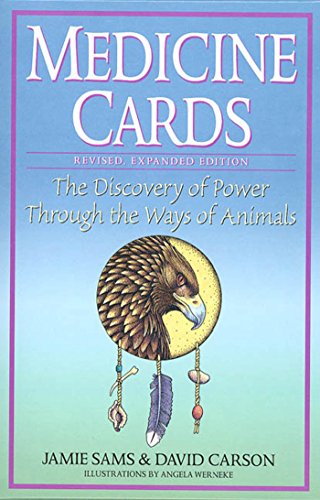
Medicine Cards
The foundational modern spirit-animal oracle: 44 cards drawn from Sams's Seneca and other Indigenous teachings, with a guidebook that actually explains its sources. The deck most later ones are imitating.
Compare the field in our ranked guide to spirit animal oracle decks, or browse decks, crystals, and journals in spirit animal gifts & tools.
Across traditions
Hawaiian ('aumakua and Kāmohoaliʻi)
In Hawaiian tradition, specific families hold sharks as 'aumakua, ancestral guardian spirits that can take living animal form. The shark-god Kāmohoaliʻi is the eldest brother of the volcano-goddess Pele, and the most widely-cited shark 'aumakua figure. Martha Beckwith's Hawaiian Mythology (University of Hawai'i Press, 1940) and Mary Kawena Pukui's Nānā I Ke Kumu (Queen Liliʻuokalani Children's Center, 1972) document the specific family lineages.
The traditional relationship involved reciprocity: the family fed and honored the shark 'aumakua, and the shark in return protected family members from drowning and from other sharks. The practice is alive in the cultural memory of specific Hawaiian families today. The general Hawaiian reading of the shark is not "predator to fear" but "ancestor to honor in a specific lineage-bound way."
- PEER-REVIEWED Martha Beckwith, Hawaiian Mythology — University of Hawai'i Press, 1940.
- PRIMARY Mary Kawena Pukui et al., Nānā I Ke Kumu (Look to the Source) — Queen Liliʻuokalani Children's Center, 1972.
- PRIMARY Kumulipo — Liliʻuokalani trans., 1897; Beckwith trans., University of Chicago, 1951.
Fijian (Dakuwaqa, the shark-god)
Dakuwaqa is the shark-god of Fijian traditional religion, guardian of the reefs and protector of the fishermen of specific villages, particularly on Kadavu Island and in the Rewa delta. The iTaukei (indigenous Fijian) oral tradition narrates Dakuwaqa's contest with the octopus-god Rokobakaniceva of Kadavu: after a long fight, the octopus wraps eight arms around Dakuwaqa and forces him to promise never to eat humans in Kadavu waters.
A.M. Hocart's Lau Islands, Fiji (Bishop Museum Bulletin 62, 1929) and Asesela Ravuvu's Vaka i Taukei: The Fijian Way of Life (University of the South Pacific, 1983) are the standard scholarly treatments. The Dakuwaqa tradition is alive in contemporary Kadavu villages, where sharks are still read as the god's presence.
- PRIMARY A.M. Hocart, Lau Islands, Fiji — Bernice P. Bishop Museum Bulletin 62, 1929.
- PRIMARY Asesela Ravuvu, Vaka i Taukei: The Fijian Way of Life — University of the South Pacific, 1983.
- PEER-REVIEWED Fergus Clunie, Yalo i Viti: Shades of Viti. A Fiji Museum Catalogue — Fiji Museum, 1986.
Solomon Islands (shark-callers)
The Solomon Islands tradition of nguzunguzu-era shark-calling involved specific men who maintained hereditary relationships with specific sharks. The practitioner would chant, rattle coconut shells, and call the shark to a ritual feeding, often of a pig or a dog. The tradition is documented in Harold Scheffler's Choiseul Island Social Structure (University of California Press, 1965) and earlier in Beatrice Blackwood's Both Sides of Buka Passage (Oxford, 1935), though Blackwood's site was adjacent (Bougainville) rather than Choiseul proper.
Shark-calling in its classical form has declined substantially under missionary and colonial pressure through the 20th century, but it has not entirely vanished. Contemporary documentation by Melanesian filmmakers, including the 2006 documentary Shark Callers of Kontu (Papua New Guinea, Dennis O'Rourke), records surviving practitioners.
- PEER-REVIEWED Harold W. Scheffler, Choiseul Island Social Structure — University of California Press, 1965.
- PRIMARY Beatrice Blackwood, Both Sides of Buka Passage — Clarendon Press, 1935.
- REFERENCE Dennis O'Rourke (dir.), Shark Callers of Kontu (film, 1982)
Māori (mako tradition)
In Māori tradition, the mako shark (Isurus oxyrinchus) is valued for its teeth, worn as pendants (mako taniwha or simply mako) by chiefs and warriors as a sign of rank. Te Rangi Hīroa (Peter Buck), the Māori physician-anthropologist, documented the traditional mako-tooth adornment in The Coming of the Maori (Māori Purposes Fund Board, 1949). Elsdon Best's earlier The Maori (Board of Maori Ethnological Research, 1924) records mako-shark fishing as a specifically regarded practice.
The mako also appears in some Māori origin narratives as a shape Tangaroa (the sea-god) or specific ancestors took at particular moments. Unlike the Hawaiian and Fijian traditions, the Māori mako is more prestige-object than personal-guardian, though the distinction is not absolute.
- PRIMARY Te Rangi Hīroa (Peter Buck), The Coming of the Maori — Māori Purposes Fund Board, 1949.
- PRIMARY Elsdon Best, The Maori — Board of Maori Ethnological Research, 1924.
Ted Andrews (1993)
Andrews's 1993 shark is the Jaws-era American shark softened into a personal-spirit keyword: ferocity, survival, forward movement, predatory focus. He does not draw substantially on the Pacific traditions. The result is a reading about Western shark anxiety rather than about any specific ancient or Indigenous shark theology.
- REFERENCE Ted Andrews, Animal Speak — Llewellyn, September 1993.
Frequently asked
- What does a shark symbolize spiritually?
- In modern pop usage, ferocity, survival, and predatory focus, the Andrews 1993 reading filtered through Jaws (1975) and Discovery Channel Shark Week. The deep traditions are Pacific. Hawaiian shark 'aumakua and the god Kāmohoaliʻi are documented by Martha Beckwith's Hawaiian Mythology (1940) and Mary Kawena Pukui's Nānā I Ke Kumu (1972). Fijian Dakuwaqa is the shark-god of the Kadavu and Rewa reefs. Solomon Islands shark-callers maintained hereditary relationships with specific sharks. Māori mako-tooth pendants were a chiefly rank-sign.
- What is a shark 'aumakua?
- In Hawaiian tradition, an 'aumakua is a family ancestral guardian spirit that can take living animal form. Specific families hold sharks as 'aumakua, honoring the shark and, in turn, believing the shark will protect family members from drowning and from other sharks. The shark-god Kāmohoaliʻi is the eldest brother of the volcano-goddess Pele and the most widely-cited shark 'aumakua figure. Mary Kawena Pukui's Nānā I Ke Kumu (1972) documents specific family lineages.
- Who is Dakuwaqa?
- Dakuwaqa is the shark-god of Fijian traditional religion, guardian of the reefs and protector of the fishermen of Kadavu Island and the Rewa delta. iTaukei oral tradition narrates his fight with the octopus-god Rokobakaniceva of Kadavu, which Dakuwaqa lost; the octopus made him promise never to eat humans in Kadavu waters. A.M. Hocart's Lau Islands, Fiji (1929) and Asesela Ravuvu's Vaka i Taukei (1983) are the standard scholarly treatments.
- Did people really call sharks in the Solomon Islands?
- Yes, and the tradition is documented in Harold Scheffler's Choiseul Island Social Structure (UC Press, 1965) and earlier in Beatrice Blackwood's 1935 Bougainville fieldwork. The practitioner would chant, rattle coconut shells, and call the shark to a ritual feeding, often of a pig. The tradition has declined substantially under missionary and colonial pressure but has not entirely vanished; Dennis O'Rourke's 1982 film Shark Callers of Kontu records surviving practitioners in Papua New Guinea.
Sources
- PEER-REVIEWEDMartha Beckwith, Hawaiian Mythology — University of Hawai'i Press, 1940.
- PRIMARYMary Kawena Pukui, Nānā I Ke Kumu — Queen Liliʻuokalani Children's Center, 1972.
- PRIMARYKumulipo — Liliʻuokalani trans., 1897.
- PRIMARYA.M. Hocart, Lau Islands, Fiji — Bishop Museum Bulletin 62, 1929.
- PRIMARYAsesela Ravuvu, Vaka i Taukei — University of the South Pacific, 1983.
- PEER-REVIEWEDFergus Clunie, Yalo i Viti — Fiji Museum, 1986.
- PEER-REVIEWEDHarold Scheffler, Choiseul Island Social Structure — UC Press, 1965.
- PRIMARYBeatrice Blackwood, Both Sides of Buka Passage — Clarendon Press, 1935.
- PRIMARYTe Rangi Hīroa, The Coming of the Maori — Māori Purposes Fund Board, 1949.
- PRIMARYElsdon Best, The Maori — 1924.
- REFERENCEDennis O'Rourke, Shark Callers of Kontu (film, 1982)
- REFERENCETed Andrews, Animal Speak — Llewellyn, September 1993.