Spirit Animal
Rabbit Spirit Animal
Rabbit spirit animal meaning, traced from the modern fertility-and-timidity reading back through Ted Andrews's Animal Speak to the Mesoamerican Four Hundred Rabbits (Centzon Tōtōchtin), the Chinese moon-hare and Japanese Inaba hare, and the African-rooted Br'er Rabbit trickster.
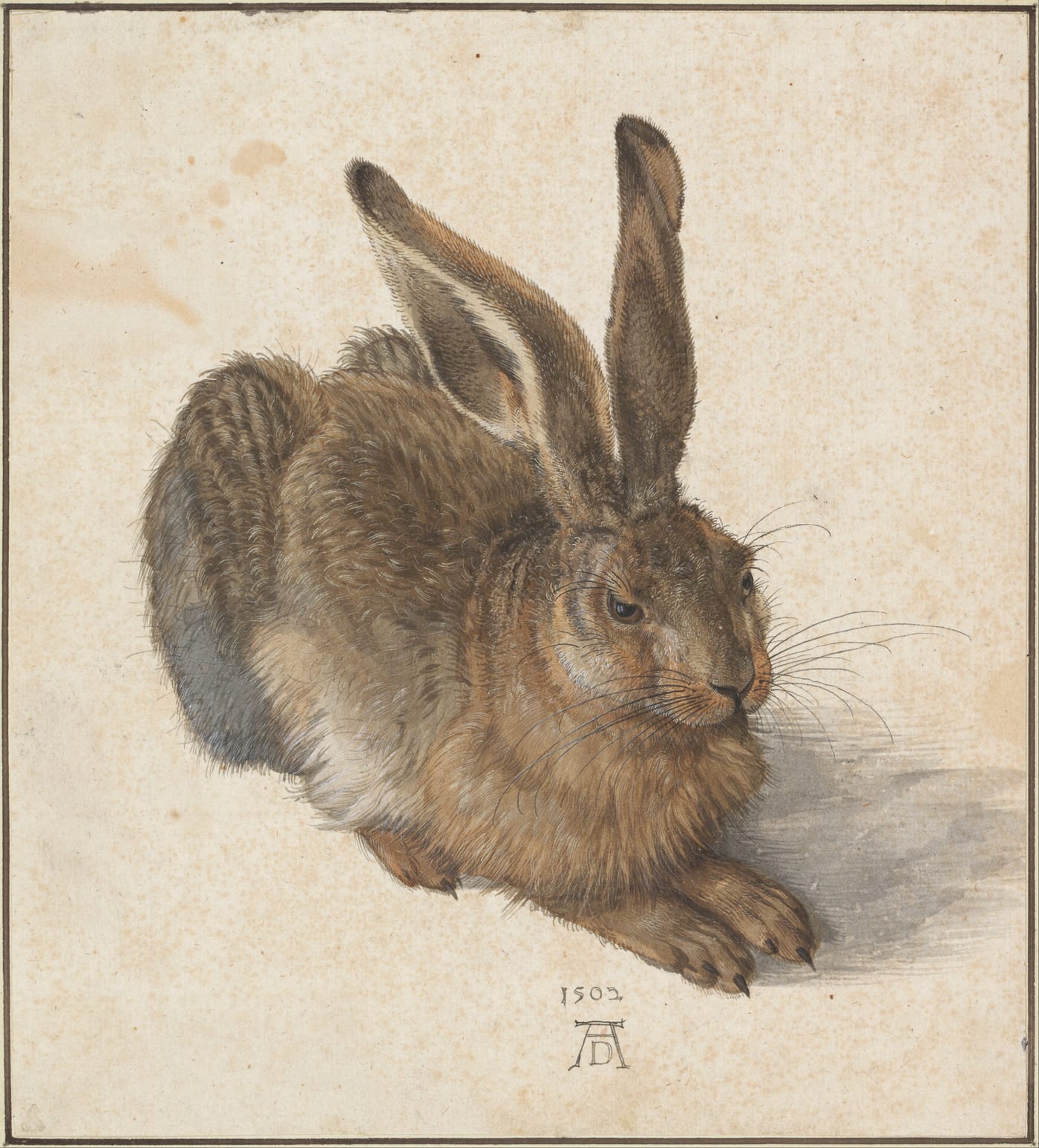
In modern American "spirit animal" usage, the rabbit stands for fertility, intuition, timidity, and the ability to move fast and quiet at the edges. That reading comes through Ted Andrews's Animal Speak (Llewellyn, 1993). The older traditions split between trickster and divine. The Mesoamerican Centzon Tōtōchtin (Four Hundred Rabbits) are the pulque gods of Sahagún's Florentine Codex, a council of rabbit-deities presiding over drunkenness and agricultural fertility. The Chinese moon-hare (yùtù) pounds the elixir of immortality on the moon, per the Chu Ci and the Han-era Mawangdui banners. The Japanese White Hare of Inaba in the Kojiki helps Ōkuninushi marry his bride. And the American Br'er Rabbit tradition, recorded by Joel Chandler Harris in 1881, is an African-rooted trickster cycle from enslaved Gullah storytellers.
A 16th-century Aztec priest would have been baffled to hear the rabbit described as “gentle, intuitive, and timid.” For him the rabbit was a god of drunkenness. Four hundred rabbits, in fact, a whole council of them, each with its own name, its own day in the sacred calendar, and its own role in the pulque brewery of Mexica religion. Sahagún’s Florentine Codex names them: Patécatl, Tezcatzóncatl, Toltécatl, Papáztac, and on through a long list that takes up most of a chapter. The day Ome Tochtli, Two Rabbit, was a day to drink. Serious transactions were not undertaken on it.
That is one tradition. It is almost the opposite of the Easter-bunny-colored-egg-fertility-innocence rabbit a modern American inherits. And neither of those is the moon-hare pounding the elixir of immortality on the Chinese moon, which has its own two-thousand-year history. And none of those is Br’er Rabbit outwitting Br’er Bear in the Tar Baby story the enslaved Gullah storytellers of the Georgia Sea Islands were telling their children two hundred years ago.
Four traditions, four rabbits, none of them the pop reading
The Centzon Tōtōchtin. A council of pulque-gods in Mesoamerican religion. Sahagún’s Florentine Codex Book 1 is the primary source. The Mexica calendar day Two Rabbit was a dangerous drinking-day; the Codex Telleriano-Remensis preserves the visual calendar. This is the rabbit as deity of fermentation, agricultural fertility, and the controlled chaos of drunkenness.
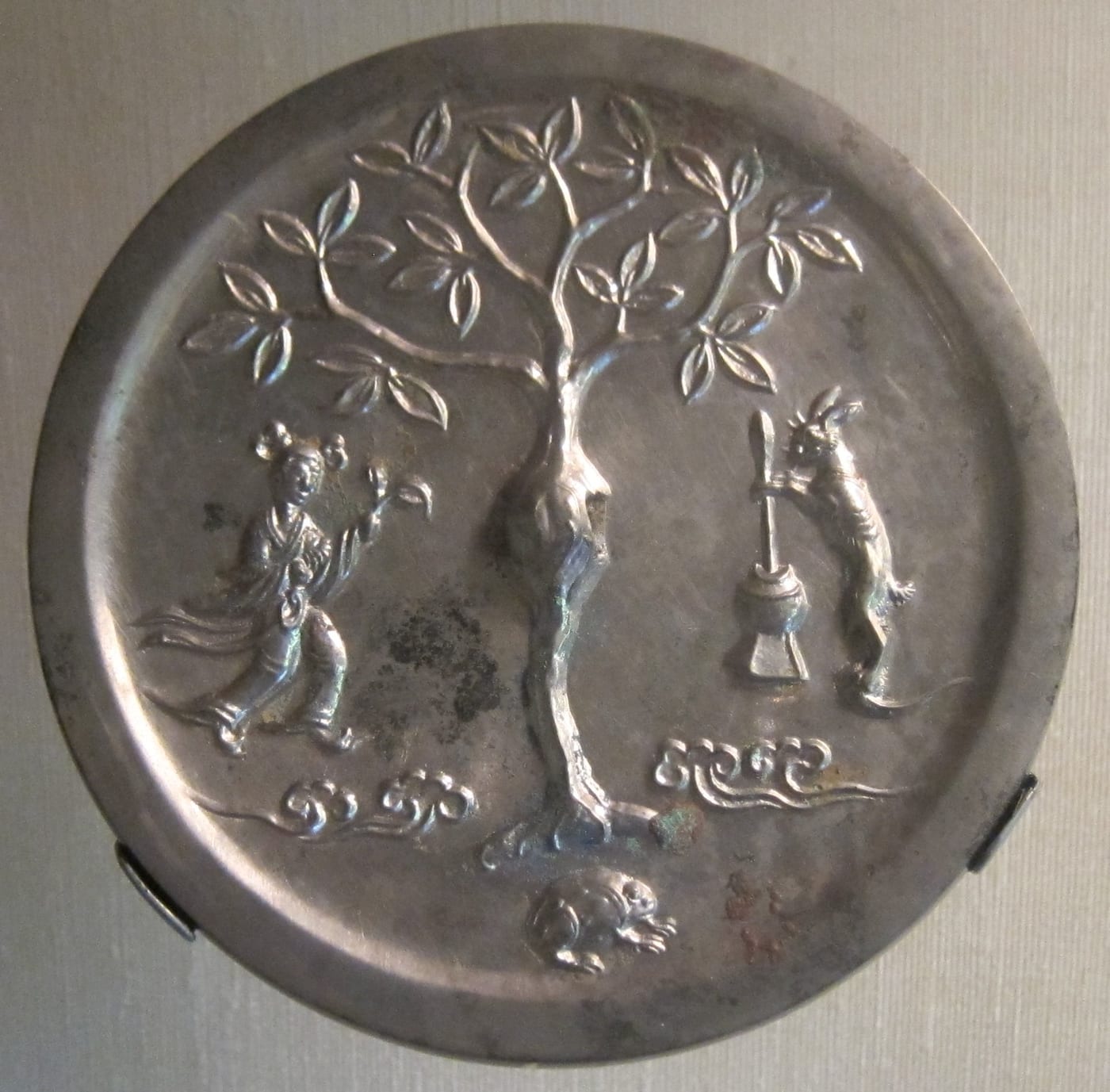
The moon-hare. A Chinese tradition running from at least the 4th century BCE through every subsequent dynasty to the present. The Chu Ci references the hare on the moon. The Mawangdui Han-era silk banner, one of the most important surviving Chinese artifacts of the 2nd century BCE, shows the hare on the lunar disk alongside a three-legged toad. The hare pounds the elixir of immortality. The Mid-Autumn Festival still carries the imagery in mooncake packaging and Beijing’s Lord Rabbit clay figurines. The Japanese moon-rabbit descends from this.
The White Hare of Inaba. Eighth-century Japanese imperial mythography, the Kojiki. A hare tricks sharks, gets punished, is healed by the young god Ōkuninushi, and repays the kindness with a marriage-prophecy. The Hakuto Jinja in Tottori still enshrines the hare today.
Br’er Rabbit. An African-American trickster cycle carried from West Africa through the Middle Passage, told around Gullah-Geechee hearths on the Sea Islands, collected and published (not invented) by the white journalist Joel Chandler Harris in 1881. Roberts’s 1989 From Trickster to Badman from Penn Press reframes the material as Black folklore first, Harris-compilation second.
Why these matter more than the pop reading
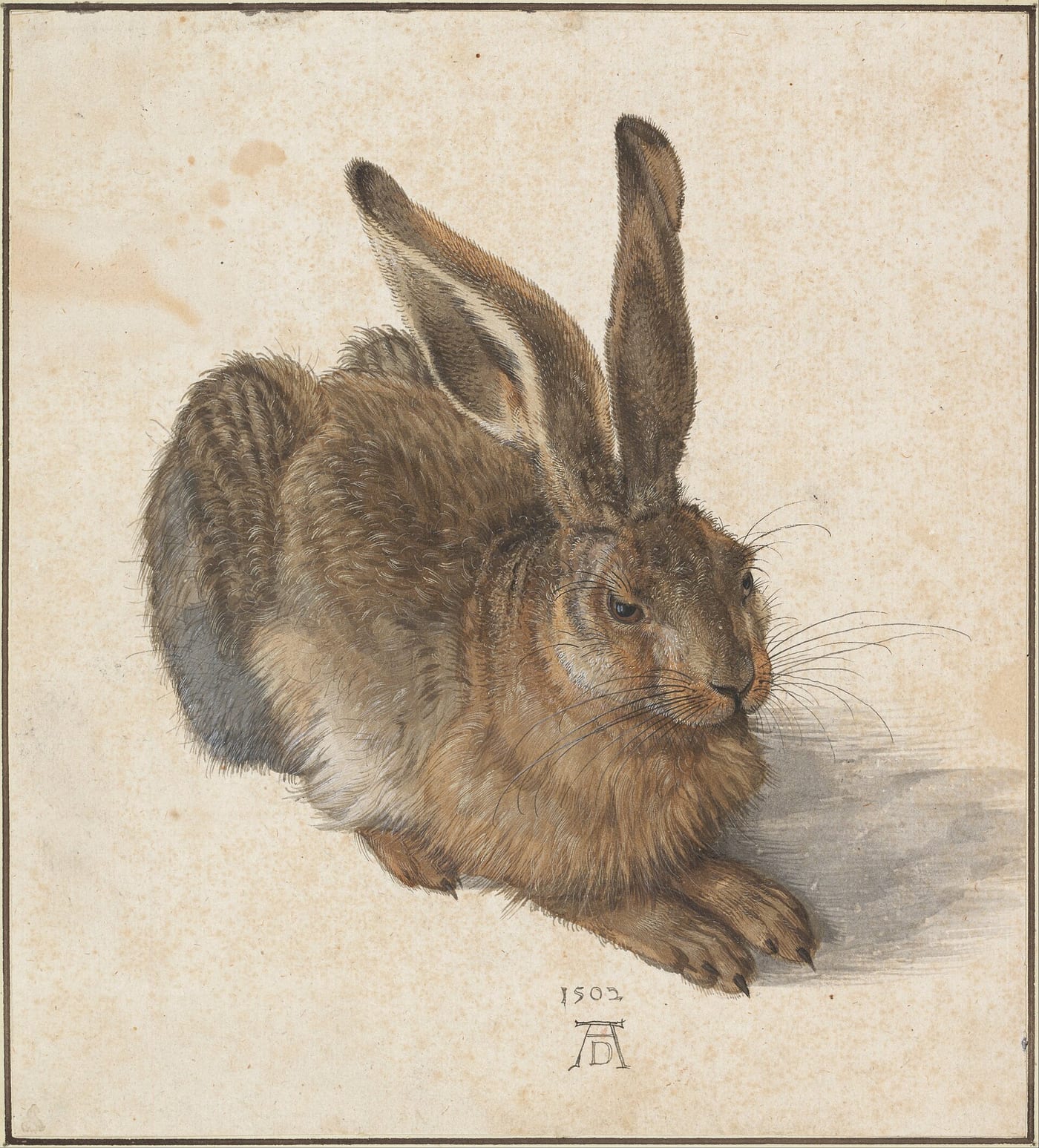
The modern spirit-animal rabbit (fertility, intuition, timidity) is mostly a European folk inheritance, Eostre-adjacent, Easter-adjacent, softened into New Age keyword form by Andrews 1993. It is not wrong. It is also not the richest layer available.
A reader who knows the Centzon Tōtōchtin will never see a rabbit the same way. A reader who has looked at the Mawangdui banner at the Hunan museum in Changsha will carry the moon-hare in their head forever. A reader who has sat with Br’er Rabbit and the Tar Baby is reading American history inside an animal story.
That is what the tradition sections above open up.
Across traditions
Mesoamerican (Centzon Tōtōchtin)
The Centzon Tōtōchtin, the "Four Hundred Rabbits," are a council of Aztec (Mexica) pulque gods, a collective deity of drunkenness, fertility, and the agricultural maguey plant from which pulque is brewed. Bernardino de Sahagún's Florentine Codex Book 1 (Anderson & Dibble trans., University of Utah Press, 1950–82) names the individual rabbits, including Patécatl, the pulque-god consort of Mayahuel (the maguey-goddess), and Ometochtli ("Two Rabbit"), the day-sign patron.
The calendar day ome tochtli (Two Rabbit) was considered a dangerous drinking-day in the pre-Columbian tonalpohualli (260-day ritual calendar); the Codex Telleriano-Remensis (16th century, BnF Mexicain 385) preserves a visual calendar listing. The rabbit here is not a gentle forest creature. It is a council of fermentation-deities with specific days and specific rites.
- PRIMARY Bernardino de Sahagún, Florentine Codex (Book 1, Chapters 22–23) — Anderson & Dibble trans., University of Utah Press, 1950–82.
- ARCHIVE Codex Telleriano-Remensis — BnF Mexicain 385, 16th c.
- PEER-REVIEWED Michael Coe & Rex Koontz, Mexico: From the Olmecs to the Aztecs — Thames & Hudson, 7th ed. 2013.
Chinese (the moon-hare, yùtù)
The moon-hare (yùtù, 玉兔, "jade hare") has been in Chinese astronomical-mythic imagery since at least the 4th century BCE. The Chu Ci (Songs of Chu, c. 3rd c. BCE) references the hare on the moon. The Mawangdui Han-era silk banner (Hunan Provincial Museum, 2nd c. BCE) shows the hare on the lunar disk alongside a toad, an image that became canonical for the next two thousand years.
The hare is usually depicted pounding the elixir of immortality in a mortar, sometimes alongside the goddess Chang'e. The Mid-Autumn Festival (15th day of the 8th lunar month) retains the hare as a central iconographic figure in mooncake packaging and children's toys (the Tuyeye, "Lord Rabbit," clay figurines of Beijing). Related: the Japanese moon-rabbit (tsuki no usagi) descends from this Chinese tradition and has its own cultural development.
- PRIMARY Chu Ci (Songs of Chu), 'Heavenly Questions' (Tian Wen) — Hawkes trans., Penguin Classics, 1985.
- MUSEUM Mawangdui T-shaped silk banner — Hunan Provincial Museum; 2nd c. BCE.
- PRIMARY Huainanzi (c. 139 BCE) — Major et al. trans., Columbia University Press, 2010.
Japanese (the White Hare of Inaba)
The Inaba no Shiroi Usagi (The White Hare of Inaba) is one of the oldest episodes in the Japanese mythic corpus, recorded in the Kojiki (712 CE, Philippi trans.). The hare tricks a line of sharks into forming a bridge across the sea to the mainland, then insults them at the last jump; the sharks tear off his fur. The young god Ōkuninushi, passing by, tells the hare to bathe in fresh water and roll in cattail fluff, which heals him. The hare repays the kindness by prophesying that Ōkuninushi will win the marriage-competition for the Princess Yakami.
The Hakuto Jinja in Tottori Prefecture enshrines the hare to this day. The story is one of the best-known Japanese tales and one of the earliest documented.
- PRIMARY Kojiki (712 CE) — Philippi trans., University of Tokyo Press, 1968.
- REFERENCE Hakuto Jinja, Tottori Prefecture
African American (Br'er Rabbit, Gullah origins)
The Br'er Rabbit trickster cycle, which Joel Chandler Harris published in Uncle Remus: His Songs and His Sayings (1881), is an African-rooted tradition carried to the American South by enslaved people from West and Central Africa. Harris was a white journalist who collected and published the stories; the stories themselves belong to the Gullah-Geechee cultural tradition of the Sea Islands and the broader African diaspora.
Scholars trace Br'er Rabbit's lineage to West African hare-trickster figures including the Akan-Asante Kwaku Anansé tradition (more commonly a spider, but with overlapping rabbit-hare variants) and to the hare-trickster cycle documented across multiple West African languages. Alice Walker's 1981 essay on Harris and John Roberts's From Trickster to Badman: The Black Folk Hero in Slavery and Freedom (University of Pennsylvania Press, 1989) are important reframings.
- PRIMARY Joel Chandler Harris, Uncle Remus: His Songs and His Sayings — D. Appleton & Co., 1881.
- PEER-REVIEWED John W. Roberts, From Trickster to Badman: The Black Folk Hero in Slavery and Freedom — University of Pennsylvania Press, 1989.
- PEER-REVIEWED Patricia Jones-Jackson, When Roots Die: Endangered Traditions on the Sea Islands — University of Georgia Press, 1987.
Ted Andrews (1993)
Andrews's 1993 rabbit is the European folk rabbit (associated with the springtime goddess Eostre via Bede's De temporum ratione and later 19th-century German folklore) softened into a personal-spiritual reading: fertility, intuition, timidity, the ability to move unseen. The Mesoamerican pulque-rabbit, the Chinese moon-hare, the Japanese Inaba hare, and the African-American Br'er Rabbit traditions are absent.
- REFERENCE Ted Andrews, Animal Speak — Llewellyn, September 1993.
Frequently asked
- What does a rabbit symbolize spiritually?
- In modern pop usage, fertility, intuition, and timidity, the Andrews 1993 reading. Older traditions split. The Mesoamerican Centzon Tōtōchtin are a council of pulque gods; the calendar day Two Rabbit was a drinking-day (Sahagún, Florentine Codex Book 1). The Chinese yùtù is the jade moon-hare pounding the elixir of immortality (Chu Ci, Mawangdui banner). The Japanese White Hare of Inaba helps Ōkuninushi marry in the Kojiki. Br'er Rabbit is an African-rooted trickster cycle carried to the American South by Gullah-Geechee storytellers.
- Why is there a rabbit on the moon?
- The Chinese moon-hare (yùtù) has been in astronomical-mythic imagery since at least the 4th century BCE. The Chu Ci poem 'Heavenly Questions' references the hare; the Mawangdui Han-era silk banner (2nd c. BCE, Hunan Provincial Museum) shows it definitively on the lunar disk alongside a toad. The hare pounds the elixir of immortality in a mortar, often alongside the goddess Chang'e. The Japanese tsuki no usagi descends from this Chinese tradition.
- Who is Br'er Rabbit really?
- Br'er Rabbit is a trickster hero of African-American folklore, recorded in Joel Chandler Harris's 1881 Uncle Remus but belonging to the Gullah-Geechee Sea Islands tradition and the broader West African diasporic inheritance. Scholars trace the figure to West African hare-trickster cycles. John W. Roberts's From Trickster to Badman (University of Pennsylvania Press, 1989) is a standard reframing of the Harris material from within African American studies.
- What does 'Two Rabbit' mean in Aztec calendar?
- Ome Tochtli, 'Two Rabbit,' is a day-sign in the Aztec tonalpohualli (260-day ritual calendar), patron of pulque and drunkenness. The Centzon Tōtōchtin ('Four Hundred Rabbits') are the associated council of pulque gods; individual rabbit-deities including Patécatl (consort of the maguey-goddess Mayahuel) are named in Sahagún's Florentine Codex Book 1. The day was considered a dangerous drinking-day, avoided for serious transactions.
Sources
- PRIMARYSahagún, Florentine Codex (Book 1, Chs. 22–23) — Anderson & Dibble trans.
- ARCHIVECodex Telleriano-Remensis
- PRIMARYChu Ci (Hawkes trans., 1985)
- MUSEUMMawangdui silk banner (Hunan Provincial Museum)
- PRIMARYHuainanzi (Major et al. trans., 2010)
- PRIMARYKojiki (Philippi trans., 1968)
- REFERENCEHakuto Jinja, Tottori
- PRIMARYJoel Chandler Harris, Uncle Remus (1881)
- PEER-REVIEWEDJohn W. Roberts, From Trickster to Badman — University of Pennsylvania Press, 1989.
- PEER-REVIEWEDPatricia Jones-Jackson, When Roots Die — University of Georgia Press, 1987.
- PEER-REVIEWEDMichael Coe & Rex Koontz, Mexico — Thames & Hudson, 2013.
- REFERENCETed Andrews, Animal Speak — Llewellyn, September 1993.