Spirit Animal
Llama Spirit Animal
Llama spirit animal meaning, traced from the modern steady-service reading back through Ted Andrews's Animal Speak to Incan white-llama sacrifice documented by Bernabé Cobo's 1653 Historia del Nuevo Mundo, Moche decapitator-priest iconography, and contemporary Aymara ch'alla libation ceremonies.
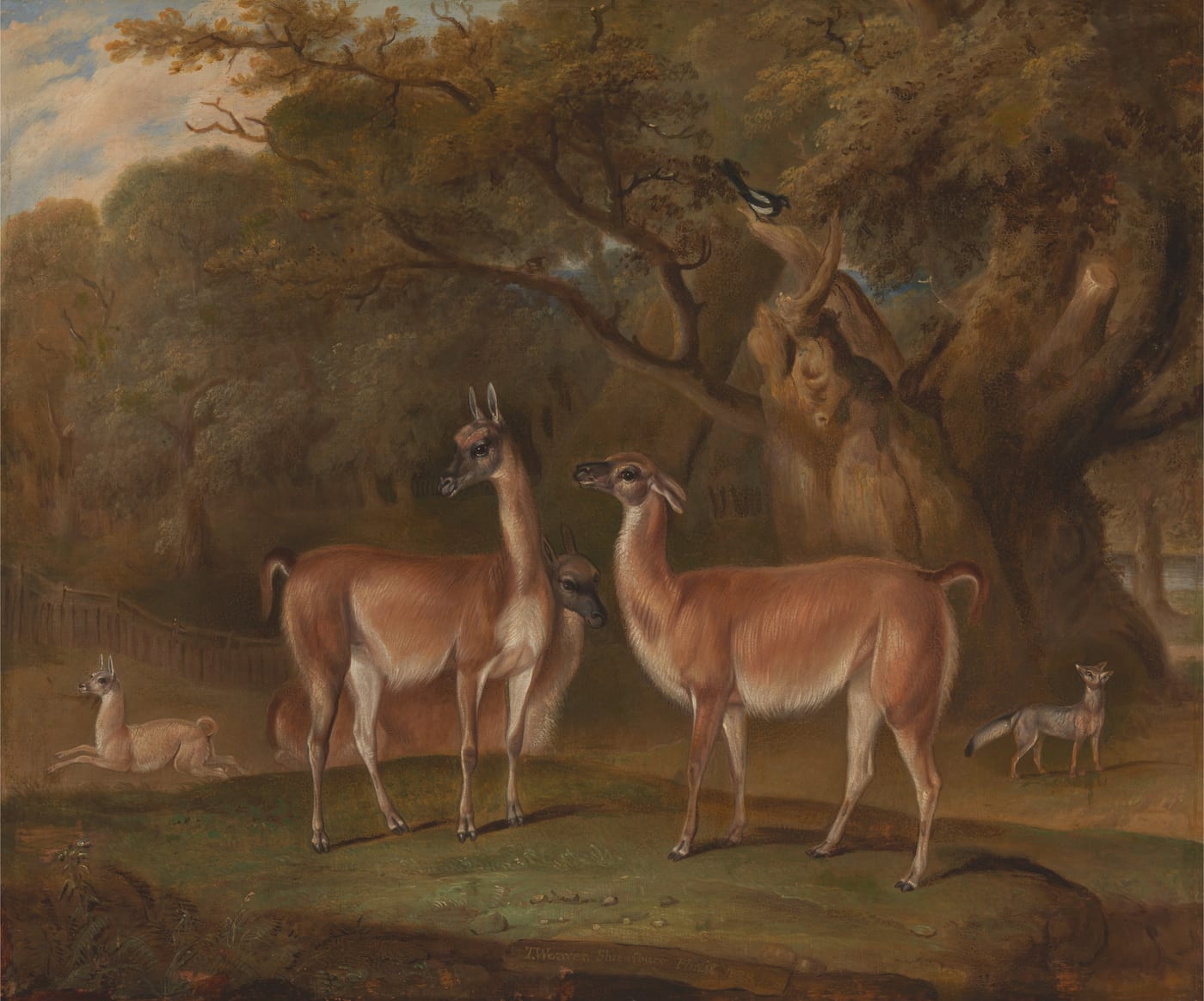
In modern American "spirit animal" usage, the llama stands for steady service, sure-footed perseverance, and the patient carrying of loads. That reading comes through Ted Andrews's Animal Speak (Llewellyn, 1993). The older traditions are Andean and specific. Incan religion reserved white llamas (napa) for the most important state sacrifices; Bernabé Cobo's Historia del Nuevo Mundo (1653) is the fullest Spanish-chronicler account. Moche iconography (c. 100–700 CE) on Peru's north coast depicts llamas in decapitator-priest scenes at Sipán and El Brujo. Aymara and Quechua contemporary traditions preserve the ch'alla libation ceremony, offering llama fat and blood to Pachamama. The domesticated llama has been central to Andean life for roughly 6,000 years.
The llama, like the hummingbird and the penguin, is an animal whose spiritual traditions are entirely New World because the animal itself is entirely New World. Llamas (Lama glama) were domesticated in the Andes roughly six thousand years ago from wild guanacos. Pre-contact Mediterranean, Asian, and African civilizations had no llama tradition. What they do have, which most modern spirit-animal articles skip, is the Incan imperial sacrificial system and two millennia of Andean religious and pastoral practice.
Three Andean traditions
Incan white-llama sacrifice. Bernabé Cobo, a Jesuit who arrived in Peru in 1599 and spent over sixty years in the Andes, wrote the fullest Spanish-chronicler account in Historia del Nuevo Mundo (1653). White llamas (napa) were reserved for Inti (the Sun) and for Capac Raymi, the royal coronation rite. Garcilaso de la Vega’s 1609 Comentarios Reales and Guamán Poma’s c. 1615 illustrated manuscript Nueva Corónica y Buen Gobierno provide Quechua-speaker perspectives.
Moche iconography. The Moche of Peru’s north coast (c. 100–700 CE) produced some of the most visually striking pre-Columbian Andean art. Llamas appear on fine-line polychrome ceramic vessels both as everyday pack animals and in specific ritual contexts. Alva and Donnan’s Royal Tombs of Sipán (Fowler Museum, UCLA, 1993) is the standard archaeological documentation.
The ch’alla. Contemporary Aymara and Quechua libation, alive across four countries. Llama fat and blood offered to Pachamama at specific calendar moments. Catherine Allen’s The Hold Life Has and Thomas Abercrombie’s Pathways of Memory and Power are the standard ethnographies.
The pop reading
Andrews 1993: steady service, perseverance, the patient carrying of loads. Real observations about a pack animal. But a civilization that reserved white llamas for its imperial coronation, and a pastoral-religious tradition alive across Bolivia, Peru, Ecuador, and Argentina that still offers llama fat to the earth at specific calendar moments, is the weight the animal actually carries.
Working with the Llama
If you want a regular practice rather than a one-time read, an oracle deck is the standard tool: you draw a card and sit with whatever animal comes up. The foundational modern spirit-animal oracle: 44 cards drawn from Sams's Seneca and other Indigenous teachings, with a guidebook that actually explains its sources. The deck most later ones are imitating.
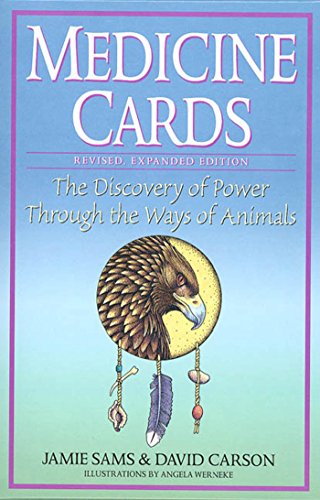
Medicine Cards
The foundational modern spirit-animal oracle: 44 cards drawn from Sams's Seneca and other Indigenous teachings, with a guidebook that actually explains its sources. The deck most later ones are imitating.
Compare the field in our ranked guide to spirit animal oracle decks, or browse decks, crystals, and journals in spirit animal gifts & tools.
Across traditions
Incan (white-llama state sacrifice, Bernabé Cobo 1653)
Incan state religion reserved white llamas (Quechua napa) for the most important imperial sacrifices. Bernabé Cobo, a Jesuit historian who arrived in Peru in 1599 and spent over sixty years in the Andes, wrote the fullest Spanish-chronicler account in his Historia del Nuevo Mundo (completed 1653, published posthumously). Cobo documents the monthly sacrificial calendar at Cuzco, which required specific colors and ages of llamas for different ceremonies; white llamas were reserved for Inti (the Sun) and for the Capac Raymi royal coronation rite.
Garcilaso de la Vega's Comentarios Reales de los Incas (1609) and Felipe Guamán Poma de Ayala's Nueva Corónica y Buen Gobierno (c. 1615, illustrated manuscript, now at the Royal Danish Library) provide corroborating Quechua-speaker perspectives.
- PRIMARY Bernabé Cobo, Historia del Nuevo Mundo (1653) — Hamilton trans. (History of the Inca Empire), University of Texas Press, 1979.
- PRIMARY Garcilaso de la Vega, Comentarios Reales de los Incas (1609) — Livermore trans., University of Texas Press, 1966.
- ARCHIVE Felipe Guamán Poma de Ayala, Nueva Corónica y Buen Gobierno (c. 1615) — Royal Danish Library digital facsimile.
Moche (decapitator-priest iconography, c. 100–700 CE)
The Moche civilization of Peru's north coast (c. 100–700 CE), predating the Inca by roughly a millennium, produced some of the most visually striking pre-Columbian Andean iconography, much of it on fine-line polychrome ceramic vessels. Llamas appear in Moche art both as everyday pack animals and in specific ritual contexts, including the decapitator-priest scenes at burial sites including the Royal Tombs of Sipán (excavated by Walter Alva from 1987) and the El Brujo complex.
Walter Alva and Christopher Donnan's Royal Tombs of Sipán (Fowler Museum of Cultural History, UCLA, 1993) is the standard archaeological documentation. Moche ceramics depicting llamas are in the Museo Tumbas Reales de Sipán (Lambayeque) and the Larco Museum (Lima).
- PEER-REVIEWED Walter Alva and Christopher B. Donnan, Royal Tombs of Sipán — Fowler Museum of Cultural History, UCLA, 1993.
- MUSEUM Museo Tumbas Reales de Sipán, Lambayeque
- MUSEUM Museo Larco, Lima (Moche ceramics collection)
Aymara and Quechua (contemporary ch'alla)
Aymara and Quechua contemporary traditions preserve the ch'alla, a libation ceremony in which llama fat (untu) and blood, alongside coca leaves and chicha (corn beer), are offered to Pachamama (Earth Mother) at specific moments: new year, harvest, the inauguration of new buildings, and mining operations. The ceremony is alive across the Andes in Bolivia, Peru, Ecuador, and northern Argentina.
Catherine Allen's The Hold Life Has: Coca and Cultural Identity in an Andean Community (Smithsonian Institution Press, 1988, revised 2002) treats the ch'alla in the context of rural Quechua life. Thomas Abercrombie's Pathways of Memory and Power (University of Wisconsin Press, 1998) treats the Aymara version. These are living traditions, not historical artifacts.
- PEER-REVIEWED Catherine J. Allen, The Hold Life Has: Coca and Cultural Identity in an Andean Community — Smithsonian Institution Press, 1988 (revised 2002).
- PEER-REVIEWED Thomas A. Abercrombie, Pathways of Memory and Power — University of Wisconsin Press, 1998.
Ted Andrews (1993)
Andrews's 1993 llama is the steady-service, sure-footed-perseverance figure drawn generically from the animal's observable pack-bearing behavior. The Incan, Moche, and Aymara-Quechua traditions are gestured at without specific citations.
- REFERENCE Ted Andrews, Animal Speak — Llewellyn, September 1993.
Frequently asked
- What does a llama symbolize spiritually?
- In modern pop usage, steady service, sure-footed perseverance, and the patient carrying of loads, the Andrews 1993 reading. Older traditions are Andean. Incan state religion reserved white llamas for Inti (the Sun) and the Capac Raymi royal coronation; Bernabé Cobo's 1653 Historia del Nuevo Mundo documents the sacrificial calendar. Moche iconography (c. 100–700 CE) depicts llamas in decapitator-priest ritual scenes at Sipán and El Brujo. And contemporary Aymara and Quechua traditions preserve the ch'alla libation, offering llama fat and blood to Pachamama.
- Why did the Inca sacrifice white llamas?
- Because Incan state religion reserved white llamas (Quechua napa) for the most important imperial sacrifices, particularly to Inti (the Sun) and at the Capac Raymi royal coronation rite. Bernabé Cobo's Historia del Nuevo Mundo (1653) documents the monthly sacrificial calendar at Cuzco with specific color and age requirements for each ceremony. The llama was central to the Incan state economy (carrying capacity, wool, meat, hides) and therefore central to the state's religious offerings.
- What is ch'alla?
- Ch'alla is the Aymara-Quechua libation ceremony, performed at specific moments (new year, harvest, the inauguration of new buildings, mining operations) in which llama fat (untu) and blood, alongside coca leaves and chicha (corn beer), are offered to Pachamama (Earth Mother). The ceremony is alive across the Andes. Catherine Allen's The Hold Life Has (Smithsonian, 1988/2002) and Thomas Abercrombie's Pathways of Memory and Power (University of Wisconsin Press, 1998) are the standard ethnographic treatments.
- When was the llama domesticated?
- Roughly 6,000 years ago in the Andes, with archaeological evidence from sites in the Junín puna of central Peru. The llama (Lama glama) is a domesticated form of the guanaco (Lama guanicoe). The species has been continuously central to Andean pastoral and agricultural life since domestication, making its cultural integration one of the longest continuous human-animal partnerships on the American continents.
Sources
- PRIMARYBernabé Cobo, Historia del Nuevo Mundo (1653) — Hamilton trans., University of Texas Press, 1979.
- PRIMARYGarcilaso de la Vega, Comentarios Reales (1609) — Livermore trans., University of Texas Press, 1966.
- ARCHIVEFelipe Guamán Poma de Ayala, Nueva Corónica (c. 1615)
- PEER-REVIEWEDWalter Alva and Christopher Donnan, Royal Tombs of Sipán — Fowler Museum, UCLA, 1993.
- MUSEUMMuseo Tumbas Reales de Sipán
- MUSEUMMuseo Larco, Lima
- PEER-REVIEWEDCatherine J. Allen, The Hold Life Has — Smithsonian, 2002.
- PEER-REVIEWEDThomas A. Abercrombie, Pathways of Memory and Power — University of Wisconsin Press, 1998.
- REFERENCETed Andrews, Animal Speak — Llewellyn, September 1993.