Spirit Animal
Hummingbird Spirit Animal
Hummingbird spirit animal meaning, traced from the modern joy-and-lightness reading back through Ted Andrews's Animal Speak to the Aztec war-god Huitzilopochtli, the Nazca hummingbird geoglyph, the Taíno colibrí narrative, and early modern European encounters with the bird.
In modern American "spirit animal" usage, the hummingbird stands for joy, lightness, agility, and the capacity to revisit what is sweet in life. That reading comes through Ted Andrews's Animal Speak (Llewellyn, 1993). The older traditions are all American, because hummingbirds are a New World bird, unknown to Old World religion until after 1492. The Aztec (Mexica) war-and-sun god Huitzilopochtli is 'Hummingbird of the Left (South),' documented in Sahagún's Florentine Codex Book 3. The Nazca Lines of southern Peru (c. 500 BCE–500 CE) include a 93-meter hummingbird geoglyph. The Taíno of the Caribbean told a creation narrative in which the hummingbird (colibrí) carried messages between worlds. And the first European encounter with hummingbirds, recorded by Oviedo's 1526 Historia general y natural de las Indias, shaped how Europe came to read them.
One fact about the hummingbird that almost no popular spirit-animal article mentions, but that shapes everything: hummingbirds are a New World family. They exist in the Americas, from Alaska to Tierra del Fuego, and they do not exist in the Old World. Medieval European monks did not write about hummingbirds. The Greeks did not. The Romans, Chinese, Indians, Persians, and Egyptians did not. The first European to describe a hummingbird was Gonzalo Fernández de Oviedo in 1526, writing with genuine astonishment about an animal he had no European category for.
This means the deep hummingbird traditions are all Indigenous American. And the deepest of them is not the “joy” reading most Western articles offer.
Huitzilopochtli, the hummingbird-god of war
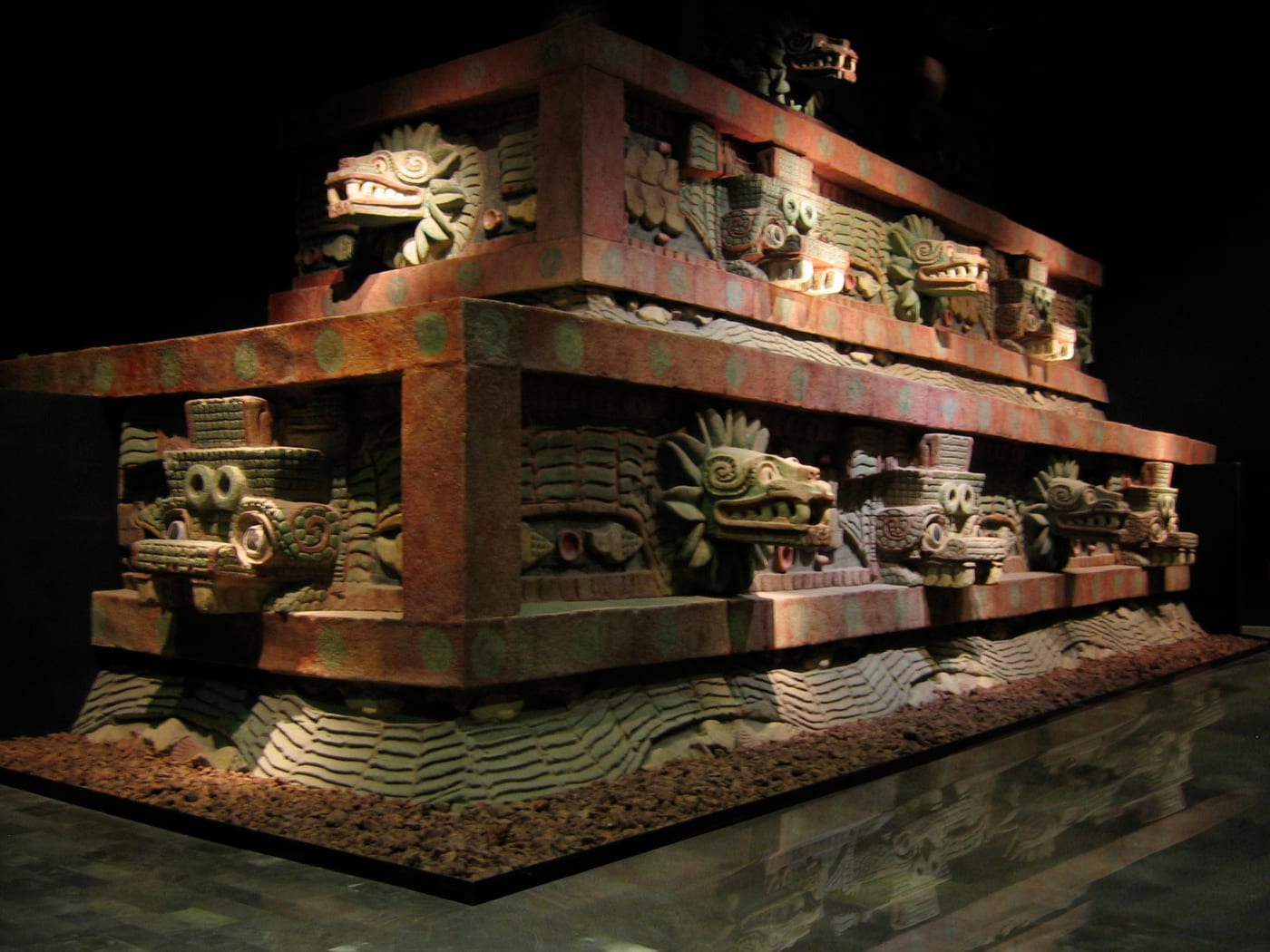
The Aztec (Mexica) patron deity Huitzilopochtli is, in English translation, “Hummingbird of the Left,” where “left” in Nahuatl cosmic orientation means “south.” Sahagún’s Florentine Codex Book 3, chapters 1 through 4, is the fullest pre-contact-rooted narrative. He is the god of war, the sun at its zenith, the patron of the Mexica city-state of Tenochtitlan. His mother Coatlicue, “Serpent Skirt,” conceives him by a ball of feathers; his sister Coyolxauhqui and his four hundred brothers attempt to kill their mother for the pregnancy; Huitzilopochtli is born fully armed and kills them all. The Templo Mayor of Tenochtitlan, excavated since 1978 under Eduardo Matos Moctezuma, was dedicated to him (alongside Tlaloc).
This is the deepest hummingbird tradition in the documented world, and it is almost the opposite of the pop “joy and sweetness” reading. The Aztec hummingbird is a warrior-god of the noon sun in its murderous intensity. Naming that is the minimum honest act.
The Nazca Lines and the Taíno colibrí
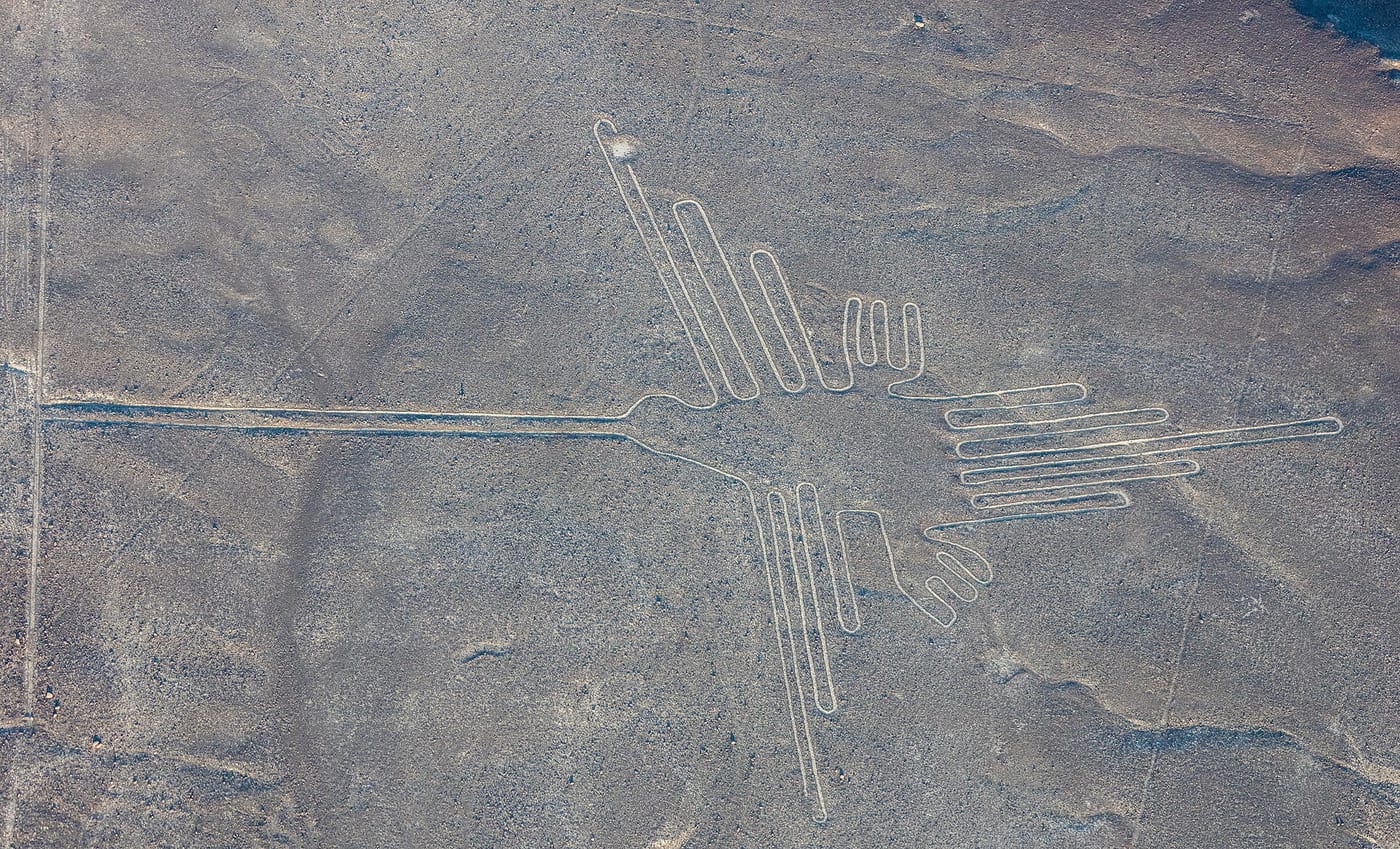
The Nazca hummingbird. 93 meters long, etched into the Nazca Desert plain of southern Peru by the Nazca culture between roughly 500 BCE and 500 CE. UNESCO World Heritage. Maria Reiche spent six decades documenting the site; Johan Reinhard’s 1988 monograph argued for ceremonial and water-ritual functions. The hummingbird also appears as a recurring motif on Nazca ceramics (Museo Larco in Lima has the principal collection).
The Taíno colibrí. The Taíno of the Greater Antilles told a hummingbird narrative in which the bird was a messenger between worlds. Most Taíno oral tradition was lost in the post-1492 demographic collapse, but Ramón Pané’s 1498 Relación (the first ethnography written in the Americas) preserves fragments. The Spanish word colibrí is itself a Taíno loanword. Contemporary Boricua and Jíbaro communities in Puerto Rico and the Dominican Republic continue the folklore in syncretized form.
The European post-contact imagination
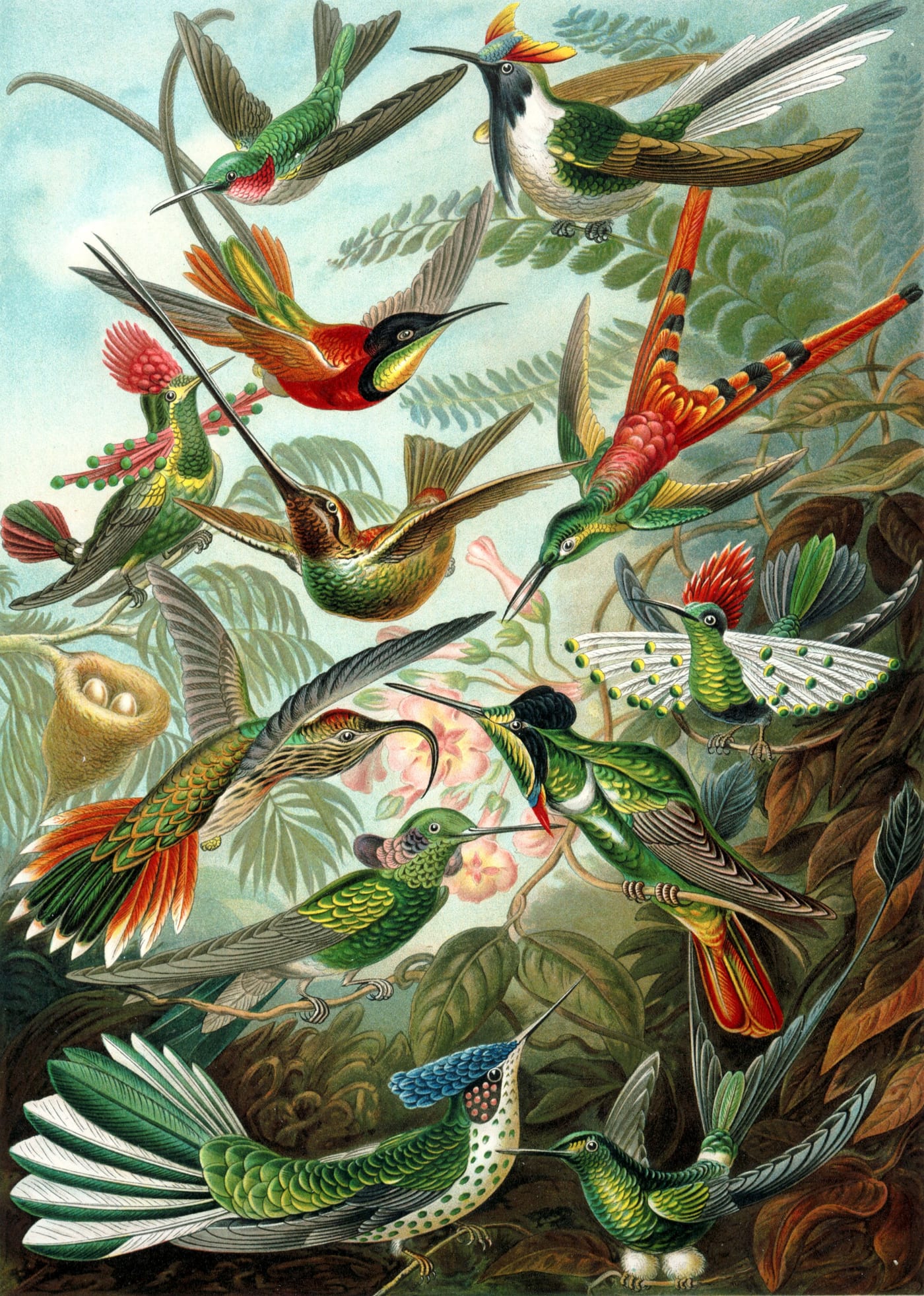
Oviedo in 1526 had no category for the hummingbird and said so. Buffon’s 18th-century Histoire naturelle and John Gould’s 19th-century five-volume Monograph of the Trochilidae (1849–61) constructed the Romantic European hummingbird: jewel-like, tiny miracle, joyful presence. That image, not the Huitzilopochtli image, is what Ted Andrews inherited and what the modern pop-spiritual hummingbird-reading carries.
Both readings are real. One is five hundred years old and European-invented. The other is older, American, and considerably more serious. A page that only gives you the first without mentioning the second is withholding the part that matters most.
Working with the Hummingbird
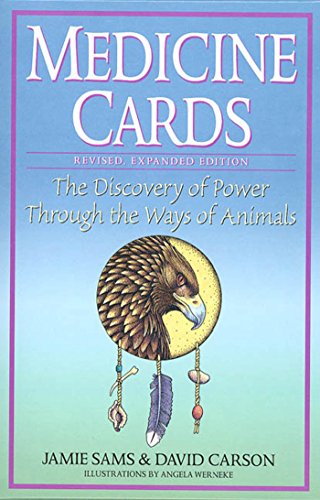
If you want a regular practice rather than a one-time read, an oracle deck is the standard tool: you draw a card and sit with whatever animal comes up. The foundational modern spirit-animal oracle: 44 cards drawn from Sams's Seneca and other Indigenous teachings, with a guidebook that actually explains its sources. The deck most later ones are imitating.
Medicine Cards
The foundational modern spirit-animal oracle: 44 cards drawn from Sams's Seneca and other Indigenous teachings, with a guidebook that actually explains its sources. The deck most later ones are imitating.
Compare the field in our ranked guide to spirit animal oracle decks, or browse decks, crystals, and journals in spirit animal gifts & tools.
Across traditions
Aztec / Mexica (Huitzilopochtli, Hummingbird of the South)
Huitzilopochtli ("Hummingbird of the Left," where "left" in Nahuatl cosmic orientation means "south") is the Aztec god of war, the sun at its zenith, and the patron deity of the Mexica people. Bernardino de Sahagún's Florentine Codex Book 3, chapters 1–4 (Anderson & Dibble trans., University of Utah Press) narrates his birth from Coatlicue ("Serpent Skirt"), his defeat of his sister Coyolxauhqui and his four hundred brothers (the Centzon Huitznahua), and his leading of the Mexica from Aztlán to the founding of Tenochtitlan at the sign of the eagle on the nopal cactus (see our eagle page).
The Templo Mayor of Tenochtitlan, excavated since 1978 under Eduardo Matos Moctezuma's direction, was dedicated to Huitzilopochtli alongside Tlaloc. The image of the warrior-hummingbird is central to Aztec theology, and the modern reading of the hummingbird as a "joy" symbol is the pop-spiritual mirror-opposite of the actual Mexica reading, which is closer to "warrior-god of the sun in its full murderous noon intensity."
- PRIMARY Bernardino de Sahagún, Florentine Codex (Book 3, chs. 1–4) — Anderson & Dibble trans., University of Utah Press, 1950–82.
- PEER-REVIEWED Eduardo Matos Moctezuma, The Great Temple of the Aztecs: Treasures of Tenochtitlan — Thames & Hudson, 1988.
- ARCHIVE Codex Mendoza, folio 2r (Tenochtitlan founding)
Andean (Nazca Lines hummingbird)
The Nazca Lines, a set of geoglyphs on the Nazca Desert plain of southern Peru, include dozens of zoomorphic figures created by the Nazca culture between c. 500 BCE and 500 CE. The hummingbird geoglyph (Colibrí in Spanish) measures approximately 93 meters long and is one of the most-photographed of the figures. The site is a UNESCO World Heritage property.
The purpose of the geoglyphs is debated. Maria Reiche's six decades of fieldwork (Mystery on the Desert, 1968) argued for astronomical-calendrical functions; later scholarship including Johan Reinhard's The Nazca Lines: A New Perspective on their Origin and Meaning (Los Pinos, 1988) emphasizes ceremonial and water-related ritual contexts. The hummingbird specifically is a recurring Nazca ceramic motif and appears on numerous surviving pots now in Lima's Museo Larco.
- MUSEUM UNESCO World Heritage Centre, Nazca Lines
- PEER-REVIEWED Maria Reiche, Mystery on the Desert — Self-published, 1968.
- PEER-REVIEWED Johan Reinhard, The Nazca Lines — Los Pinos, 1988.
- MUSEUM Museo Larco, Lima (Nazca ceramics collection)
Taíno (Caribbean colibrí)
The Taíno of the Greater Antilles told a hummingbird (colibrí or guanín) narrative in which the bird was the messenger between worlds. The documentation is fragmentary, because most Taíno oral tradition was lost in the post-1492 demographic collapse; Ramón Pané's Relación acerca de las antigüedades de los indios (c. 1498, the first ethnography written in the Americas) is the foundational source. Jalil Sued-Badillo's General History of the Caribbean, Volume 1: Autochthonous Societies (UNESCO, 2003) and Irving Rouse's The Tainos: Rise and Decline of the People Who Greeted Columbus (Yale, 1992) are the standard modern treatments.
Surviving Taíno cemí (carved ritual objects) sometimes depict the hummingbird or hummingbird-features, and the Spanish word colibrí itself is a Taíno loanword that entered European languages. The living Taíno-descendant Jíbaro and Boricua communities of Puerto Rico and the Dominican Republic continue to carry hummingbird-folklore, now syncretized with post-contact Caribbean spiritualities.
- PRIMARY Ramón Pané, Relación acerca de las antigüedades de los indios — Arrom ed., Siglo XXI, 1974.
- PEER-REVIEWED Irving Rouse, The Tainos: Rise and Decline of the People Who Greeted Columbus — Yale University Press, 1992.
- PEER-REVIEWED Jalil Sued-Badillo (ed.), General History of the Caribbean, Volume 1 — UNESCO, 2003.
European post-contact (Oviedo and the 'birds that live on flowers')
Hummingbirds do not exist in the Old World. European religion, literature, and folklore therefore had no hummingbird tradition before 1492. Gonzalo Fernández de Oviedo's Historia general y natural de las Indias (1526, expanded 1535) contains the first sustained European description of the hummingbird, expressing genuine astonishment at an animal he had no European category for. Oviedo compares its hovering to a bee's and its colors to jewelry.
Subsequent European imagination, through Buffon's Histoire naturelle (1770s) and 19th-century illustrated works like John Gould's A Monograph of the Trochilidae (1849–61), created the Romantic hummingbird the modern reader inherits. That image, jewel-like, joyful, a small miracle, is the one Andrews's 1993 reading softens into personal-spirit keyword form. It is genuinely late.
- PRIMARY Gonzalo Fernández de Oviedo, Historia general y natural de las Indias — Tudela Bueso ed., BAE, 1959.
- PRIMARY Georges-Louis Leclerc de Buffon, Histoire naturelle des oiseaux — Imprimerie Royale, 1770–83.
- PRIMARY John Gould, A Monograph of the Trochilidae (5 vols.) — London, 1849–61; digitized Smithsonian Libraries.
Ted Andrews (1993)
Andrews's 1993 hummingbird is the Oviedo-to-Buffon-to-Victorian-Romantic hummingbird reduced to personal-spirit keywords: joy, lightness, the capacity to revisit what is sweet. The Mesoamerican Huitzilopochtli tradition, which would radically complicate the reading by making the hummingbird the Aztec war-god of the noon sun, is essentially absent. The Nazca geoglyph gets a cursory mention. The Taíno tradition is missing.
- REFERENCE Ted Andrews, Animal Speak — Llewellyn, September 1993.
Frequently asked
- What does a hummingbird symbolize spiritually?
- In modern pop usage, joy, lightness, and agility, the Andrews 1993 reading. The actual deep tradition is Mesoamerican and is the opposite of the modern joy reading. The Aztec Huitzilopochtli is 'Hummingbird of the Left/South,' god of war and the noon sun, the Mexica's patron deity (Sahagún, Florentine Codex Book 3). The Nazca Lines hummingbird is a 93-meter geoglyph of the Nazca culture, c. 500 BCE–500 CE. The Taíno colibrí was a messenger between worlds.
- Why is Huitzilopochtli called a hummingbird?
- Because his name in Nahuatl translates as 'Hummingbird of the Left (South)' (huitzilin = hummingbird; opochtli = left, which in Nahuatl cosmic orientation indicates south). He is the Aztec god of war, the patron deity of the Mexica people, and the sun at its murderous noon. Sahagún's Florentine Codex Book 3 narrates his birth from Coatlicue and his founding of Tenochtitlan. The Templo Mayor in Mexico City, excavated since 1978 by Eduardo Matos Moctezuma, was his principal shrine.
- Are there hummingbirds in ancient European mythology?
- No. Hummingbirds are a New World family (Trochilidae) with no Old World range. Pre-1492 European religion, literature, and folklore have no hummingbird tradition. Gonzalo Fernández de Oviedo's 1526 Historia general y natural de las Indias contains the first sustained European description. The 19th-century Romantic hummingbird image that shapes the modern spirit-animal reading, jewel-like and miraculous, is a genuinely post-Columbian Western construction.
- What is the Nazca hummingbird?
- A 93-meter-long geoglyph on the Nazca Desert plain of southern Peru, one of dozens of zoomorphic figures created by the Nazca culture between roughly 500 BCE and 500 CE. The site is a UNESCO World Heritage property. Maria Reiche spent six decades documenting the figures; Johan Reinhard's 1988 The Nazca Lines argued for ceremonial and water-ritual functions. The hummingbird is also a recurring Nazca ceramic motif.
Sources
- PRIMARYSahagún, Florentine Codex (Book 3) — Anderson & Dibble trans., University of Utah Press.
- PEER-REVIEWEDEduardo Matos Moctezuma, The Great Temple of the Aztecs — Thames & Hudson, 1988.
- ARCHIVECodex Mendoza frontispiece
- MUSEUMUNESCO, Nazca Lines
- PEER-REVIEWEDMaria Reiche, Mystery on the Desert — Self-published, 1968.
- PEER-REVIEWEDJohan Reinhard, The Nazca Lines — Los Pinos, 1988.
- MUSEUMMuseo Larco, Lima
- PRIMARYRamón Pané, Relación acerca de las antigüedades de los indios — Arrom ed., Siglo XXI, 1974.
- PEER-REVIEWEDIrving Rouse, The Tainos — Yale, 1992.
- PEER-REVIEWEDJalil Sued-Badillo (ed.), General History of the Caribbean vol. 1 — UNESCO, 2003.
- PRIMARYOviedo, Historia general y natural de las Indias — BAE, 1959.
- PRIMARYGould, A Monograph of the Trochilidae — London, 1849–61.
- REFERENCETed Andrews, Animal Speak — Llewellyn, September 1993.