Spirit Animal
Horse Spirit Animal
Horse spirit animal meaning, traced from the modern freedom-and-power reading back through Ted Andrews's Animal Speak to the Vedic Aśvamedha, the Greek Pegasus, the Welsh Rhiannon of the Mabinogion, the Gallo-Roman Epona, and the Plains horse cultures that began with the 1680 Pueblo Revolt.
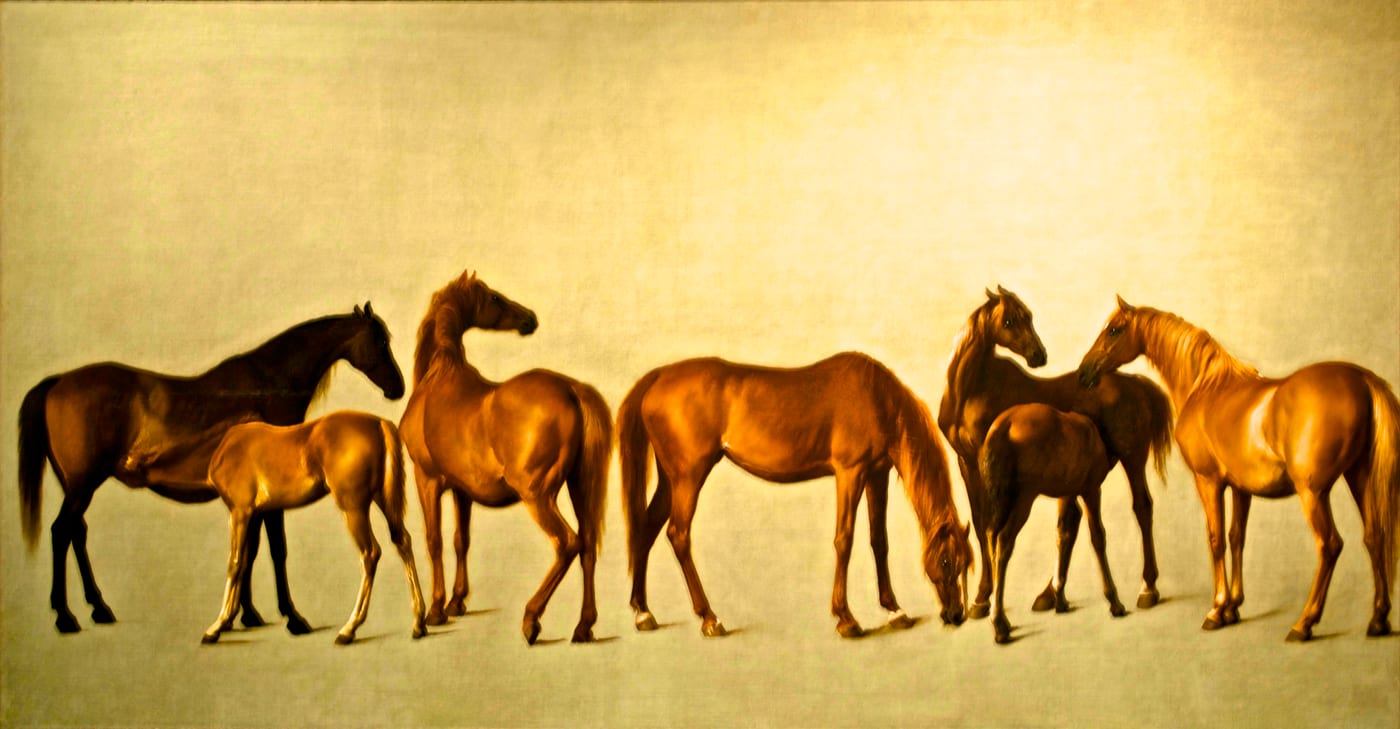
In modern American "spirit animal" usage, the horse stands for freedom, power, forward motion, and the sometimes-wild energy of an undomesticated self. That reading comes through Ted Andrews's Animal Speak (Llewellyn, 1993). The older traditions are denser. The Vedic Aśvamedha (horse sacrifice), one of the oldest documented royal rites in the world, is recorded in Rigveda 1.162 and Shatapatha Brahmana 13. Pegasus, born from Medusa's blood in Hesiod's Theogony, carried the bolt-bearing lightning for Zeus. The Welsh Rhiannon of the first branch of the Mabinogion rides a pale horse no one can catch. The Gallo-Roman goddess Epona is the one Celtic deity Rome worshipped in her own right. And the Plains horse cultures that reshaped North American Indigenous life began in a single historical moment: the Pueblo Revolt of 1680.
A Comanche warrior in the 1830s, riding a horse his grandfather never saw, was participating in a cultural complex roughly 150 years old. That is a shocking sentence to some readers. The Plains horse cultures are so associated with “ancient Indigenous tradition” in the American popular imagination that their actual historical depth feels wrong. But the arithmetic is simple: no horses on the continent from about 10,000 BCE to 1519 CE. Spanish horses into the Southwest in the 16th century. The Pueblo Revolt of 1680 scatters the herds. By the mid-1700s, horse cultures are spreading across the Plains. By 1830, Comanche empire. By 1877, Little Bighorn. Less than two hundred years from first hooves to the last great horse-and-rider wars.
If the horse is going to be treated as a spiritual figure, the real history of the horse on this continent should be on the table.
What the pop reading is, named plainly
Ted Andrews’s 1993 horse is the 19th-century American romantic horse: freedom, wild energy, forward motion, a noble power that resists domestication. That reading descends straight from Remington paintings, Buffalo Bill’s Wild West show, and a century of Hollywood Westerns. It is not a bad reading. It is also not what a horse meant in Vedic India, Greek Thessaly, or the Welsh Mabinogion. Each of those three traditions gives the horse a very different weight.
The Vedic horse as cosmic-political figure
The Aśvamedha is the royal horse sacrifice. A king could perform it only after he had achieved sufficient political weight to claim cosmic-imperial status. A consecrated stallion was turned loose for a full year, moving wherever it pleased, under the protection of a hundred royal attendants. Every territory the horse crossed, the king claimed by right of the horse’s passage. At the end of the year, the horse was sacrificed in a multi-day ritual that included the queen’s ritual union with the dead stallion (described with clinical specificity in Shatapatha Brahmana 13). The rite was, in its fullest form, performed only by kings whose sovereignty was uncontested across the known world.
You can feel, reading the Shatapatha Brahmana, how much the horse mattered. The rite is designed around it. The king’s whole political career could be measured by whether he was someone who had earned the right to perform an Aśvamedha.
The Greek miraculous-horse tradition
Pegasus is born from Medusa’s blood. Hesiod’s Theogony 280 has him leap out when Perseus beheads her. He flies to Olympus to carry Zeus’s lightning. He lets Bellerophon ride him briefly, then throws him when Bellerophon gets above himself. This is the horse as divine vehicle, and the rules are strict: you don’t ride Pegasus unless a god permits it.
The ordinary Greek horse is a separate animal. Xenophon’s On Horsemanship is a practical training manual. The Greeks were horsemen, but they didn’t sentimentalize the animal the way 19th-century American cowboys did. Pegasus is the Greek horse taken to the limit. He is not your personal spirit.
Rhiannon on the pale horse
The first branch of the Mabinogion opens with Pwyll, prince of Dyfed, sitting on a mound one afternoon when a woman in gold on a pale horse passes below. He sends riders after her. They can’t catch her, no matter how hard they ride, because her horse always stays exactly the same distance ahead. Eventually Pwyll himself calls out, and she stops. Her name is Rhiannon. She has come to marry him.
She is, in the consensus of Celtic studies, a Welsh descendant of Epona, the Gallo-Roman horse-goddess whose Roman-military cult spread across the empire in the first and second centuries CE. Her story in the Mabinogion bends toward horse-associated imagery throughout: the unreachable rider, the unjust punishment of being made to carry visitors on her back, the recovery of her lost son via a horse-theft subplot. The horse-goddess has survived the Welsh-Christian literary overlay.
Why the 1680 date matters
The most important date in this whole entry is 1680. The Pueblo Revolt of 1680 is when the Spanish horse herds of New Mexico were abandoned and began to move north through Indigenous trade networks. Two generations later, horse cultures. Another two generations, the Comanche were dominating the southern Plains. Historians now routinely describe the Comanche as an empire (Pekka Hämäläinen’s 2008 Yale book uses exactly that word). All of this unfolded inside roughly 150 years.
The cultural weight of the horse in Plains Indigenous life is real. It is also historically specific, modern, and built in the same centuries when Americans were writing the Declaration of Independence and running the Underground Railroad. Treating it as “ancient spiritual tradition” flattens the actual drama of its arrival.
The reading that pulls these together
No single reading does. The Aśvamedha horse and the Comanche war-horse and Pegasus and Rhiannon’s pale horse are not the same figure in different costumes. They are four separate traditions that happen to involve the same species. The lesson is that you get more out of each tradition by reading it on its own terms than by averaging them into a generic “horse means freedom.”
Working with the Horse
If you want a regular practice rather than a one-time read, an oracle deck is the standard tool: you draw a card and sit with whatever animal comes up. The foundational modern spirit-animal oracle: 44 cards drawn from Sams's Seneca and other Indigenous teachings, with a guidebook that actually explains its sources. The deck most later ones are imitating.
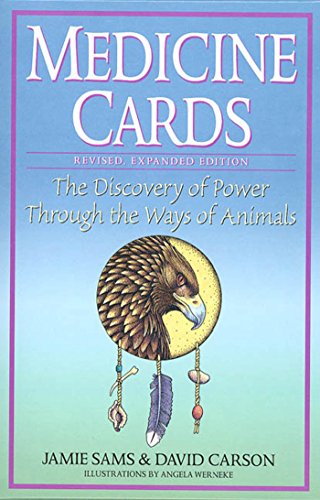
Medicine Cards
The foundational modern spirit-animal oracle: 44 cards drawn from Sams's Seneca and other Indigenous teachings, with a guidebook that actually explains its sources. The deck most later ones are imitating.
Compare the field in our ranked guide to spirit animal oracle decks, or browse decks, crystals, and journals in spirit animal gifts & tools.
Across traditions
Vedic (the Aśvamedha)
The Aśvamedha, the royal horse sacrifice, is one of the most elaborately documented religious rites in world history. Rigveda 1.162 and 1.163 are the core hymns; Shatapatha Brahmana 13 (c. 700 BCE) is the full liturgical handbook; the Mahābhārata's Ashvamedhika Parva (Book 14) narrates Yudhishthira's performance of the rite after the Kurukshetra war. A consecrated stallion was released to wander for a year under royal protection; the territory the horse crossed, the king claimed. At year's end, the horse was sacrificed in a ritual that lasted days and required the presence of the queen.
This is the opposite of a personal-guide reading. The horse in the Aśvamedha is a cosmic-political figure. Its journey is the expansion of sovereignty. Its death is the regeneration of the universe through royal offering.
- PRIMARY Rigveda 1.162–163 (Aśvamedha hymns) — Jamison & Brereton trans., Oxford University Press, 2014.
- PRIMARY Shatapatha Brahmana 13 (Aśvamedha liturgy) — Eggeling trans., Sacred Books of the East 44, 1900.
- PRIMARY Mahābhārata, Ashvamedhika Parva (Book 14) — van Buitenen-Fitzgerald trans., University of Chicago Press, 1973–.
Greek (Pegasus)
Pegasus, the winged horse, is born in Hesiod's Theogony 280–286 from the blood of Medusa when Perseus beheads her. He carries the thunderbolt and lightning for Zeus (Theogony 285). The Corinthian hero Bellerophon briefly rides him to kill the Chimera (Pindar, Olympian 13.63–92; Homer, Iliad 6.155–202), then falls to his death when he tries to fly to Olympus and Zeus sends a gadfly to unseat him.
Pegasus is not the ordinary horse in Greek thought. He is the horse as divine vehicle, the miraculous offspring of monstrous parents, the bearer of the god's weapon. Ordinary Greek horse practice, well-documented in Xenophon's On Horsemanship (c. 350 BCE), is a separate tradition.
- PRIMARY Hesiod, Theogony 280–286 — Most trans., Loeb Classical Library.
- PRIMARY Pindar, Olympian 13.63–92 — Race trans., Loeb Classical Library.
- PRIMARY Homer, Iliad 6.155–202 (Bellerophon episode) — Murray trans., Loeb Classical Library.
- PRIMARY Xenophon, On Horsemanship — Marchant trans., Loeb Classical Library.
Welsh / Gallo-Roman (Rhiannon, Epona)
Rhiannon appears in the first branch of the Mabinogion, the Welsh mythic cycle preserved in the White Book of Rhydderch (c. 1350) and the Red Book of Hergest (c. 1400) but drawing on earlier oral tradition. She rides a pale horse no one can catch; Pwyll pursues her and eventually marries her; later, accused falsely of killing her infant son, she is punished by having to carry visitors on her back at the palace gate, an explicit identification with the horse-goddess role. Sioned Davies's The Mabinogion (Oxford World's Classics, 2007) is the standard modern English translation.
Rhiannon's likely origin lies in the Gallo-Roman Epona, a Celtic horse-goddess formally adopted into the Roman military pantheon; her feast day was 18 December. Miranda Aldhouse-Green's The Gods of the Celts (Alan Sutton, 1986) documents the iconography: a seated woman flanked by or riding a horse, with patera (offering-dish) and cornucopia. Inscriptions survive from Gaul, Britain, the Rhineland, and the Danube frontier.
- PRIMARY The Mabinogion (Branch 1, Pwyll Pendefig Dyfed) — Davies trans., Oxford World's Classics, 2007.
- PRIMARY Gallo-Roman Epona inscriptions, corpus — Corpus Inscriptionum Latinarum (CIL), multiple volumes.
- PEER-REVIEWED Miranda Aldhouse-Green, The Gods of the Celts — Alan Sutton, 1986.
Plains Indigenous (horse cultures, post-1680)
There were no horses on the North American continent after the end-Pleistocene extinction roughly 10,000 years ago. The horse cultures of the Great Plains, which Europeans first encountered in the 17th and 18th centuries, are historical in the strictest sense. They began with the Pueblo Revolt of 1680, when Pueblo peoples drove the Spanish out of New Mexico and the abandoned Spanish horse herds scattered north through trade and raiding. Within two generations, Comanche, Lakota, Blackfeet, and Crow societies had transformed around the horse.
Colin Calloway's One Vast Winter Count: The Native American West before Lewis and Clark (University of Nebraska Press, 2003) and Pekka Hämäläinen's The Comanche Empire (Yale University Press, 2008) are the essential scholarly treatments. The specific horse-and-rider cultural complex is less than 350 years old at its deepest layer. Any article treating "the Native American horse" as an ancient spiritual tradition is historically misinformed.
- PEER-REVIEWED Colin Calloway, One Vast Winter Count: The Native American West before Lewis and Clark — University of Nebraska Press, 2003.
- PEER-REVIEWED Pekka Hämäläinen, The Comanche Empire — Yale University Press, 2008.
Ted Andrews (1993)
Andrews's 1993 horse is the 19th-century American-Western-romantic horse reduced to a personal-spiritual keyword: freedom, power, forward motion. He gestures at "Native American" horse tradition without the necessary historical framing. The Vedic Aśvamedha, the Greek Pegasus material, and the Welsh-Gallic Rhiannon-Epona layers are essentially absent.
- REFERENCE Ted Andrews, Animal Speak — Llewellyn, September 1993.
Frequently asked
- What does the horse symbolize spiritually?
- In modern pop usage, freedom, power, and forward motion, the reading set by Andrews 1993. Older traditions are denser. The Vedic Aśvamedha is a royal sacrifice whose released stallion marked a year-long territorial claim (Rigveda 1.162, Shatapatha Brahmana 13). Pegasus is born from Medusa's blood to carry Zeus's thunderbolts (Hesiod, Theogony 280–286). Rhiannon rides a pale horse no one can catch in the Mabinogion. The Gallo-Roman Epona is the one Celtic deity Rome worshipped under her original name.
- When did Plains tribes get horses?
- After the Pueblo Revolt of 1680, when Pueblo peoples drove the Spanish out of New Mexico and the abandoned Spanish horse herds moved north through Indigenous trade and raiding networks. The specific Plains horse-cultures (Comanche, Lakota, Blackfeet, Crow) are historical developments of the 17th through 19th centuries, not ancient traditions. Calloway's One Vast Winter Count (2003) and Hämäläinen's The Comanche Empire (2008) are the scholarly treatments.
- Who were Rhiannon and Epona?
- Rhiannon is the horse-goddess figure in the first branch of the Welsh Mabinogion, riding a pale horse no pursuer can overtake. She is usually identified as a Welsh descendant of the Gallo-Roman goddess Epona, the only Celtic deity formally worshipped by the Roman military under her original Celtic name. Epona inscriptions survive across Gaul, Britain, and the Rhineland; her feast day was 18 December.
- What was the Vedic horse sacrifice?
- The Aśvamedha was the most elaborate royal ritual in classical Vedic religion, documented in Rigveda 1.162–163, the Shatapatha Brahmana's Book 13, and the Mahābhārata's Ashvamedhika Parva. A consecrated stallion was released to wander for a year under royal protection; all land the horse crossed became the king's territory. At the end of the year the horse was sacrificed in a rite lasting days, with the queen present. It was both a cosmic regeneration ritual and a legal-political claim of sovereignty.
Sources
- PRIMARYRigveda 1.162–163 — Jamison & Brereton trans., Oxford, 2014.
- PRIMARYShatapatha Brahmana 13 — Eggeling trans., Sacred Books of the East 44, 1900.
- PRIMARYMahābhārata, Ashvamedhika Parva — van Buitenen-Fitzgerald trans., University of Chicago Press.
- PRIMARYHesiod, Theogony 280–286 — Loeb Classical Library.
- PRIMARYPindar, Olympian 13.63–92 — Loeb Classical Library.
- PRIMARYHomer, Iliad 6.155–202 — Loeb Classical Library.
- PRIMARYXenophon, On Horsemanship — Loeb Classical Library.
- PRIMARYThe Mabinogion (Davies trans., 2007)
- PEER-REVIEWEDMiranda Aldhouse-Green, The Gods of the Celts — Alan Sutton, 1986.
- PEER-REVIEWEDColin Calloway, One Vast Winter Count — University of Nebraska Press, 2003.
- PEER-REVIEWEDPekka Hämäläinen, The Comanche Empire — Yale University Press, 2008.
- REFERENCETed Andrews, Animal Speak — Llewellyn, September 1993.