Spirit Animal
Hawk Spirit Animal
Hawk spirit animal meaning, traced from the modern vision-and-messenger reading back through Ted Andrews's Animal Speak to the Egyptian Horus and Ra-Horakhty tradition, Roman and Etruscan augury, and Lakota hawk imagery documented by Frances Densmore.
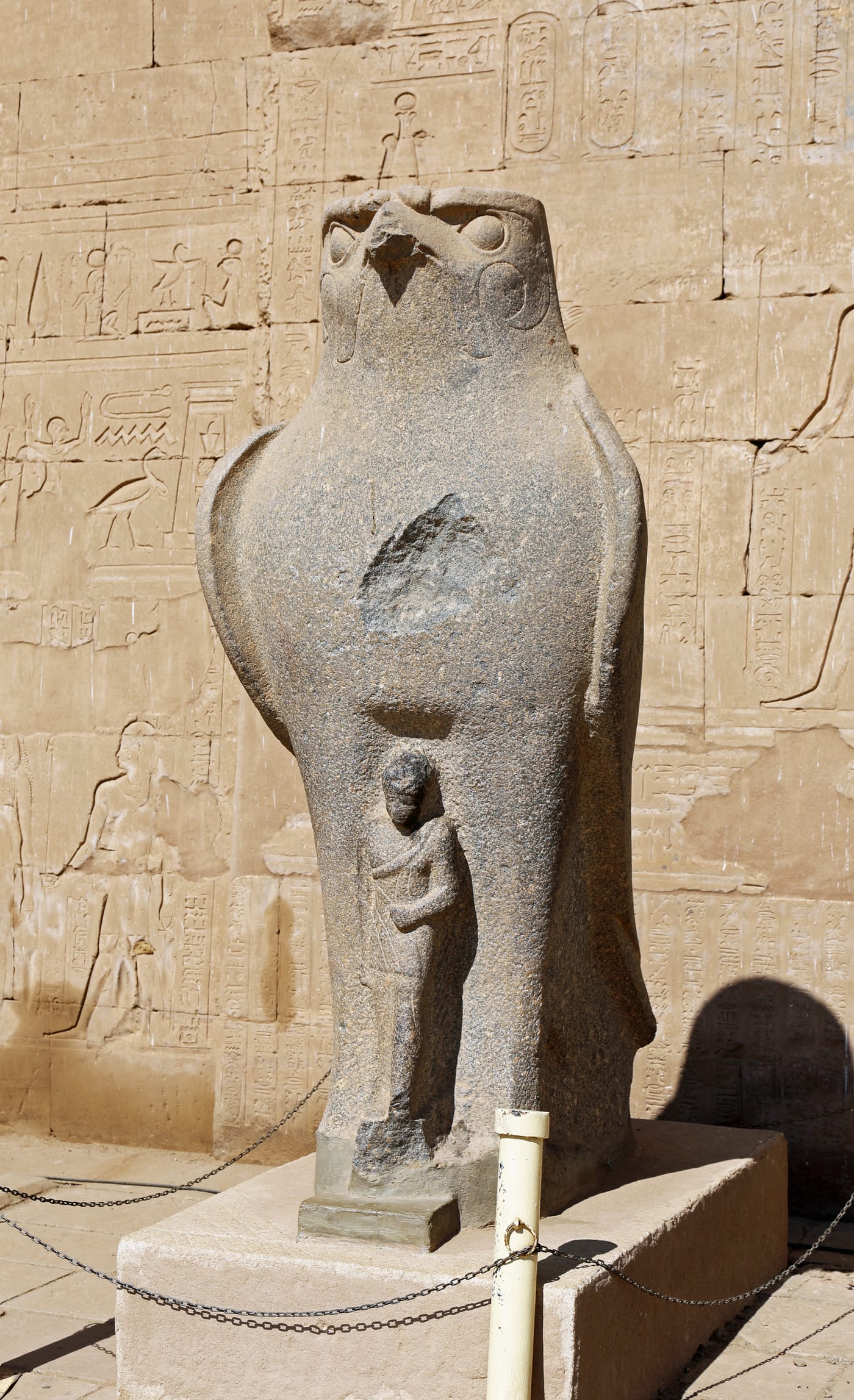
In modern American "spirit animal" usage, the hawk most often stands for vision, focus, and messages arriving from above, the idea that the hawk sees what is still hidden at ground level. That reading comes through Ted Andrews's Animal Speak (Llewellyn, 1993). The older traditions cut differently. In Egyptian religion the hawk (really the falcon, Falco biarmicus or F. peregrinus) is Horus himself, his eye, and the composite sun-god Ra-Horakhty, documented across the Pyramid Texts and the Book of the Dead. In Roman practice, the hawk's flight was read by augurs as political-religious data, per Cicero's De Divinatione. In Lakota tradition, the hawk's feathers and cries carry specific ceremonial weight, documented by Frances Densmore's 1918 Teton Sioux fieldwork.
Egyptian priests, for roughly three thousand years, treated a specific bird as the living body of a specific god. That bird was the falcon, and the god was Horus. The continuity is stunning. The falcon-form Horus appears on the Narmer Palette at the very start of Egyptian unified kingship around 3100 BCE, and he is still being named in the temple texts at Philae fifteen hundred years after the birth of Christ. Three thousand years of one god, always a falcon, always the sky. No other animal tradition on earth has that kind of documented continuity.
If you want to understand what a “hawk spirit animal” once meant, in the deepest recorded civilizational sense, you start in Egypt.
Horus, Ra-Horakhty, and the eye
In the Pyramid Texts, the oldest religious literature in the world (c. 2400 BCE), the dead king is identified with the falcon-god Horus as he rises out of the tomb. “He hath flown away from you, ye men; he is not of the earth, he is of the sky” (Utterance 467, Faulkner trans.). The Book of the Dead continues the logic a thousand years later: Chapter 78 is titled “Transforming into a Falcon,” and it is a spell the deceased uses to take on the falcon-body and ascend.
The Eye of Horus, the wedjat, runs through Egyptian material culture like a thread. It was worn as an amulet against harm; it was carved on coffins; it was used as a mathematical notation for fractions, with each hieroglyphic fragment of the eye standing for a fraction of a heqat of grain. The Rhind Mathematical Papyrus (British Museum EA 10057, c. 1550 BCE) uses the system. A civilization that runs its arithmetic inside the symbol of a bird’s eye is telling you something about how seriously that bird was taken.
The Roman augurs weren’t reading vibes
Popular modern spirit-animal writing treats bird-omens as vague intuitive signs. Roman augury was the opposite: a trained, state-sanctioned, technically specific practice. Cicero’s De Divinatione walks through it. The augur marked a quadrant of sky with a staff, watched for named species, and read the flight direction, call, and pattern against a memorized corpus of precedents. A hawk flying from the left at dawn meant one thing for a marriage, something different for a proposed war.
Livy preserves the foundation of Rome as an augury scene: Romulus and Remus standing on their two hills, each watching for hawks. Remus saw six first; Romulus saw twelve slightly later. They fought over whether quantity or priority won, and Remus died. The city was named for the winner. If the first Romans are, in their own founding story, killing each other over the correct reading of hawk auspices, you can see where the animal sits in the civic imagination.
What Densmore actually recorded
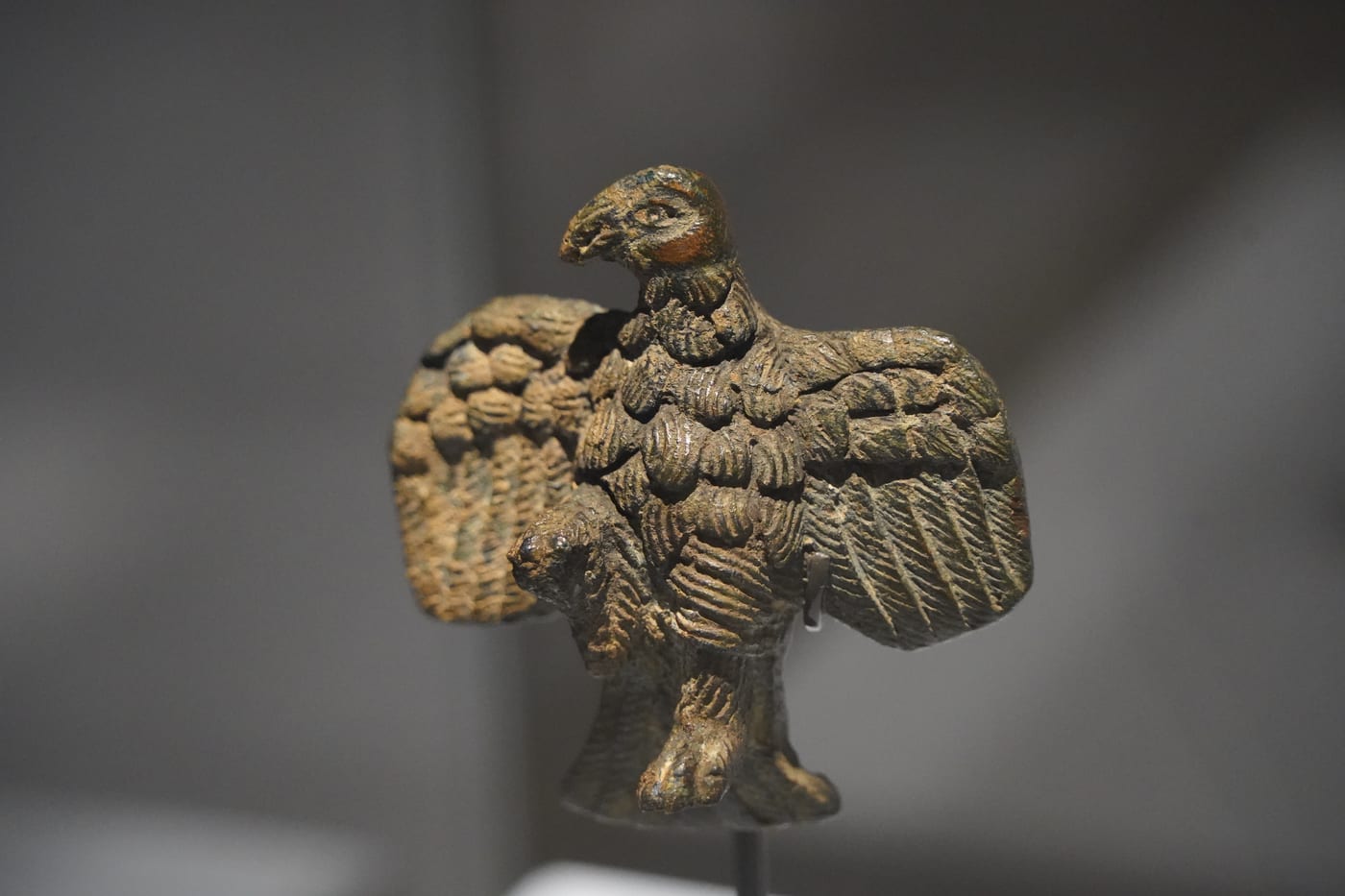
Frances Densmore arrived at Standing Rock Agency in 1911 carrying one of the earliest portable cylinder phonographs. She was there to record, with permission from named Lakota singers, the actual music of the Sun Dance and the songs attached to specific ceremonies. Her 1918 Smithsonian bulletin Teton Sioux Music and Culture preserves the recordings, the song transcriptions, the life histories of the singers, and the protocol explanations. It is one of the great primary-source ethnographies of early twentieth-century North America.
The hawk appears in several of the songs she recorded. Feathers had to be earned. Songs had to be permissioned. Nothing in that record resembles the 1990s pop-spiritual “the hawk is your messenger” treatment. A 21st-century article about the hawk that takes its imagery from Plains traditions without citing Densmore, or without noting the very specific protocols she documented, is doing the thing this whole site is here to push back against.
The Andrews 1993 synthesis, named plainly
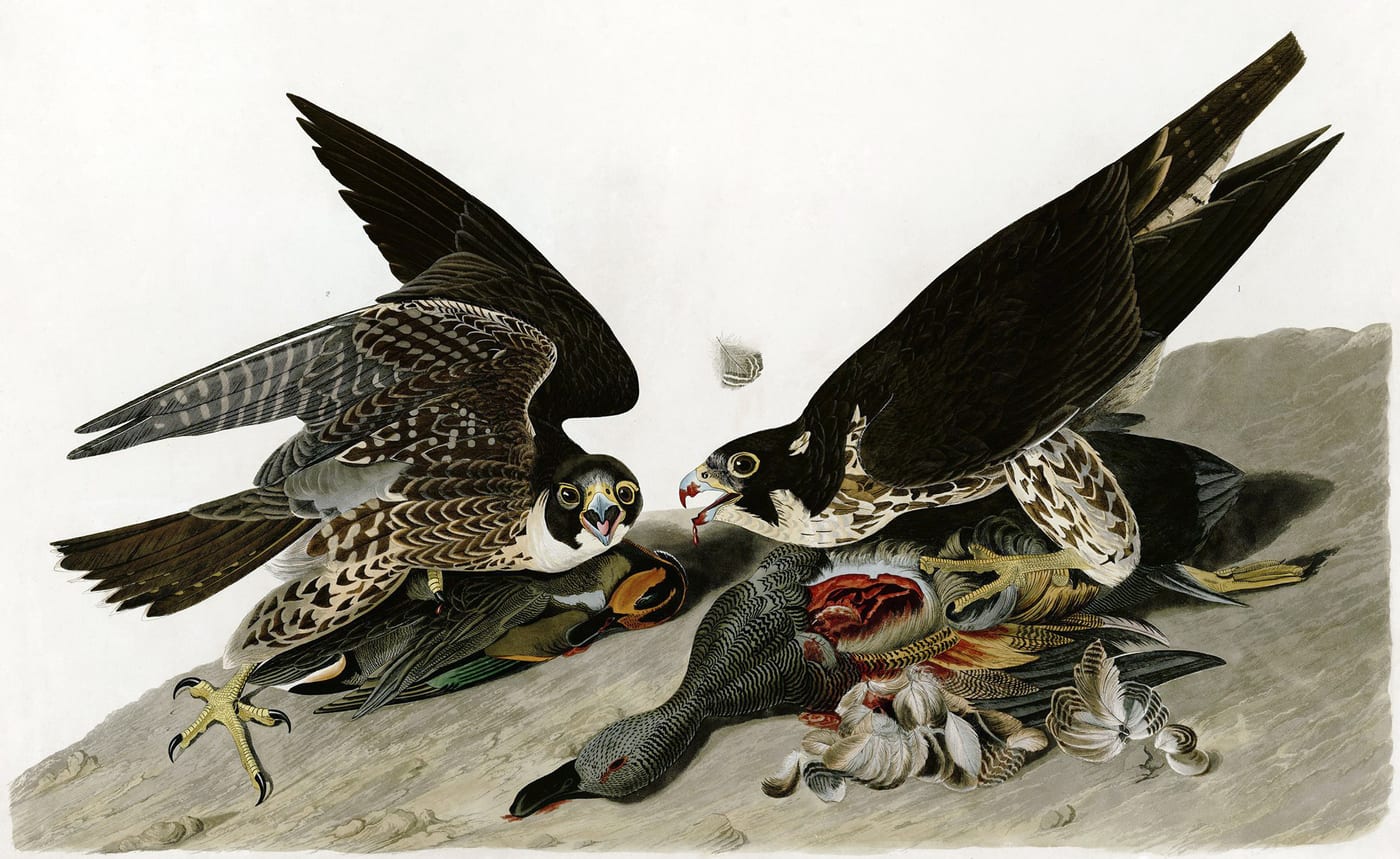
Ted Andrews’s Animal Speak, Llewellyn, September 1993, is where the modern consumer “hawk spirit animal” settled. Vision. Focus. The higher perspective. Messages from spirit. The reading borrows the Egyptian Horus imagery without the Egyptian theological frame, borrows Plains feather imagery without the earned-protocol frame, and reduces the Roman augury practice to “signs and omens” in general.
None of this is a crime. It is a paperback-sized synthesis, and it served as the entry point for two generations of readers into a subject they would not otherwise have encountered. But thirty years later, a reader who has gotten serious about the question deserves to know which parts of the synthesis came from where. That is what the tradition sections below do.
Wearing the Hawk
Some people want something to hold rather than something to read: a small pendant that keeps the meaning present through an ordinary day. A hawk pendant or small carved totem gives the hawk's clear-sightedness a physical form you can carry rather than just reference.
Hawk Spirit Animal Pendant
A hawk pendant or small carved totem gives the hawk's clear-sightedness a physical form you can carry rather than just reference.
Working with the Hawk
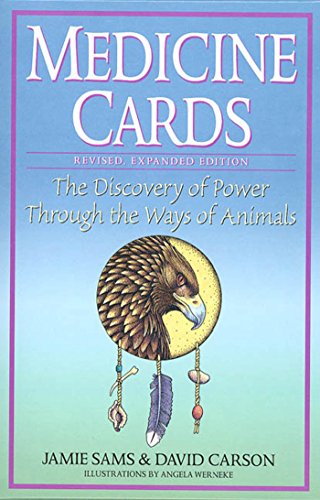
If you want a regular practice rather than a one-time read, an oracle deck is the standard tool: you draw a card and sit with whatever animal comes up. The foundational modern spirit-animal oracle: 44 cards drawn from Sams's Seneca and other Indigenous teachings, with a guidebook that actually explains its sources. The deck most later ones are imitating.
Medicine Cards
The foundational modern spirit-animal oracle: 44 cards drawn from Sams's Seneca and other Indigenous teachings, with a guidebook that actually explains its sources. The deck most later ones are imitating.
Compare the field in our ranked guide to spirit animal oracle decks, or browse decks, crystals, and journals in spirit animal gifts & tools.
Across traditions
Egyptian (Horus, Ra-Horakhty)
The bird the Greeks translated as hierax and we call a hawk is, in Egyptian religion, most precisely a falcon. Horus, the sky-god and royal patron, is depicted as a falcon or as a falcon-headed man from the Predynastic period (c. 3200 BCE) through every subsequent dynasty. The Pyramid Texts (Utterances 467–468 in Faulkner's 1969 translation) identify the dead king with Horus rising as a falcon. The composite sun-god Ra-Horakhty ("Ra-Horus of the Two Horizons") is the falcon at noon, crowned with the sun disk.
The Eye of Horus, the wedjat, was both a protective amulet and a mathematical notation system. Ancient Egyptian doctors wrote fractions of medical doses using the hieroglyphic parts of the eye. By the late period, falcon mummies were interred by the thousands at Saqqara and elsewhere as votive offerings, a practice documented by Salima Ikram's ongoing Animal Mummy Project.
- PRIMARY Pyramid Texts (Utterances 467–468) — Faulkner trans., Oxford, 1969.
- PRIMARY Book of the Dead, Chapter 78 (Transforming into a Falcon) — Allen trans., SAOC 37, University of Chicago, 1974.
- PEER-REVIEWED Salima Ikram, Divine Creatures: Animal Mummies in Ancient Egypt — American University in Cairo Press, 2005.
Roman / Etruscan (augury)
Roman public decisions required auspicium: the reading of bird-signs by the college of augurs. Hawks (accipitres) and eagles were among the most weighted birds. Cicero's De Divinatione 1.7, 1.32 describes the practice in detail; Livy, Ab Urbe Condita 1.6, preserves the foundation scene where Romulus and Remus take the auspices from hawks before founding Rome. Pliny, Natural History 10.8–9, catalogs the species the augurs distinguished.
The Etruscan tradition behind Roman augury, documented in the Piacenza Liver (a 2nd-century-BCE bronze model of a sheep's liver used for haruspicy, now at the Museo Civico di Piacenza), goes further back still. The hawk in this system is not a personal spirit. It is a public-religious signal read by trained specialists.
- PRIMARY Cicero, De Divinatione 1.7, 1.32 — Falconer trans., Loeb Classical Library.
- PRIMARY Livy, Ab Urbe Condita 1.6 — Foster trans., Loeb Classical Library.
- PRIMARY Pliny the Elder, Natural History 10.8–9 — Rackham trans., Loeb Classical Library.
Lakota (Densmore's 1918 fieldwork)
Frances Densmore's Teton Sioux Music and Culture (Smithsonian Bureau of American Ethnology Bulletin 61, 1918) documents the hawk's ceremonial role in Lakota practice with audio recordings, song transcriptions, and interviews with named singers including Red Fox, Eagle Shield, and Two Shields. Hawk-feathers were worn on the heads of men who had earned them in specific war or ceremonial contexts; hawk songs were sung at specific moments in the Sun Dance.
As with the eagle, federal US law (the Migratory Bird Treaty Act of 1918 and subsequent legislation) governs possession of hawk feathers; the ceremonial context remains specific to particular nations and specific clans within them, not a portable pan-tribal symbol.
- PRIMARY Frances Densmore, Teton Sioux Music and Culture — Smithsonian BAE Bulletin 61, 1918.
- REFERENCE Migratory Bird Treaty Act (16 U.S.C. §§ 703–712)
Ted Andrews (1993)
Andrews's hawk is mostly an Egyptian hawk reduced to a personal-spiritual keyword: vision, focus, messages arriving from above. He draws without attribution on the Horus strand and on generic Plains imagery, producing the synthesis that most modern spirit-animal pages rearrange. The Roman augury layer, which would complicate the reading by making the hawk a civic-political signal, drops out almost entirely.
- REFERENCE Ted Andrews, Animal Speak — Llewellyn, September 1993.
Frequently asked
- What does a hawk symbolize spiritually?
- In modern pop usage, vision, focus, and messages arriving from above, the reading set by Ted Andrews's Animal Speak (Llewellyn, 1993). Older traditions split. Egyptian: Horus himself, the falcon-headed sky and royal god, documented across the Pyramid Texts and Book of the Dead. Roman: a public augury signal read by trained augurs (Cicero, De Divinatione 1.7). Lakota: a specific ceremonial bird whose feathers are earned, documented by Frances Densmore's 1918 Smithsonian fieldwork.
- Is the hawk and the falcon the same bird in ancient Egypt?
- Functionally yes. The Egyptian falcon god Horus is almost always rendered as Falco biarmicus (the lanner falcon) or F. peregrinus in the art historical analysis; later Greek translators used hierax, which in modern English is often rendered 'hawk.' The biological distinction between hawks (family Accipitridae) and falcons (family Falconidae) was not observed in Egyptian iconography.
- What did Romans read in a hawk's flight?
- Roman augurs read the direction of flight, the part of the sky where the bird appeared, the species, the call, and whether the bird flew alone or with others. Each combination carried a specific political-religious meaning for the action under consideration (marriage, war, founding a colony). Cicero's De Divinatione 1.7 and 1.32 walks through the system; Livy 1.6 narrates the Romulus-and-Remus founding auspice, where hawks settled the matter in favor of Romulus.
- What is the Eye of Horus?
- The Eye of Horus (Egyptian wedjat) is the left eye of the falcon god Horus, restored by Thoth after Set tore it out in their combat cycle. It functioned both as a protective amulet worn across Egyptian society and as a mathematical notation for fractions in medical and administrative texts. Hieroglyphic parts of the eye represented 1/2, 1/4, 1/8, 1/16, 1/32, 1/64, a system documented in the Rhind Mathematical Papyrus (c. 1550 BCE).
Sources
- PRIMARYPyramid Texts (Utterances 467–468) — Faulkner trans., Oxford, 1969.
- PRIMARYBook of the Dead, Chapter 78 — Allen trans., SAOC 37, 1974.
- PEER-REVIEWEDSalima Ikram, Divine Creatures: Animal Mummies in Ancient Egypt — AUC Press, 2005.
- PRIMARYCicero, De Divinatione 1.7, 1.32 — Loeb Classical Library.
- PRIMARYLivy, Ab Urbe Condita 1.6 — Loeb Classical Library.
- PRIMARYPliny the Elder, Natural History 10.8–9 — Loeb Classical Library.
- PRIMARYFrances Densmore, Teton Sioux Music and Culture — Smithsonian BAE Bulletin 61, 1918.
- PRIMARYRhind Mathematical Papyrus (Eye of Horus fractions) — British Museum EA 10057 and 10058, c. 1550 BCE.
- REFERENCEMigratory Bird Treaty Act
- REFERENCETed Andrews, Animal Speak — Llewellyn, September 1993.