Spirit Animal
Groundhog Spirit Animal
Groundhog spirit animal meaning, traced to Lenape (Delaware) traditions, the Pennsylvania Dutch Candlemas tradition that seeded Groundhog Day, and the 1887 Punxsutawney Phil origin.
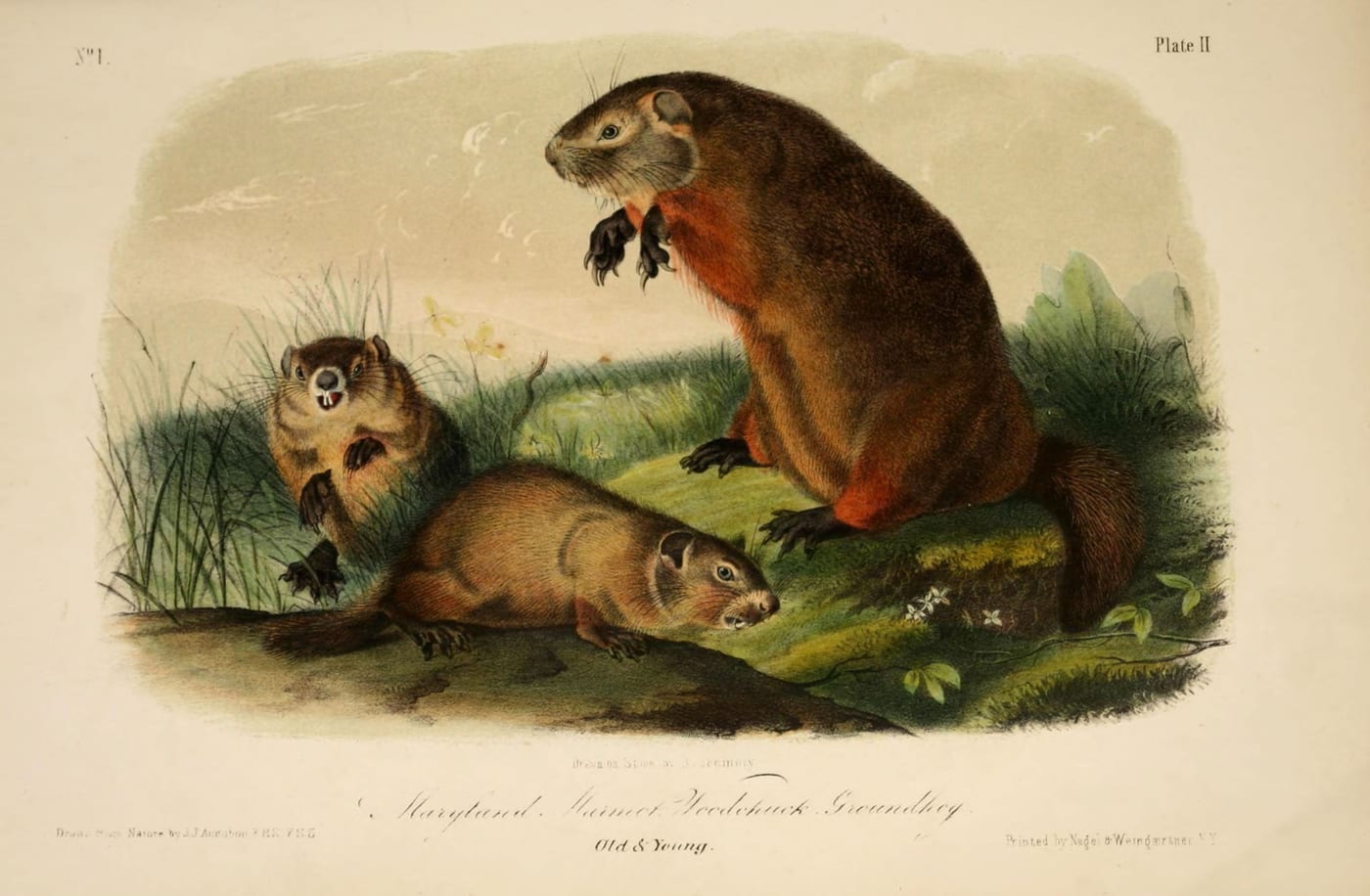
In modern pop-spiritual usage, the groundhog stands for dreaming, deep rest, and the announcement of seasonal change. The pre-modern documented traditions are mostly Lenape (Delaware) and colonial Pennsylvania. The Lenape name wojak (anglicized 'woodchuck') is preserved in place names and in Daniel Brinton's 19th-century Lenape ethnography. Pennsylvania Dutch Candlemas weather-divination (February 2), imported from German Badger-Day tradition, seeded the 1887 founding of the Punxsutawney Groundhog Day ceremony. The modern pop-spiritual reading post-dates both and leans heavily on the 1993 Bill Murray film Groundhog Day.
The groundhog has no ancient spiritual tradition behind it, and being honest about that is part of what makes the three traditions that actually exist more interesting. None are ancient. All are documented. All are distinctly American.
The Lenape linguistic inheritance
The English word “woodchuck” is one of the cleaner linguistic borrowings in the American fauna vocabulary. It comes from Lenape (Delaware language) wojak or related forms, recorded by Daniel Garrison Brinton in his 1885 The Lenâpé and their Legends. The Lenape name for the groundhog is not spiritual import from the Lenape tradition into American folk culture; it is the name of the animal that was adopted into English because the settlers encountered the animal in Lenape-speaking territory. The Delaware Tribe of Indians language program (delawaretribe.org) maintains the living Delaware language that preserves the original term.
Pennsylvania Dutch Candlemas
The Candlemas tradition (February 2nd, forty days after Christmas, the feast of the Presentation of Christ in the Temple) brought with it a German folk-weather divination practice: if the sun shines on Candlemas, the animal (typically a badger in Germany) emerges and sees its shadow, forecasting six more weeks of winter. If the day is cloudy, no shadow, early spring. German-speaking immigrants (Pennsylvania Dutch) to Pennsylvania brought this tradition with them in the 17th and 18th centuries. They substituted the local groundhog for the German badger, since groundhogs were abundant and badgers were not. Don Yoder’s Groundhog Day (Stackpole Books, 2003) is the definitive historical treatment.
Punxsutawney Phil and Harold Ramis
The formalization of the Punxsutawney, Pennsylvania Groundhog Day ceremony dates to February 2, 1887, when the Punxsutawney Spirit newspaper first reported the groundhog’s weather prediction. The ceremony had been building from the Pennsylvania Dutch Candlemas tradition for decades before it acquired a name, an official groundhog, and an organized civic ritual. The Punxsutawney Groundhog Club has maintained the ceremony ever since.
Harold Ramis’s 1993 film Groundhog Day, starring Bill Murray as a TV weatherman trapped repeating the same day, transformed the American cultural weight of Groundhog Day from a regional Pennsylvania Dutch folk-custom into a national metaphor for time loops, self-improvement, and the possibility of change within constraint. Any spiritual reading of the groundhog in 2026 that does not acknowledge the Ramis film’s symbolic contribution is pretending the last thirty years of American cultural context don’t exist.
Andrews 1993
Andrews’s groundhog reads dreaming, deep rest, and seasonal announcement, the creature who goes underground, enters the dream-world of hibernation, and emerges with news of what is coming. This is an honest synthesis of the Candlemas weather-divination tradition and the groundhog’s actual hibernation biology. Not ancient, but coherent.
Across traditions
Lenape / Delaware (wojak)
The Lenape (Delaware) word wojak, anglicized as 'woodchuck,' gave English one of the common names for the groundhog (Marmota monax). Daniel Garrison Brinton's The Lenape and Their Legends (1885) preserves 19th-century ethnographic material on Lenape animal-narratives. Contemporary Lenape scholarship, including the Delaware Tribe of Indians language-revitalization work, continues the tradition.
- PRIMARY Daniel Garrison Brinton, The Lenape and Their Legends (1885)
- REFERENCE Delaware Tribe of Indians, Lenape language program
Pennsylvania Dutch Candlemas (1800s)
Candlemas (February 2), a Christian feast forty days after Christmas, was traditionally observed as a weather-divination day in German folk practice: if the day is clear, six more weeks of winter follow; if cloudy, spring is near. The German tradition used a badger (Dachs) as the weather-indicator. Pennsylvania German (Pennsylvania Dutch) immigrants from the 18th century forward brought the tradition to North America and, lacking local badgers, substituted the groundhog.
Don Yoder's Groundhog Day (Stackpole Books, 2003) documents the Pennsylvania-German adaptation. The first recorded American Groundhog Day newspaper reference is from 1840 (Morgantown, West Virginia); the Punxsutawney, Pennsylvania, formal ceremony dates to 1887.
- PEER-REVIEWED Don Yoder, Groundhog Day — Stackpole Books, 2003.
- REFERENCE Punxsutawney Groundhog Club, historical records
Punxsutawney Phil (1887 onward)
The Punxsutawney Groundhog Day ceremony was formally inaugurated on February 2, 1887, by the Punxsutawney Groundhog Club in Punxsutawney, Pennsylvania. Every February 2 since (with minor pandemic-related interruptions), a groundhog named Punxsutawney Phil has been ceremonially extracted from his burrow at Gobbler's Knob to determine whether his shadow (or its absence) predicts six more weeks of winter.
Harold Ramis's 1993 film Groundhog Day starring Bill Murray, set in Punxsutawney and centered on the ceremony, added a second layer of American-pop-cultural significance. The film's structure (the same day repeated until transformation occurs) has entered English-language idiom as 'a Groundhog Day situation,' a broader cultural usage than the original ceremony.
- REFERENCE Punxsutawney Groundhog Club
- REFERENCE Harold Ramis (dir.), Groundhog Day (Columbia, 1993)
Ted Andrews (1993)
Andrews's 1993 groundhog is the dreaming-deep-rest-seasonal-announcement figure drawn from the animal's observable hibernation biology plus the Candlemas-Punxsutawney tradition. Published the same year as the Ramis film, coincidentally.
- REFERENCE Ted Andrews, Animal Speak — Llewellyn, September 1993.
Frequently asked
- What does a groundhog symbolize spiritually?
- In modern pop usage, dreaming, deep rest, and the announcement of seasonal change. The pre-modern documented traditions are Lenape (the word 'woodchuck' descends from Lenape wojak) and Pennsylvania Dutch Candlemas weather-divination, which seeded the 1887 Punxsutawney Groundhog Day ceremony. The 1993 Harold Ramis film Groundhog Day added a second layer of American cultural significance.
- Where does 'woodchuck' come from?
- From the Lenape (Delaware) word wojak, anglicized as 'woodchuck.' Daniel Brinton's The Lenape and Their Legends (1885) preserves 19th-century Lenape ethnographic material. The Delaware Tribe of Indians language-revitalization program continues the tradition.
- Why is Groundhog Day on February 2?
- Because it coincides with Candlemas, a Christian feast forty days after Christmas, traditionally observed as a weather-divination day in German folk practice. Pennsylvania German (Pennsylvania Dutch) immigrants from the 18th century brought the tradition to North America, substituting the local groundhog for the European badger originally used in the divination. Don Yoder's Groundhog Day (Stackpole Books, 2003) documents the Pennsylvania-German adaptation.
Sources
- PRIMARYDaniel Garrison Brinton, The Lenape and Their Legends (1885)
- REFERENCEDelaware Tribe of Indians language program
- PEER-REVIEWEDDon Yoder, Groundhog Day — Stackpole Books, 2003.
- REFERENCEPunxsutawney Groundhog Club
- REFERENCEHarold Ramis, Groundhog Day (1993)
- REFERENCETed Andrews, Animal Speak — Llewellyn, September 1993.