Dream Meaning
Dreams of Wolves: Jung's Archetypes, Old Norse Fylgja, and Specific Folk Traditions
Dreams of wolves: Jung's archetypal interpretation from The Archetypes and the Collective Unconscious (1959), the Old Norse fylgja saga tradition in which dream-wolves predict violent events, and contemporary dream-research framing.
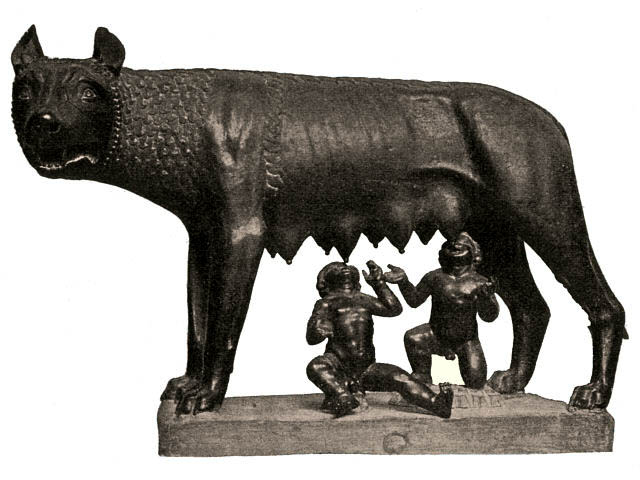
Dreams of wolves draw on two substantive interpretive frameworks. In C.G. Jung's analytical psychology (The Archetypes and the Collective Unconscious, 1959, Collected Works Vol. 9i), the wolf typically represents shadow-aspects, instinct, and sometimes the 'devouring mother' complex. In Old Norse saga tradition, a wolf appearing in a dream is a specific omen: the fylgja of a violent or outlaw figure approaching (Njáls saga 23 is the canonical case). Contemporary dream-research (J. Allan Hobson, Robert Stickgold) treats dream-imagery as emergent from memory-consolidation processes rather than as external messaging.
Wolf dreams are common, and for obvious reasons: the wolf is the large predator that humans have lived alongside, hunted, feared, and mythologized longer than almost any other animal. It is simultaneously a threat and a social creature with loyalty structures that parallel our own. That’s the tension. It’s why the wolf doesn’t resolve into a single symbolic meaning and probably never will.
Jung’s shadow reading
C.G. Jung’s analytical psychology treats the wolf primarily as shadow-material, the wild, instinctual, uncivilized self that the socialized ego has suppressed and pushed out of awareness. The wolf doesn’t follow social rules. It takes what it needs. It howls at night. In the Jungian frame these are not character flaws; they are descriptions of what civilized consciousness has exiled from itself, and the shadow’s demands for recognition show up in dreams as the returning wolf.
The Archetypes and the Collective Unconscious (Collected Works 9i, Princeton, 1959) provides the theoretical framework. The wolf-shadow in individual case work often represents aggression, appetite, or boundary-violation that the dreamer has not been able to own in waking life. A wolf dream at a life-threshold (a new relationship, a major change, a loss) often signals shadow-material pressing for integration.
The “devouring mother” variant: in some patients’ dreams the wolf represents the overwhelming, annihilating aspect of the maternal force. Little Red Riding Hood’s wolf is the literary crystallization, the thing in the grandmother’s bed that has swallowed what should have been safe.
The Njáls saga fylgja
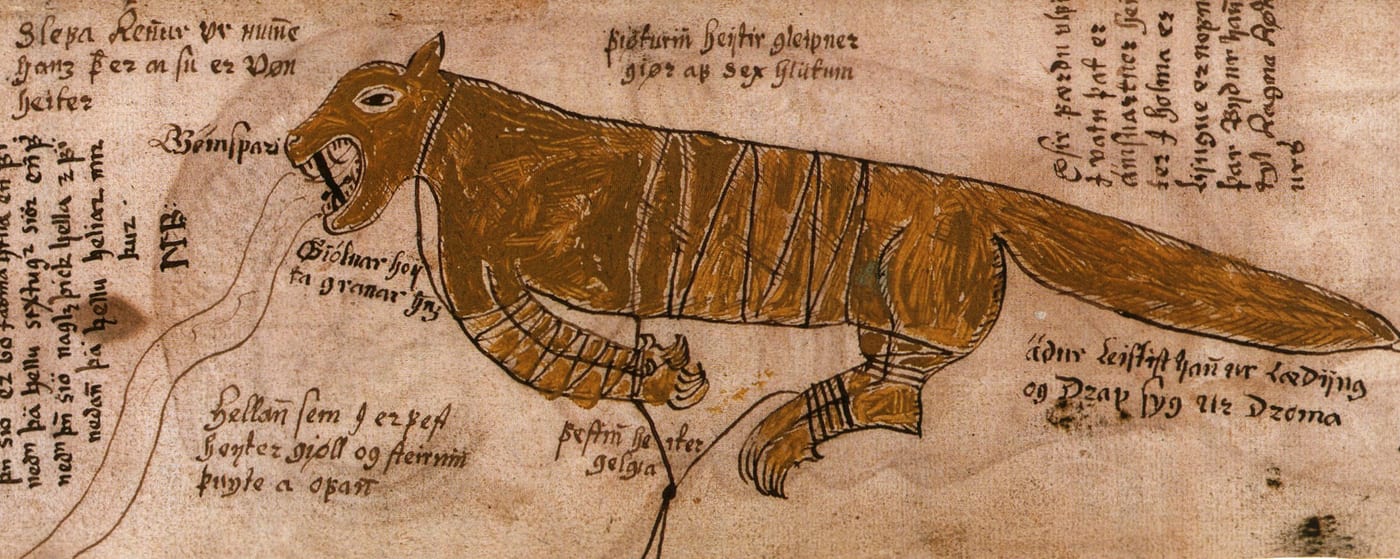
Old Norse saga tradition gives wolf dreams a completely different grammar. In Njáls saga chapter 23, Gunnar of Hliðarendi’s brother Kolskeggr dreams of a great bear coming toward him from the direction of Gunnar’s farm, and the saga identifies the bear as Gunnar’s fylgja, his externalized soul-figure walking ahead of him. The wolf-fylgja, in the broader saga tradition, belongs specifically to the violent or outlaw type: a man whose wolf-fylgja has been seen in a dream is approaching as a threat.
This is the old Norse interpretive convention: not shadow-integration but external warning. The dream wolf is someone else’s soul-animal, coming toward you. It tells you about the world, not about yourself. Gabriel Turville-Petre’s Myth and Religion of the North (1964) documents the saga evidence. Neil Price’s The Viking Way (revised 2019) provides the broader magical-psychological context.
Contemporary dream-science
J. Allan Hobson’s activation-synthesis model (developed from the 1970s onward; summarized in Dreaming: An Introduction to the Science of Sleep, Oxford, 2002) treats dream-imagery as the brain’s narrative construction over randomly-activated memory material during REM sleep. In this framework, wolves appear in dreams because wolf-imagery is available in the dreamer’s memory and was activated during a memory-consolidation cycle. The cultural and psychological meanings are real because they are load-bearing parts of the memory structure, they’re not imposed on the dream after the fact; they’re part of the material the brain is working with.
Robert Stickgold’s research on fear-memory and dream replay suggests that threatening animal imagery is preferentially replayed during sleep for evolutionary reasons, processing threat information has survival value. The wolf is the right size and kind of threat to activate this processing. That doesn’t make the Jungian or Norse readings wrong; it adds a third layer to understand why wolf dreams are so common and so consistent in their emotional charge.
Frequently asked
- What does it mean to dream of a wolf?
- In Jung's analytical psychology, typically shadow-aspects, instinct, or the 'devouring mother.' In Old Norse saga tradition, a dream-wolf is specifically the fylgja of an approaching violent figure (Njáls saga 23). Contemporary cognitive dream-research treats dream-imagery as memory-consolidation rather than external messaging. Your reading depends on which interpretive frame you're using.
- Is a wolf dream a bad omen?
- In Old Norse saga tradition, yes, a dream-wolf specifically signals an approaching violent or outlaw figure whose fylgja has appeared in the dream. In Jung's analytical framework, it's interpretive-neutral; a wolf-dream might signal shadow-integration work rather than danger. Context matters: who the dreamer is, what the wolf is doing, and what waking-life concerns the dream might be processing.
- Where does the "devouring mother" wolf-dream reading come from?
- Jung's essay on the mother archetype in The Archetypes and the Collective Unconscious (Collected Works 9i, 1959) catalogs the negative-mother imagery: cave, ocean, dragon, and devouring predator. The wolf belongs to that set when the dream-context activates maternal-relational material. Marie-Louise von Franz developed the reading further in fairy-tale analysis (Shadow and Evil in Fairy Tales, 1974), where wolves repeatedly appear as the threshold-figure between child and adult identity.
Sources
- PEER-REVIEWEDC.G. Jung, The Archetypes and the Collective Unconscious — Collected Works Vol. 9i, Princeton University Press, 1959.
- PRIMARYNjáls saga, ch. 23 — Cook trans., Penguin Classics, 2001.
- PEER-REVIEWEDRobert Stickgold and Matthew Walker (eds.), The Neuroscience of Sleep — Academic Press, 2009.
- PEER-REVIEWEDNeil Price, The Viking Way — Oxbow Books, revised 2019.
- PEER-REVIEWEDJ. Allan Hobson, Dreaming: An Introduction to the Science of Sleep — Oxford University Press, 2002.
- PEER-REVIEWEDMarie-Louise von Franz, Shadow and Evil in Fairy Tales — Spring Publications, 1974.