Spirit Animal
Deer Spirit Animal
Deer spirit animal meaning, traced from the modern gentleness-and-grace reading back through Ted Andrews's Animal Speak to Artemis's sacred hinds, Celtic Cernunnos on the Gundestrup Cauldron, the deer of Japan's Kasuga shrine, and the Banyan Deer Jātaka.
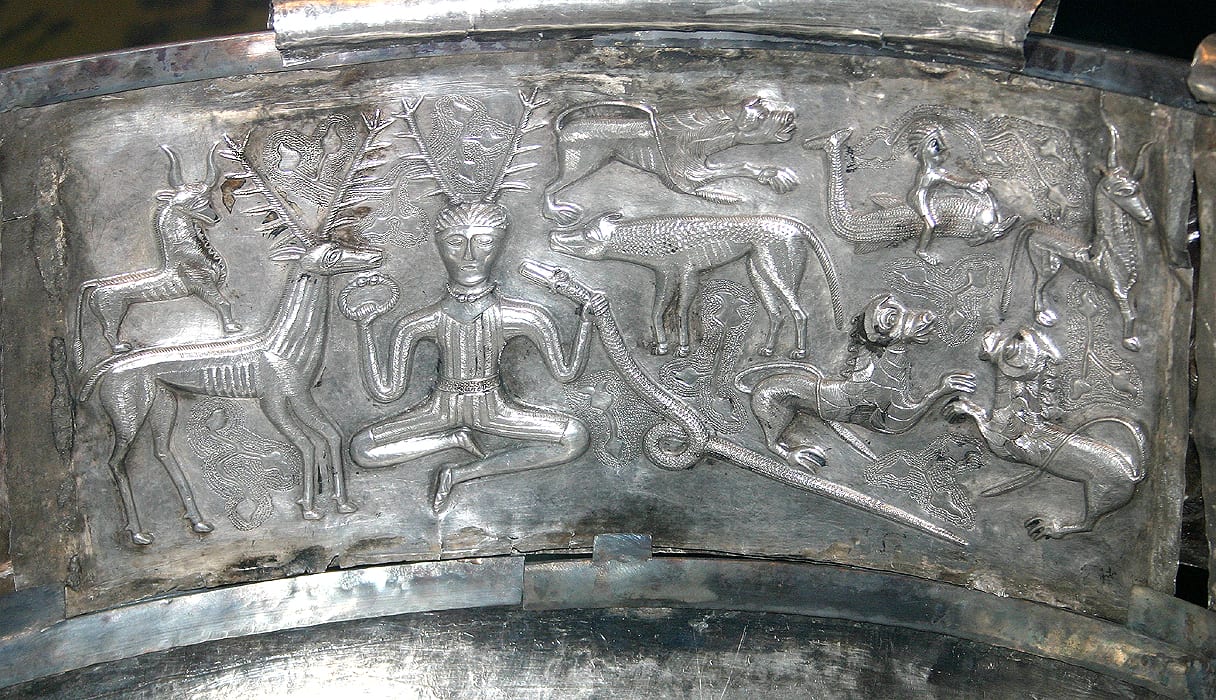
In modern American "spirit animal" usage, the deer most often stands for gentleness, grace, alertness, and a receptive sensitivity to the world. That reading comes through Ted Andrews's Animal Speak (Llewellyn, 1993). The older traditions treat the deer as sacred in very specific ways. The Greek Artemis's hinds appear in Euripides's Iphigenia in Aulis and across Pausanias. The Celtic antlered god Cernunnos sits on inner panel A of the Gundestrup Cauldron (c. 1st century BCE), holding a torc and a serpent. Japan's Kasuga Taisha shrine in Nara treats the sika deer as divine messengers, and roughly 1,200 free-roaming deer still occupy the shrine grounds today. The Banyan Deer Jātaka (Jātaka 12) is one of the earliest Buddhist sermons on compassion, with the Buddha in a prior life as a deer-king.
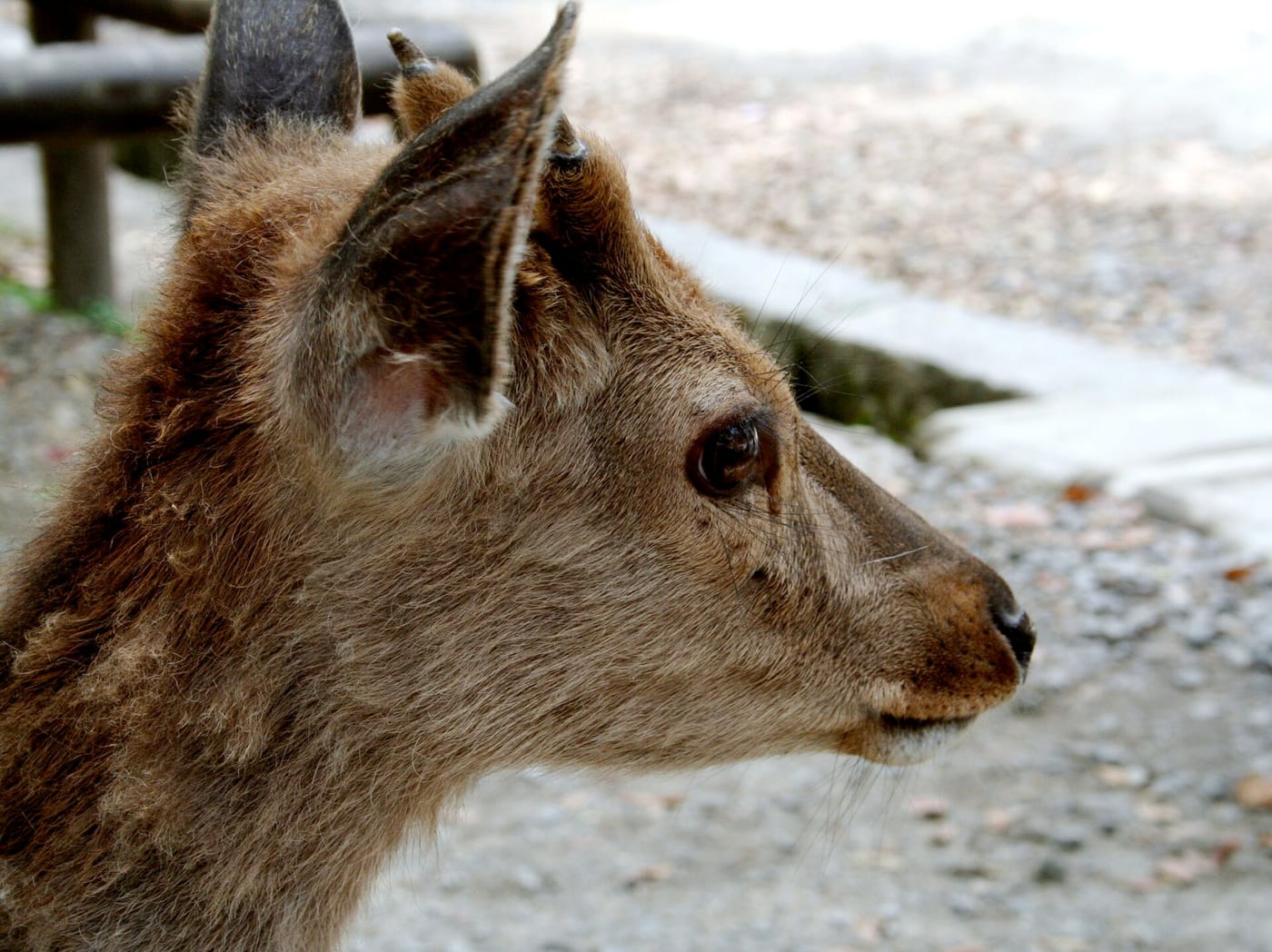
At Kasuga Taisha in Nara, deer walk up to you and bow their heads. They have been trained by generations of visitors who hand-feed them rice crackers at the shrine gates, but the bow is ancient. The deer of the Kasuga forest were declared divine messengers in the 8th century. Killing one was a capital offense until 1871. Today there are roughly twelve hundred of them loose in the park and the shrine grounds. They are, in the strict legal sense of Japanese cultural-property law, a National Natural Monument. They are also, in the strict religious sense, shinroku, the living messengers of the kami.
That is one tradition. It has texture, paperwork, a founding scroll, a twelve-hundred-deer census that keeps updating. Most “deer spirit animal” articles on the internet mention none of it.
What the pop reading actually inherited
Ted Andrews’s 1993 deer is gentle. Graceful. Alert. The 1990s American reader who reached for a spirit-animal paperback had the Disney Bambi aesthetic as the primary cultural reference, whether they knew it or not. Andrews’s synthesis worked inside that frame. It is not a wrong reading, and it doesn’t have to be. But “the deer is gentle” is a long way from the specific weight of any of the real traditions.
The four traditions, each with its own logic
Artemis and the Iphigenia substitution. Euripides’s Iphigenia in Aulis ends with a scene that has been painted on more Greek vases than almost any other. Agamemnon has agreed to sacrifice his daughter to gain favorable winds. The priest lifts the knife. The girl vanishes. A deer is on the altar in her place, Artemis’s substitution. In this tradition the deer is the animal that saves the human. That is almost the opposite of the gentle Bambi reading. It is the mercy that interrupts a sacrificial machine that would otherwise have kept running.
Cernunnos on the Gundestrup Cauldron. The silver cauldron pulled out of a Danish peat bog in 1891 is one of the great surviving Celtic ritual objects. Inside panel A: a cross-legged, antlered god, holding a torc and a horned serpent, surrounded by a stag and other animals. The iconography has no later Christian gloss on it. What it meant inside the living Celtic religion of the first century BCE is reconstructive; what it meant to the people who commissioned and used the cauldron, we will never fully know. But the figure, antlers and all, survives in modern Wicca and pagan revival under the same name. Anne Ross’s 1967 Pagan Celtic Britain is where a serious reader should start.
The Buddhist deer-king. In the Nigrodhamiga Jātaka, the Buddha in a former life is the deer-king Banyan. The local king eats a deer a day from a corralled herd. When a pregnant doe’s turn comes, Banyan offers his own body in her place. The king, moved, renounces deer-hunting and extends the protection to all the deer in his realm. The story is one of the earliest extended teachings in the Pāli tradition on compassion and self-sacrifice. The deer paired with the wheel above every Tibetan monastery gate is the descendant of that image.
The Kasuga deer. A scroll painted in the 14th century in Japan shows a kami arriving in Nara on the back of a white deer, and from that moment forward the sika deer of the forest are his messengers. Eight hundred years later, they are still there, still protected, still walking up to visitors to bow.
What they share and what they don’t
What they share: the deer is not a personal totem-animal in any of the four. It is a god’s companion, the animal of a founding scene, a redemptive sacrificial substitute, or a divine messenger. It is the opposite of a private spiritual guide.
What they don’t share: the Greek deer is mercy interrupting violence. The Celtic deer is the god’s own companion at the center of a ritual image. The Japanese deer is a living population of animals with legal protection. The Buddhist deer is the animal-form of the Awakened One himself. Four readings, four theologies, four relationships. Any article that averages them into “the deer symbolizes grace and sensitivity” is doing violence to all four.
That distinction is the work.
Across traditions
Greek (Artemis and her hinds)
Artemis is the goddess most closely associated with the deer in the Greek pantheon. Her Cretan stag at Keryneia was captured alive by Heracles as the third of his labors (Apollodorus, Library 2.5.3). Four golden hinds pulled her chariot, per the Homeric hymns. In Euripides's Iphigenia in Aulis (c. 405 BCE), Artemis substitutes a deer at the moment of the intended human sacrifice of Iphigenia, a scene that became one of the most painted in Greek vase art.
Pausanias, Description of Greece 2.7.7 and 8.37.4, describes specific cult sites to Artemis where deer were kept or sacrificed. The deer is not a personal spirit-guide in this tradition. It is the goddess's own animal, often substituting for humans at critical sacrificial moments, and the moral force of the image is about mercy interrupting violence.
- PRIMARY Euripides, Iphigenia in Aulis 1587–1612 — Kovacs trans., Loeb Classical Library.
- PRIMARY Apollodorus, Library 2.5.3 — Frazer trans., Loeb Classical Library.
- PRIMARY Pausanias, Description of Greece 2.7.7, 8.37.4 — Jones trans., Loeb Classical Library.
Celtic (Cernunnos and the Gundestrup Cauldron)
Cernunnos is the antlered god of Celtic iconography, best known from inner panel A of the Gundestrup Cauldron, a silver vessel discovered in a Danish peat bog in 1891 and dated to roughly the 1st century BCE. The figure sits cross-legged, antlered, holding a torc in one hand and a horned serpent in the other, surrounded by stags, wolves, and other animals. The cauldron is on display at the Nationalmuseet in Copenhagen.
Cernunnos is named explicitly only once in the epigraphic record, on the Pillar of the Boatmen (Pilier des Nautes) found under Notre-Dame de Paris in 1710 and dated to roughly 14–37 CE. He appears in iconography across Gaul, Britain, and the Cisalpine region. Anne Ross's Pagan Celtic Britain (Routledge, 1967) remains the standard English-language treatment; Miranda Aldhouse-Green's Animals in Celtic Life and Myth (Routledge, 1992) updates it with later archaeology.
- MUSEUM Gundestrup Cauldron, inner panel A — Nationalmuseet, Copenhagen.
- MUSEUM Pillar of the Boatmen (Pilier des Nautes) — Musée de Cluny, Paris; 14–37 CE.
- PEER-REVIEWED Anne Ross, Pagan Celtic Britain — Routledge, 1967.
- PEER-REVIEWED Miranda Aldhouse-Green, Animals in Celtic Life and Myth — Routledge, 1992.
Japanese Shintō (Kasuga Taisha)
Kasuga Taisha in Nara, founded in 768 CE according to shrine tradition, is one of the oldest continuously-operating Shintō shrines in Japan. The founding narrative, preserved in the Kasuga Gongen Genki E (a 14th-century illustrated scroll now in the Imperial Household collection), has the kami Takemikazuchi arriving in Nara riding a white deer. From that day, the sika deer (Cervus nippon) of the Kasuga forest were declared divine messengers (shinroku), sacred and inviolable. Killing one was a capital offense until the Meiji Restoration.
Roughly 1,200 deer still roam freely through the shrine grounds and Nara Park today, still designated a National Natural Monument under Japanese cultural-property law. Allan Grapard's The Protocol of the Gods: A Study of the Kasuga Cult in Japanese History (University of California Press, 1992) is the standard scholarly treatment.
- PRIMARY Kasuga Gongen Genki E (春日権現験記絵) — 14th-century illustrated scroll, Imperial Household Agency, Japan.
- PEER-REVIEWED Allan G. Grapard, The Protocol of the Gods: A Study of the Kasuga Cult in Japanese History — University of California Press, 1992.
- REFERENCE Kasuga Taisha official shrine records
Buddhist (Banyan Deer Jātaka)
The Nigrodhamiga Jātaka (Jātaka 12 in the Pāli canon) is the Banyan Deer story: in a prior life, the Buddha is a golden deer-king who offers his own body in place of a pregnant doe scheduled for the royal kitchen. The king, moved, issues an edict protecting deer forever in his realm. The story is told in the Jātaka collection (translated by E.B. Cowell, Cambridge University Press, 1895; revised Naomi Appleton edition 2020).
The image is foundational to Buddhist visual culture. A pair of deer flanking a wheel (the dharmacakra) is the iconography of the first sermon at the Deer Park of Isipatana, now Sarnath, in northern India. Every major Tibetan monastery carries this image above the main gate.
- PRIMARY Nigrodhamiga Jātaka (Jātaka 12) — Cowell trans., Cambridge University Press, 1895; Appleton revised ed., 2020.
- MUSEUM Sarnath Archaeological Museum, Dhamek Stupa and associated deer iconography — Archaeological Survey of India.
Ted Andrews (1993)
Andrews's 1993 deer is a gentle, grace-centered figure drawn more from the broad American cultural memory of Bambi and the popular Disney / natural-history tradition than from any specific ancient culture. He gestures toward Celtic antler-god imagery and a generic pan-tribal deer-medicine without specific attribution. The Artemis, Kasuga, and Jātaka traditions are all absent in any depth.
- REFERENCE Ted Andrews, Animal Speak — Llewellyn, September 1993.
Frequently asked
- What does a deer symbolize spiritually?
- In modern pop usage, gentleness, grace, alertness, and receptive sensitivity, the reading set by Andrews 1993. Older traditions treat the deer very specifically. Artemis's hinds in Greek tradition, with the deer famously substituting for Iphigenia on the sacrificial altar. The Celtic antlered god Cernunnos, surrounded by stags on the Gundestrup Cauldron (c. 1st century BCE). Japan's Kasuga deer, divine messengers of the shrine kami since at least 768 CE. And the Banyan Deer of the Buddhist Jātaka, a prior-life Buddha who trades his life to save a pregnant doe.
- Who is Cernunnos?
- Cernunnos is the horned god of Celtic iconography, best known from inner panel A of the Gundestrup Cauldron (1st century BCE, Nationalmuseet Copenhagen). He is named explicitly only once in the epigraphic record, on the Pillar of the Boatmen under Notre-Dame de Paris, c. 14–37 CE. He appears across Gaul, Britain, and the Cisalpine region in Celtic art. Anne Ross's Pagan Celtic Britain (1967) and Miranda Aldhouse-Green's Animals in Celtic Life and Myth (1992) are the standard English-language treatments.
- Why are the deer of Nara considered sacred?
- The founding narrative of Kasuga Taisha shrine, preserved in the 14th-century Kasuga Gongen Genki E scroll, has the kami Takemikazuchi arriving in Nara riding a white deer. From that day the sika deer of the shrine forest were declared shinroku (divine messengers) and protected. Killing one was a capital offense until the Meiji Restoration. Today roughly 1,200 deer still roam the shrine grounds and Nara Park, designated a National Natural Monument.
- What is the Buddhist deer symbol about?
- The paired deer flanking a wheel (the dharmacakra) commemorates the Buddha's first sermon at the Deer Park of Isipatana (modern Sarnath) after his Awakening. The imagery appears over the gates of essentially every Tibetan monastery. The foundational narrative is the Nigrodhamiga Jātaka (Jātaka 12), in which the Buddha in a prior life is the deer-king Banyan who offers his life in place of a pregnant doe.
Sources
- PRIMARYEuripides, Iphigenia in Aulis 1587–1612 — Loeb Classical Library.
- PRIMARYApollodorus, Library 2.5.3 — Loeb Classical Library.
- PRIMARYPausanias, Description of Greece 2.7.7, 8.37.4 — Loeb Classical Library.
- MUSEUMGundestrup Cauldron, Nationalmuseet Copenhagen
- MUSEUMPillar of the Boatmen (Musée de Cluny, Paris) — c. 14–37 CE.
- PEER-REVIEWEDAnne Ross, Pagan Celtic Britain — Routledge, 1967.
- PEER-REVIEWEDMiranda Aldhouse-Green, Animals in Celtic Life and Myth — Routledge, 1992.
- PRIMARYKasuga Gongen Genki E (14th century) — Imperial Household Agency collection.
- PEER-REVIEWEDAllan Grapard, The Protocol of the Gods — University of California Press, 1992.
- PRIMARYNigrodhamiga Jātaka (Jātaka 12) — Cowell trans., Cambridge University Press, 1895.
- REFERENCETed Andrews, Animal Speak — Llewellyn, September 1993.