Spirit Animal
Crow Spirit Animal
Crow spirit animal meaning, traced from the modern transformation-and-trickster reading back through Ted Andrews's Animal Speak to the Japanese three-legged Yatagarasu of the Kojiki, Apollo's burned crow in Ovid, the Rāmāyaṇa sage-crow Kakabhusundi, and the British magpie rhyme tradition.
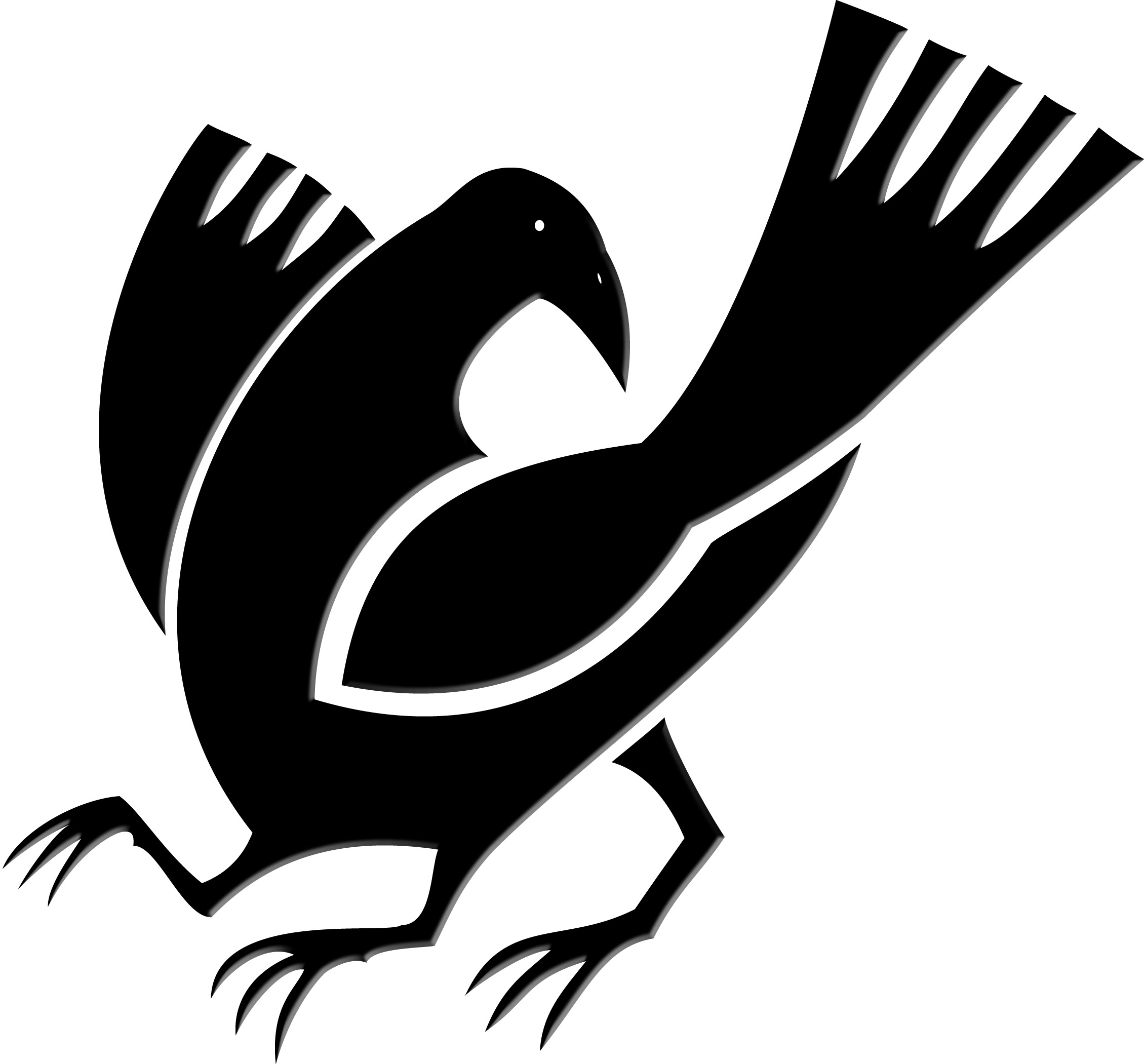
In modern American "spirit animal" usage, the crow stands for transformation, intelligence, magic, and the bearer of messages (sometimes unwelcome ones). That reading comes through Ted Andrews's Animal Speak (Llewellyn, 1993). The older traditions treat the crow more specifically. The Japanese Yatagarasu is a three-legged sun-crow who guides the first emperor Jimmu to Yamato in the Kojiki (712 CE) and the Nihon Shoki (720 CE); he is still on the crest of the Japan Football Association. Ovid's Metamorphoses 2.541 has Apollo burning the crow's feathers black for bringing bad news. The Tulsidas Rāmāyaṇa gives us Kakabhusundi, the immortal sage-crow who witnessed many cycles of creation. The British 'one for sorrow' counting rhyme, first recorded in John Clare's journals, carries a numerical divination tradition down the other side of the same bird family.
Kumano Hongū-taisha is a Shintō shrine in the mountains of Wakayama Prefecture, about four hours south of Osaka. On the gates, the amulets, the ema prayer tablets, the official priestly robes: a three-legged crow. Yatagarasu. Eight-span crow. The bird is the same bird that appears in the Kojiki in 712 CE guiding the first emperor Jimmu through the mountains toward Yamato, and the same bird that sits today on the crest of the Japan Football Association, printed on every Japanese national-team jersey at every World Cup. That is continuity. One three-legged crow, from the earliest Japanese written text to a 2022 Doha stadium.
The crow in modern American spirit-animal writing has no continuity remotely like that. It has Ted Andrews, 1993.
What Andrews did with the crow
He more or less merged it with the raven. Transformation. Magic. The keeper of sacred law. Messages from the unseen. That merger is not wrong, exactly, because the two birds are close biological cousins and most traditional cultures did not sharply distinguish them. But the merger loses the specific crow-only material that’s actually interesting.
The four traditions that deserve the space
Yatagarasu. Three-legged, solar, imperial. A bird whose face is on a national football jersey because of a sentence in an 8th-century text. The logic of that continuity is worth slowing down for.
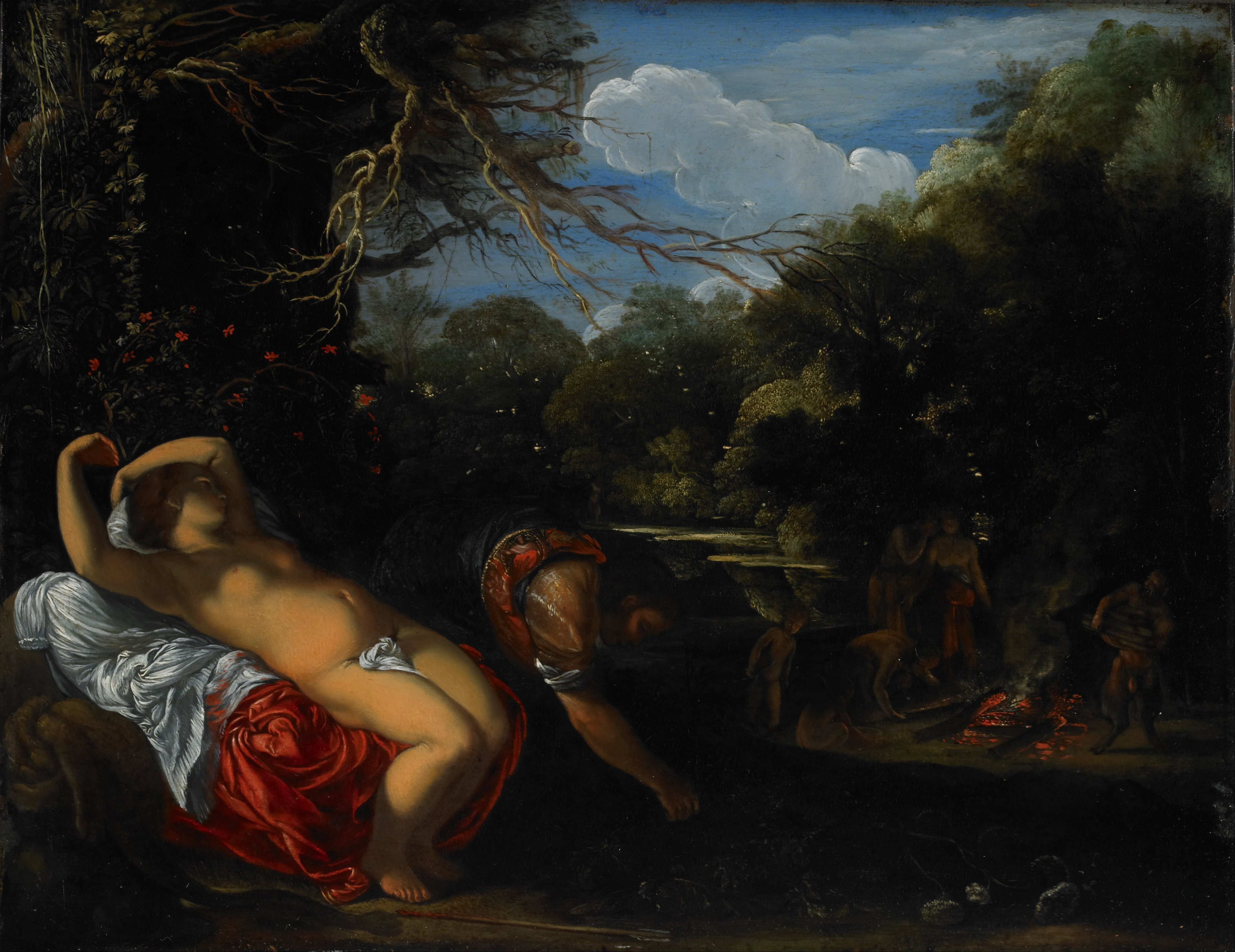
Ovid’s burning of the crow. The crow was once white. It told Apollo the truth about Coronis, who was sleeping with a mortal while carrying Apollo’s child. Apollo killed Coronis in a rage, then hated the messenger, and blackened the crow’s feathers permanently with his anger. The just-so story, from Metamorphoses 2, sets the Western literary association of the crow with unwelcome truth and the cost of bringing it.
Kakabhusundi, the immortal sage. In Tulsidas’s 16th-century Hindi Rāmcaritmānas, a crow narrates the Rāma story to Garuda, the king of birds. The crow has lived through multiple world-cycles, seen Rāma incarnate and die and incarnate again, and remembers all of it. Wisdom in bird-form. The passage is read devotionally in North Indian homes today.
“One for sorrow, two for joy.” The British-Irish counting rhyme that every English-speaking child still half-knows is the last surviving fragment of an older bird-augury tradition that treated the number and behavior of crows, rooks, and magpies as readable signs. The medieval Irish Book of Ballymote preserves the deeper layer. Modern unease at seeing a crow is not random; it is an inheritance.
Why they aren’t interchangeable with the raven
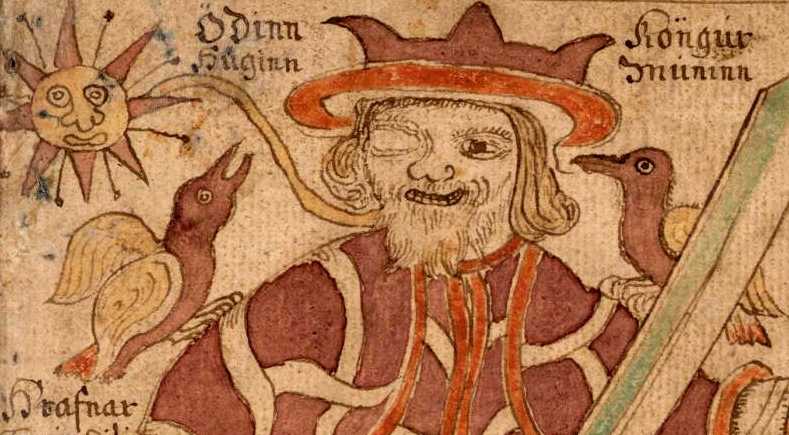
The raven belongs to the Old Norse Huginn-and-Muninn material and the Haida creator-trickster cycle (covered on our raven page). The crow belongs, in its deepest documented traditions, to the Japanese imperial-solar story, to Ovid’s tale of the cost of honesty, to Tulsidas’s cycle-memory, and to the British-Irish counting-rhyme substrate. Different birds. Different stories. Different weight.
Every popular spirit-animal page that treats them as the same bird is averaging out cultures that never saw the two the same way.
Working with the Crow
If you want a regular practice rather than a one-time read, an oracle deck is the standard tool: you draw a card and sit with whatever animal comes up. The foundational modern spirit-animal oracle: 44 cards drawn from Sams's Seneca and other Indigenous teachings, with a guidebook that actually explains its sources. The deck most later ones are imitating.
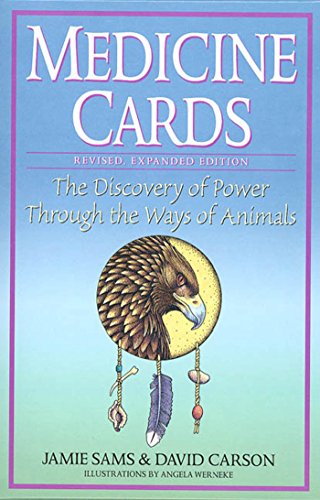
Medicine Cards
The foundational modern spirit-animal oracle: 44 cards drawn from Sams's Seneca and other Indigenous teachings, with a guidebook that actually explains its sources. The deck most later ones are imitating.
Compare the field in our ranked guide to spirit animal oracle decks, or browse decks, crystals, and journals in spirit animal gifts & tools.
Across traditions
Japanese (Yatagarasu, the three-legged sun-crow)
Yatagarasu (八咫烏, 'eight-span crow') is a three-legged crow in Japanese mythology, a divine emissary of Amaterasu-no-mi-kami. In the Kojiki (712 CE, the oldest extant Japanese text) and the Nihon Shoki (720 CE), Yatagarasu guides the first emperor Jimmu from Kumano to Yamato, and is received by Jimmu as proof of heaven's favor on his imperial mandate.
The figure persists. The Kumano Hongū-taisha shrine in Wakayama enshrines Yatagarasu; the Japan Football Association has carried the three-legged crow on its crest since 1931, an explicit reference to the Nihon Shoki passage. Allan Grapard's Mountain Mandalas (Bloomsbury, 2016) treats the Kumano shrine context; Donald Philippi's translation of the Kojiki (University of Tokyo Press, 1968) is the standard English source.
- PRIMARY Kojiki (古事記), 712 CE — Philippi trans., University of Tokyo Press, 1968.
- PRIMARY Nihon Shoki (日本書紀), 720 CE — Aston trans., Tuttle reissue, 1972 (originally 1896).
- REFERENCE Kumano Hongū-taisha official shrine records
- PEER-REVIEWED Allan Grapard, Mountain Mandalas: Shugendo in Kyushu — Bloomsbury, 2016.
Greek (Apollo and the crow's burned feathers)
Ovid, Metamorphoses 2.541–632 (c. 8 CE, Miller trans.), narrates how the crow was once white. The bird reported to Apollo that Coronis, the god's mortal lover, was unfaithful. In a fit of rage, Apollo killed Coronis, then regretted the killing and blamed the messenger. He burned the crow's feathers black, and the bird has been black ever since. The story is an etiological just-so for the bird's coloration, and it set the Western literary association of the crow with bad news and the killing of messengers.
Hesiod (Works and Days 747–48) and Aelian (On the Nature of Animals 1.47) add earlier layers: the crow was sacred to Apollo, associated with prophecy, and in some traditions with marriage (because of supposed lifelong pair-bonding, an observation modern ornithology has partially confirmed).
- PRIMARY Ovid, Metamorphoses 2.541–632 — Miller trans., Loeb Classical Library.
- PRIMARY Hesiod, Works and Days 747–48 — Most trans., Loeb Classical Library.
- PRIMARY Aelian, On the Nature of Animals 1.47 — Scholfield trans., Loeb Classical Library.
Hindu (Kakabhusundi, the immortal sage-crow)
Kakabhusundi (काकभुशुण्डि) is the immortal crow-sage who narrates the Rāmāyaṇa to Garuda in Tulsidas's Rāmcaritmānas (1574 CE, Uttar Kand). The frame is profound: Kakabhusundi has witnessed many iterations of the Rāma story across multiple world-cycles, remembers each one, and transmits the collected memory. He is a crow not because the bird is trivial but because wisdom can inhabit any form.
The Tulsidas text is read daily in North Indian homes as devotional literature; the Kakabhusundi frame is one of its most frequently-cited passages. Translation: Hill, The Holy Lake of the Acts of Rama (Oxford University Press, 1952).
- PRIMARY Tulsidas, Rāmcaritmānas, Uttar Kand (Kakabhusundi narrative) — Hill trans. (The Holy Lake of the Acts of Rama), Oxford University Press, 1952.
- PEER-REVIEWED Philip Lutgendorf, The Life of a Text: Performing the Rāmcaritmānas of Tulsidas — University of California Press, 1991.
British / Irish (the counting rhyme on magpies and crows)
"One for sorrow, two for joy, three for a girl, four for a boy…" The magpie-counting rhyme, recorded in John Brand's Observations on Popular Antiquities (London, 1777) and later in John Clare's Northamptonshire journals (1820s), is the surviving bit of an older British divination tradition that applied to rooks, crows, and magpies interchangeably. The number of black birds seen at a given moment carried a specific omen.
Earlier strata survive in the Irish Book of Ballymote (c. 1390), which preserves a detailed corpus of bird-augury that treats crows and ravens as key omen-bearers. This is one of the longest-surviving folk traditions of bird-divination in Europe, and it is the genuine source of the modern Western unease around a crow appearing at a meaningful moment.
- PRIMARY John Brand, Observations on Popular Antiquities (London, 1777)
- PRIMARY Book of Ballymote (Leabhar Bhaile an Mhóta) — c. 1390 CE; Royal Irish Academy, MS 23 P 12.
- PEER-REVIEWED Iona and Peter Opie, The Oxford Dictionary of Nursery Rhymes — Oxford University Press, revised 1997.
Ted Andrews (1993)
Andrews's 1993 crow is close to his raven: transformation, the keeper of sacred law, a messenger from the unseen. He treats the two birds as near-interchangeable, which is how most spirit-animal pages still treat them. The Japanese Yatagarasu and Hindu Kakabhusundi traditions are absent.
- REFERENCE Ted Andrews, Animal Speak — Llewellyn, September 1993.
Frequently asked
- What does a crow symbolize spiritually?
- In modern pop usage, transformation, intelligence, magic, and the bearing of messages. The reading is Andrews 1993. Older traditions are more specific. The Japanese Yatagarasu is a three-legged sun-crow who guides the first emperor to Yamato in the Kojiki (712 CE). Ovid's Metamorphoses has Apollo burning the crow's feathers black for bad news. Tulsidas's Rāmcaritmānas gives us Kakabhusundi, the immortal sage-crow. British counting rhymes ('one for sorrow, two for joy') continue an older Celtic-Anglo augury tradition.
- Is the crow the same as the raven?
- Biologically they are close cousins (genus Corvus), and most traditional cultures use one word covering both. The Ted Andrews synthesis and most popular spirit-animal writing treats the two almost interchangeably. There are real differences: the raven is larger, deeper-voiced, more associated with battlefields and gallows in European folklore; the crow is more domestic, more associated with everyday omen-counting and intelligence tests. Our site gives each its own page because the iconographic material splits along enough lines to matter.
- What is the three-legged crow?
- Yatagarasu (八咫烏) is a three-legged crow in Japanese mythology, an emissary of the sun-goddess Amaterasu. The Kojiki (712 CE) and Nihon Shoki (720 CE) narrate his guidance of the first emperor Jimmu from Kumano to Yamato. He is enshrined at Kumano Hongū-taisha in Wakayama, and has been on the crest of the Japan Football Association since 1931.
- Why do the British have a crow counting rhyme?
- 'One for sorrow, two for joy, three for a girl, four for a boy' descends from an older British-and-Irish bird-augury tradition in which the number of black birds (rooks, crows, magpies) seen together carried a specific omen. The rhyme is recorded by John Brand's Observations on Popular Antiquities (London, 1777) and in John Clare's 1820s Northamptonshire journals. The deeper substrate is preserved in medieval Irish bird-augury material in the Book of Ballymote (c. 1390).
Sources
- PRIMARYKojiki (Philippi trans., 1968)
- PRIMARYNihon Shoki (Aston trans., 1896/1972)
- PRIMARYOvid, Metamorphoses 2.541–632 — Loeb Classical Library.
- PRIMARYHesiod, Works and Days 747–48 — Loeb Classical Library.
- PRIMARYAelian, On the Nature of Animals 1.47 — Loeb Classical Library.
- PRIMARYTulsidas, Rāmcaritmānas (Hill trans., 1952)
- PEER-REVIEWEDPhilip Lutgendorf, The Life of a Text — UC Press, 1991.
- PRIMARYJohn Brand, Observations on Popular Antiquities (1777)
- PRIMARYBook of Ballymote (c. 1390) — Royal Irish Academy MS 23 P 12.
- REFERENCEKumano Hongū-taisha shrine records
- REFERENCETed Andrews, Animal Speak — Llewellyn, September 1993.