Spirit Animal
Crane Spirit Animal
Crane spirit animal meaning, traced from the modern longevity-and-grace reading back through Ted Andrews's Animal Speak to the Chinese crane as mount of the xian immortals (Zhuangzi), the Japanese senbazuru thousand-cranes tradition and Sadako Sasaki (1955), the Greek Ibycus-and-the-cranes story in Plutarch, and Celtic crane-bag traditions.
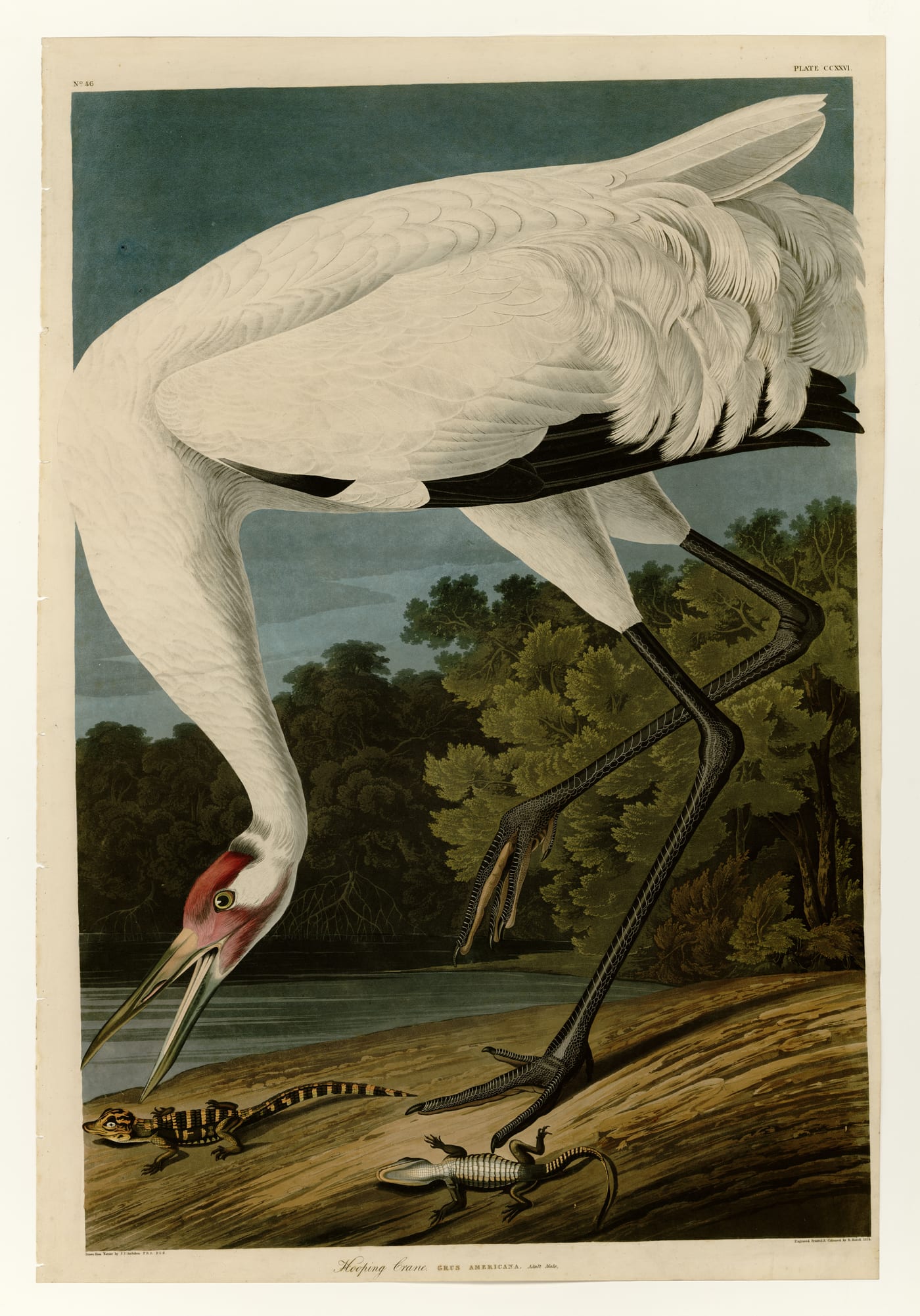
In modern American "spirit animal" usage, the crane stands for longevity, grace, balance, and meditative patience. That reading comes through Ted Andrews's Animal Speak (Llewellyn, 1993). The older traditions are specific. The Chinese crane is the mount of the xian (immortals), attested in Zhuangzi and in Han-era tomb decoration, and is a pan-cultural emblem of longevity across East Asia. The Japanese senbazuru (thousand paper cranes) tradition is medieval in origin and became globally known through Sadako Sasaki, the Hiroshima girl who folded 1,000 cranes before her 1955 death from radiation-caused leukemia. The Greek story of the cranes of Ibycus, preserved in Plutarch's Moralia 509c–d, is one of the great justice-narratives of classical antiquity. And Celtic tradition preserves the corrbolg (crane-bag), the mythic container of the sea-god Manannán mac Lir's treasures.
In August 1945 a two-year-old girl named Sadako Sasaki was at home in Hiroshima when the United States dropped the atomic bomb on her city. She survived the initial blast. Nine years later, in 1954, she was diagnosed with leukemia. She was eleven. Her best friend told her the senbazuru tradition: if you fold one thousand paper cranes, you get a wish. Sadako folded cranes from any paper she could find, including her hospital medicine wrappers, until she died in October 1955 at age twelve. Her classmates finished the thousand. The Children’s Peace Monument at Hiroshima Peace Memorial Park, dedicated in 1958, is topped by her image holding a crane. Every year, people leave paper cranes at the monument by the millions.
The crane as a longevity symbol is a Chinese tradition more than two thousand years old. The crane as a symbol of the specific twentieth-century tragedy of atomic warfare and the specific moral weight of wishing for healing is 80 years old. Both are real traditions. A responsible article about the crane mentions both.
The four older traditions
The Chinese xian-crane. Mount of the Daoist immortals, attested in the Zhuangzi (4th century BCE) and visible across Han-era tomb murals, Ming-Qing scroll painting, and the first-rank civil-official rank-badges of the Qing bureaucracy. The standard East Asian longevity emblem.
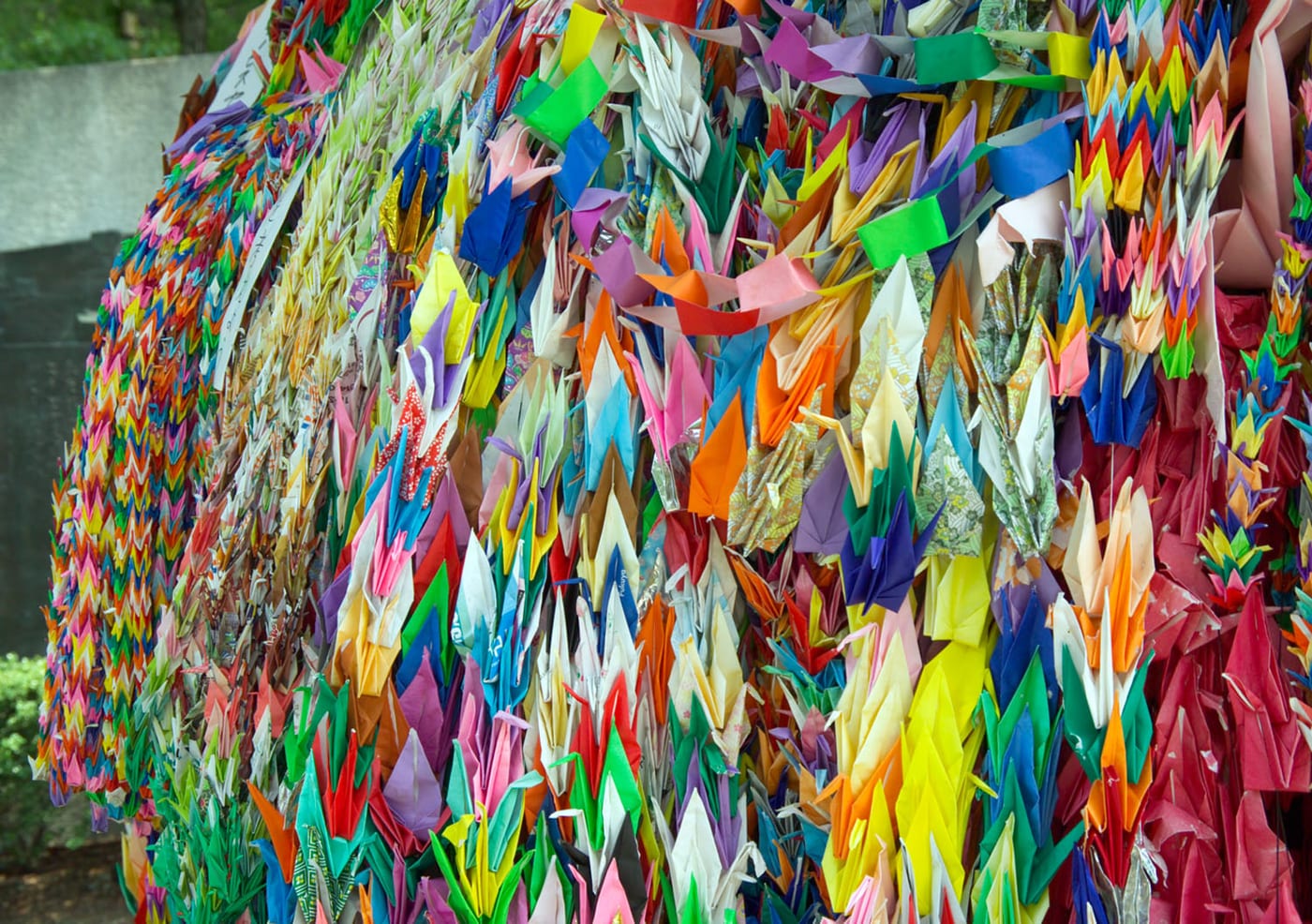
Sadako and senbazuru. Japanese. Edo-period origin for the thousand-cranes-grants-a-wish tradition; 20th-century crystallization through Sadako’s story. Eleanor Coerr’s 1977 Sadako and the Thousand Paper Cranes brought the story to English-speaking readers. The tradition is now world-global; paper cranes are among the most-used objects of international peace-solidarity symbolism.
Ibycus and the cranes. 6th century BCE Greek lyric poet. Dying witness-cry. Plutarch’s preservation in the Moralia. Schiller’s 1797 ballad. A case where the crane is the animal of justice-ultimately-done rather than of longevity.
The crane-bag. Irish. Manannán mac Lir’s treasure-container, made of crane-skin, tide-dependent in its fullness. A small tradition but a distinctive one.
What Andrews kept and what he didn’t
Andrews’s 1993 crane is the Chinese longevity figure with a dusting of Japanese-origami gentleness, softened into a personal-spirit keyword list. The Ibycus story and the Celtic corrbolg are absent; the Sadako strand is not given the 20th-century specificity it deserves. Reading all four traditions gives you the crane as more than a meditation-bird. It gives you the crane as witness, as longevity, as the companion of immortals, and as the folded paper left by a dying child in Hiroshima.
That last reading is the one that gives the crane its full contemporary weight.
Across traditions
Chinese (crane of the xian immortals)
The Chinese crane (hè, 鶴) is the standard mount of the xian, the Daoist immortals, and a pan-cultural emblem of longevity attested across more than two millennia of Chinese art. The Zhuangzi (c. 4th century BCE) references the immortals riding cranes; Han-era tomb murals and later Ming-Qing painting consistently depict xian figures with crane mounts or crane companions.
The crane is also one of the symbols on Ming-Qing-era first-rank civil-official (pinji) rank-badges, reserved for the most senior officials of the imperial bureaucracy. Craig Clunas's Art in China (Oxford, 1997) documents the iconography. In modern Chinese wedding and funeral art, the crane remains the most-used longevity symbol.
- PRIMARY Zhuangzi — Watson trans., Columbia University Press, 1964.
- MUSEUM Han-era tomb murals with xian-and-crane motifs — Hunan Provincial Museum; Luoyang sites.
- PEER-REVIEWED Craig Clunas, Art in China — Oxford University Press, 1997.
Japanese (senbazuru and Sadako Sasaki)
The Japanese crane (tsuru, 鶴) is a classical longevity symbol adopted from Chinese tradition and shaped by centuries of Japanese visual culture (ukiyo-e prints, kimono motifs, family crests). The senbazuru (千羽鶴, "thousand paper cranes") tradition, in which folding one thousand origami cranes grants a wish, is documented from the Edo period onward but became globally known through the story of Sadako Sasaki.
Sadako was two years old when the atomic bomb fell on Hiroshima in August 1945. She developed leukemia in 1954 and died in October 1955 at age twelve, having folded hundreds of paper cranes in hospital. Her classmates completed the thousand after her death; the Children's Peace Monument at Hiroshima Peace Memorial Park, dedicated in 1958, is topped by her image holding a crane. Eleanor Coerr's Sadako and the Thousand Paper Cranes (1977) brought the story to English-speaking readers. Today paper cranes are left at the monument by the millions.
- MUSEUM Hiroshima Peace Memorial Museum and the Children's Peace Monument
- PRIMARY Eleanor Coerr, Sadako and the Thousand Paper Cranes — G.P. Putnam's Sons, 1977.
- PRIMARY Masahiro Sasaki, The Complete Story of Sadako Sasaki — Sasaki family, 2013.
Greek (Ibycus and the cranes)
The 6th-century-BCE lyric poet Ibycus of Rhegium, traveling through a deserted place on his way to Corinth, was attacked by robbers. Dying, he saw a flock of cranes passing overhead and cried out that the cranes would be his witnesses. Later in Corinth, one of the robbers saw cranes passing above the theater during a festival and remarked aloud, "There go the cranes of Ibycus," unwittingly giving himself away. The story is preserved in Plutarch's Moralia 509c–d ("On Garrulity") and in Suidas.
The "cranes of Ibycus" (grues Ibyci) became proverbial in Greek and Latin for the ultimate disclosure of hidden guilt. Schiller's 1797 ballad Die Kraniche des Ibykus (The Cranes of Ibycus) made the story standard reading in 19th-century European education.
- PRIMARY Plutarch, Moralia 509c–d (De Garrulitate) — Helmbold trans., Loeb Classical Library (Moralia vol. VI).
- PRIMARY Suidas (Suda), s.v. Ibykos
- PRIMARY Friedrich Schiller, Die Kraniche des Ibykus (1797)
Celtic (the corrbolg, Manannán's crane-bag)
In Irish mythic tradition, the sea-god Manannán mac Lir owned a corrbolg ("crane-bag"), a magical bag made from the skin of a crane, in which he kept his treasures (the sword and knife of Manannán, the king of Alba's shears, the king of Lochlann's helmet, the bones of Assal's swine, and other items). The bag was full at high tide and empty at low tide. The surviving Middle Irish account is in the Fotha Catha Cnucha ("The Origin of the Battle of Cnucha") and in the Agallamh na Seanórach ("The Colloquy of the Elders").
The crane in Celtic tradition carries ambiguous weight: some hagiographic sources associate cranes with magical disguise (particularly the episode of Aoife transformed into a crane in the fate-of-the-children-of-Lir cycle, see our swan page). The standard English-language scholarly treatment is Proinsias Mac Cana's Celtic Mythology (Hamlyn, 1970).
- PRIMARY Agallamh na Seanórach (The Colloquy of the Elders) — Dooley & Roe trans., Oxford World's Classics, 1999.
- PEER-REVIEWED Proinsias Mac Cana, Celtic Mythology — Hamlyn, 1970.
Ted Andrews (1993)
Andrews's 1993 crane is the Chinese xian-crane + Japanese senbazuru synthesis, reduced to personal-spirit keywords: longevity, grace, balance, meditative patience. The Ibycus story and the Celtic corrbolg are absent.
- REFERENCE Ted Andrews, Animal Speak — Llewellyn, September 1993.
Frequently asked
- What does a crane symbolize spiritually?
- In modern pop usage, longevity, grace, and patience, the Andrews 1993 reading. Older traditions are specific. The Chinese crane is the mount of the xian immortals (Zhuangzi) and a pan-East-Asian longevity symbol. The Japanese senbazuru (thousand paper cranes) tradition, globally known through Sadako Sasaki (1943–1955), is a more recent development. The Greek 'cranes of Ibycus' (Plutarch, Moralia 509c–d) is a justice-narrative about the ultimate disclosure of hidden guilt. And the Celtic corrbolg (crane-bag) of Manannán mac Lir preserves the sea-god's treasures.
- What is the thousand paper cranes tradition?
- The Japanese senbazuru (千羽鶴) tradition holds that folding one thousand origami cranes grants the folder a wish or healing. The tradition is documented from the Edo period. It became globally known through Sadako Sasaki (1943–1955), the Hiroshima girl who folded hundreds of cranes in hospital before dying of leukemia caused by radiation exposure. Her classmates completed the thousand after her death. The Children's Peace Monument at Hiroshima Peace Memorial Park, dedicated 1958, is topped by her image holding a crane, and paper cranes are left at the monument by the millions each year.
- Who was Ibycus and what do the cranes have to do with him?
- Ibycus of Rhegium was a 6th-century-BCE Greek lyric poet. Traveling to Corinth, he was attacked by robbers and, dying, cried out that the cranes passing overhead would be his witnesses. Later in Corinth during a festival, one of the robbers saw cranes above the theater and remarked aloud, 'There go the cranes of Ibycus,' giving himself away. The story is preserved in Plutarch's Moralia 509c–d. 'The cranes of Ibycus' became proverbial in Greek and Latin for the ultimate disclosure of hidden guilt.
- What is the Celtic crane-bag?
- The corrbolg (crane-bag) is a magical bag in Irish mythology belonging to Manannán mac Lir, the sea-god, made from the skin of a crane and containing his treasures. The bag was full at high tide and empty at low tide. The tradition survives in the Agallamh na Seanórach (The Colloquy of the Elders) and related Middle Irish material. Proinsias Mac Cana's Celtic Mythology (Hamlyn, 1970) is the standard English-language treatment.
Sources
- PRIMARYZhuangzi — Watson trans., Columbia University Press, 1964.
- PEER-REVIEWEDCraig Clunas, Art in China — Oxford University Press, 1997.
- MUSEUMHiroshima Peace Memorial Museum
- PRIMARYEleanor Coerr, Sadako and the Thousand Paper Cranes — G.P. Putnam's Sons, 1977.
- PRIMARYMasahiro Sasaki, The Complete Story of Sadako Sasaki — 2013.
- PRIMARYPlutarch, Moralia 509c–d — Loeb Classical Library (Moralia vol. VI).
- PRIMARYFriedrich Schiller, Die Kraniche des Ibykus (1797)
- PRIMARYAgallamh na Seanórach — Dooley & Roe trans., Oxford World's Classics, 1999.
- PEER-REVIEWEDProinsias Mac Cana, Celtic Mythology — Hamlyn, 1970.
- REFERENCETed Andrews, Animal Speak — Llewellyn, September 1993.