Spirit Animal
Bear Spirit Animal
Bear spirit animal meaning, traced from the modern strength-protector reading back through Ted Andrews's Animal Speak to Finno-Ugric bear ceremonialism, the Ainu iyomante, the Greek Brauron arkteia, and Anglo-Saxon kenning tradition.
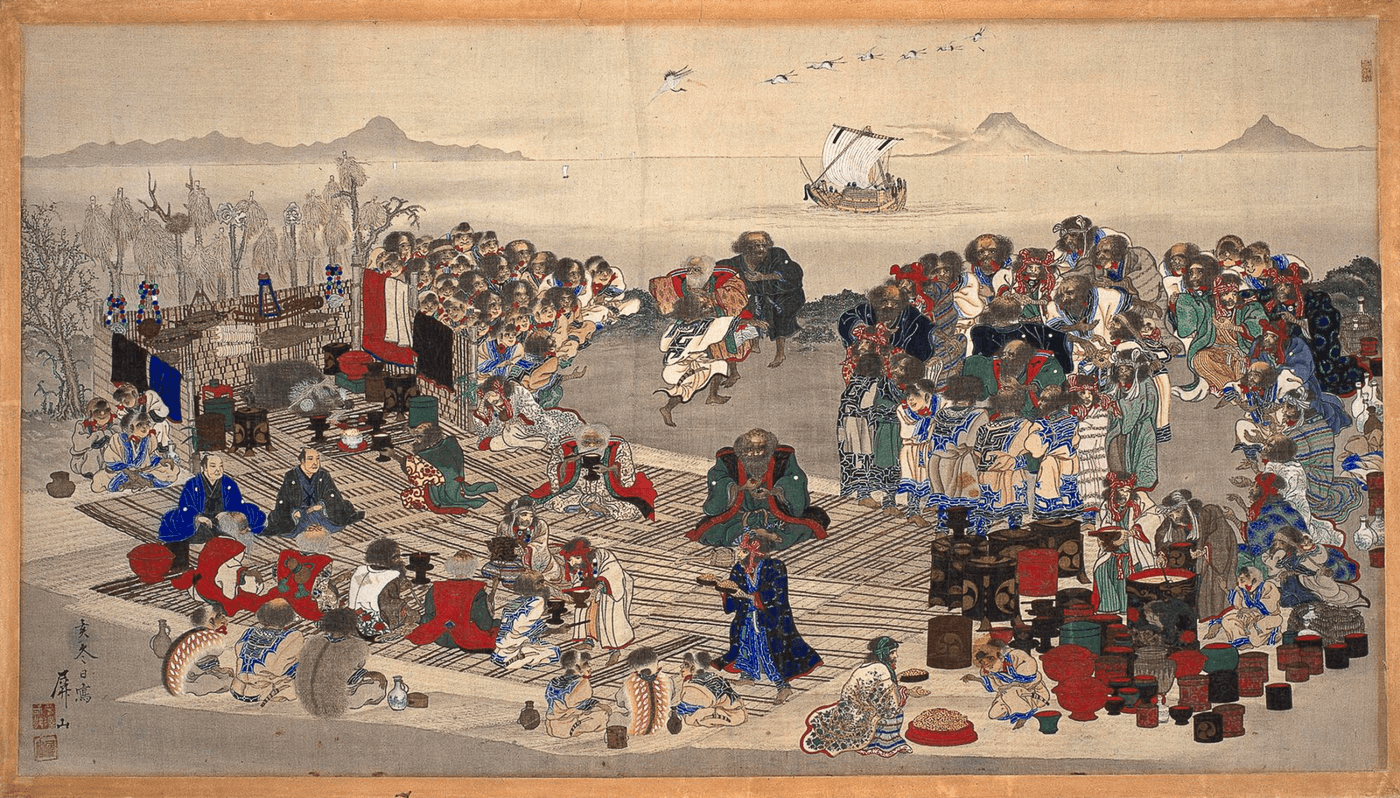
In modern American "spirit animal" usage, the bear most often signals strength, solitude, healing, and a fierce protectiveness. That reading descends most directly from Ted Andrews's Animal Speak (Llewellyn, 1993). Older traditions are sharper: Finno-Ugric peoples held elaborate bear-ceremonial feasts that treated the animal as a sacred kinsman, documented by Uno Holmberg and later Juha Pentikäinen; the Ainu iyomante of Hokkaidō is the best-preserved variant, recorded by John Batchelor and Bronisław Piłsudski; in Greek religion, young Athenian girls served as little bears (arktoi) for Artemis at Brauron; and the Anglo-Saxon poetic tradition encoded the bear in kennings like Beowulf, 'bee-wolf.'
A Karelian hunter in the 1890s, after killing a bear, didn’t call it a bear. He called it “the honey-paw,” or “the golden apple of the forest,” or “the old man of the woods.” Dozens of names. Everything but the real one. Uno Holmberg collected them in 1927, and the reason behind the euphemism was straightforward: if the bear’s spirit heard you naming it plainly, you’d be in trouble. This is what a real bear tradition looks like. It’s not a list of keywords. It’s a whole grammar of respect around a specific animal in a specific forest.
The modern “bear spirit animal” reading is something else entirely. It’s mostly one book.
The book most spirit-animal sites are quietly copying
Ted Andrews’s Animal Speak came out of Llewellyn in September 1993. Trade paperback. 383 pages. Still in print. If you’ve read any spirit-animal article about the bear in the last thirty years, you’ve read Andrews, whether the site told you so or not. His bear: strength-with-introspection, the healer, the protector who pulls back into the den for half the year to think. That’s the picture.
It’s not a bad reading. It borrows real things, bits of the Eurasian ceremonial complex, a dusting of Plains tradition (via Black Elk’s vision language), some 1970s environmental romanticism from writers like Barry Lopez. But it is one synthesis by one author in one paperback. Naming that is the floor.
What the primary sources actually say
The sections below treat each tradition on its own terms. The Finno-Ugric bear is a kinsman you owe ceremony to. The Ainu bear is a god on a visit, returning home via arrow. The Greek bear is a threshold figure for girls at Brauron, nothing to do with any adult’s intuition. And the Anglo-Saxon bear is so sacred the poets won’t name it, so they call it “bee-wolf” and move on. Four traditions. Four bears. None of them the same animal.
Across traditions
Finno-Ugric (Finnish, Karelian, Sámi)
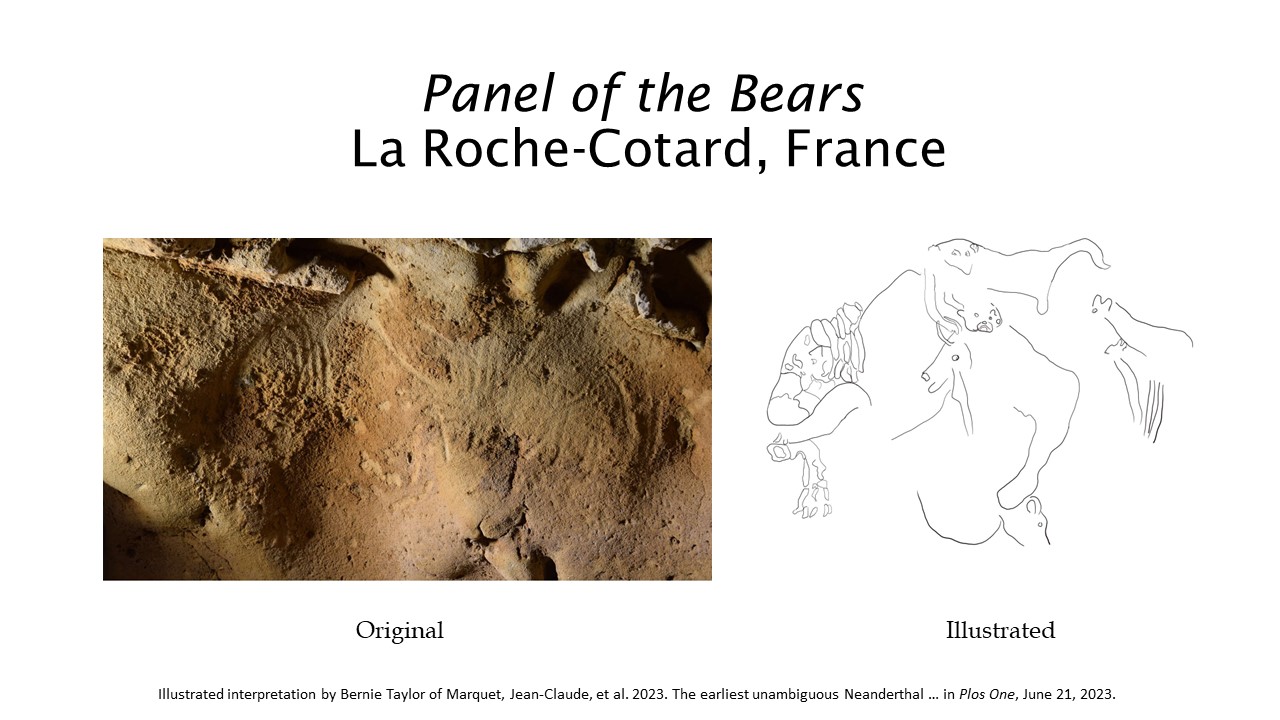
Across the Finno-Ugric north, the bear was not a metaphor. It was the kinsman one hunted with ceremony and then buried, often with apology. Uno Holmberg's The Mythology of All Races: Finno-Ugric, Siberian (1927) catalogs dozens of variants in which hunters, having killed the bear, held a peijaiset bear-feast and recited euphemisms so the bear's soul would not hold the killing against them.
Juha Pentikäinen's Golden King of the Forest: The Lore of the Northern Bear (Etnika Oy, 2007) reads the tradition as one of Eurasia's oldest continuous religious complexes, with archaeological correlates in skull-and-long-bone deposits from the Mesolithic onward. The bear was not an emblem of strength. It was a being to whom the people owed a debt.
- PRIMARY Uno Holmberg, The Mythology of All Races: Finno-Ugric, Siberian — Marshall Jones Co., 1927.
- PEER-REVIEWED Juha Pentikäinen, Golden King of the Forest: The Lore of the Northern Bear — Etnika Oy, 2007.
Ainu (Hokkaidō)
The Ainu iyomante is the best-preserved bear-sending ceremony in the ethnographic record. A cub was captured, raised for roughly two years often by a human family, then ceremonially sent back to the mountain gods with feasting, arrow-sacrifice, and formal speeches. John Batchelor's The Ainu and Their Folk-Lore (Religious Tract Society, 1901) was the first extended English account; Bronisław Piłsudski's field recordings (1902–1905) preserved the actual oral texts, now held in Poznań.
The core Ainu theology is that the bear is kamuy (a god) visiting the human world in animal form; the ceremony releases the god to return home with gifts. Flattening this into "the bear represents strength" misses the entire theological frame.
- PRIMARY John Batchelor, The Ainu and Their Folk-Lore — Religious Tract Society, 1901.
- PRIMARY Bronisław Piłsudski, Materials for the Study of the Ainu Language and Folklore — Kraków, 1912.
Greek (Artemis, Brauron)
At the sanctuary of Artemis Brauronia on the east coast of Attica, pre-pubescent Athenian girls served a term as arktoi, "little bears," in a rite of passage connected to marriage preparation. The scholia on Aristophanes's Lysistrata 645 preserve the aetiological myth: a girl was killed by brothers of a family whose bear she had offended, and the rite was instituted to appease Artemis. Pausanias, Description of Greece 1.23.7 and 1.33.1, names the sanctuary and its cult statue.
The bear here is not courage-medicine. It is a threshold animal, associated with wild girlhood before the domesticated state of marriage.
- PRIMARY Pausanias, Description of Greece 1.23.7, 1.33.1 — Jones trans., Loeb Classical Library.
- PRIMARY Scholia on Aristophanes, Lysistrata 645
- PEER-REVIEWED Christiane Sourvinou-Inwood, Studies in Girls' Transitions — Kardamitsa, 1988.
Ted Andrews (1993, the pop-concept's source)
The modern reading — bear as strength-with-introspection, solitude, healing medicine — crystallized through Ted Andrews's Animal Speak (Llewellyn, 1993), which drew on northern Eurasian ceremonialism and the general pop-environmental frame of the 1970s–80s. Every popular spirit-animal page on the bear is downstream of that synthesis.
- REFERENCE Ted Andrews, Animal Speak: The Spiritual & Magical Powers of Creatures Great and Small — Llewellyn, September 1993.
Frequently asked
- What does the bear symbolize spiritually?
- In modern pop usage, strength, protection, solitude, and healing, the reading set by Ted Andrews's Animal Speak (Llewellyn, 1993). Older traditions are more specific: the Finno-Ugric peoples treated the bear as a sacred kinsman owed ceremony; the Ainu send it home to the mountain gods in the iyomante; Greek girls served Artemis as 'little bears' at Brauron.
- What is the Ainu iyomante?
- The iyomante is the Ainu bear-sending ceremony, in which a cub raised by a human family is ceremonially returned to the mountain gods with feasting and formal speeches. The core theology is that the bear is kamuy, a god visiting the human world in animal form. John Batchelor (1901) and Bronisław Piłsudski (1902–1905) preserved the earliest detailed accounts.
- Why were Greek girls called 'little bears'?
- At the Artemis Brauronia sanctuary in Attica, pre-pubescent Athenian girls served as arktoi (little bears) in a rite of passage tied to the transition from wild girlhood to married adulthood. The scholia on Aristophanes's Lysistrata 645 preserve the aetiological myth; Pausanias 1.23.7 and 1.33.1 name the sanctuary.
- Is Beowulf a bear?
- The name Beowulf is usually read as a kenning: beo (bee) + wulf (wolf) = 'bee-wolf,' a poetic circumlocution for the bear as the bee-raiding animal. J.R.R. Tolkien's 1936 lecture 'Beowulf: The Monsters and the Critics' endorses the reading. The Anglo-Saxon poetic tradition encoded the bear by what it did rather than naming it outright, possibly under a name taboo of the kind common across Indo-European languages.
Sources
- PRIMARYUno Holmberg, The Mythology of All Races: Finno-Ugric, Siberian — Marshall Jones Co., 1927.
- PEER-REVIEWEDJuha Pentikäinen, Golden King of the Forest — Etnika Oy, 2007.
- PRIMARYJohn Batchelor, The Ainu and Their Folk-Lore — Religious Tract Society, 1901.
- PRIMARYBronisław Piłsudski, Materials for the Study of the Ainu Language and Folklore — Kraków, 1912.
- PRIMARYPausanias, Description of Greece 1.23.7, 1.33.1 — Loeb Classical Library.
- PRIMARYScholia on Aristophanes, Lysistrata 645
- PEER-REVIEWEDChristiane Sourvinou-Inwood, Studies in Girls' Transitions — Kardamitsa, 1988.
- PEER-REVIEWEDJ.R.R. Tolkien, Beowulf: The Monsters and the Critics — Proceedings of the British Academy, 1936.
- REFERENCETed Andrews, Animal Speak — Llewellyn, September 1993.