Spirit Animal
Antelope Spirit Animal
Antelope spirit animal meaning, traced to San Bushmen eland-centered rock art documented by David Lewis-Williams, the Egyptian gazelle-goddess Anuket, and the Bamana/Dogon Chi Wara agricultural headdresses.
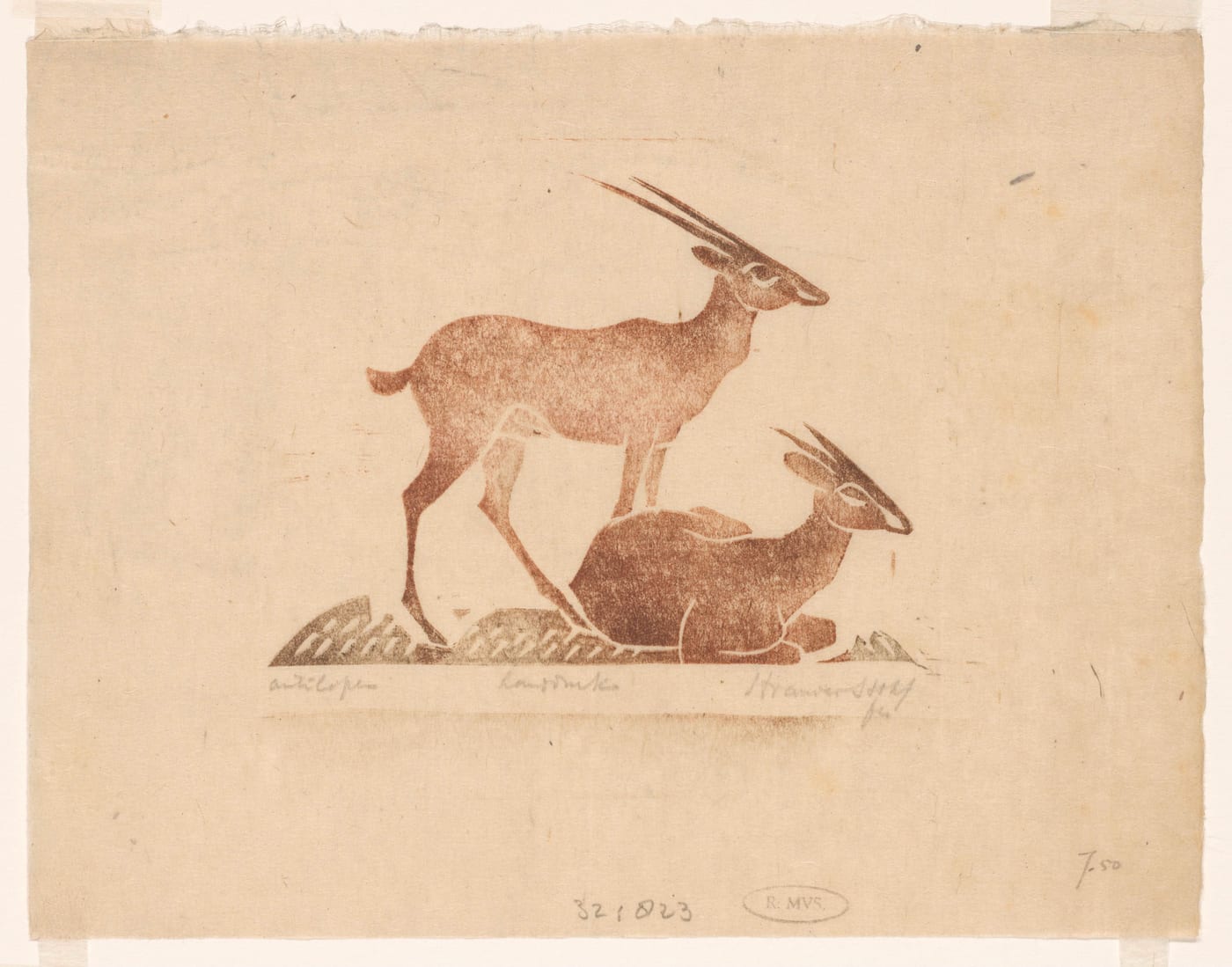
In modern pop-spiritual usage, the antelope stands for grace, speed, alertness, and the capacity to flee from danger. The deeper traditions are primarily African. San Bushmen rock art across southern Africa treats the eland (Taurotragus oryx) as the central animal of trance-rain-making ritual, documented extensively by David Lewis-Williams. The Egyptian gazelle-goddess Anuket was associated with the Nile cataract at Elephantine. The Bamana Chi Wara agricultural headdresses of Mali (14th–20th century) reference the roan antelope in the origin narrative of agriculture itself.
The traditions behind the antelope are African, specifically and entirely. European and Asian spiritual traditions, which generated the lion, eagle, serpent, and deer symbolism that populates most spirit-animal content, did not live alongside antelopes in their primary literary and religious periods. What exists is from Africa, and it is substantive.
San eland
The eland (Taurotragus oryx) is the most frequently depicted animal in southern African San rock art. David Lewis-Williams’s research (particularly Believing and Seeing (Academic Press, 1981) and his later The Mind in the Cave (Thames & Hudson, 2002)) established the eland’s central role in San trance-ritual and rain-making ceremonies. The Bleek-Lloyd Archive at the University of Cape Town (lloydbleekcollection.cs.uct.ac.za) preserves 19th-century /Xam San narratives, many of them centering on the eland, collected by Wilhelm Bleek and Lucy Lloyd between 1870 and 1884.
In /Xam San tradition, the eland is associated with potency, the spiritual power that shamanic healers activated in trance states, used for rain-making, healing, and protection. The eland’s fatness, distinctive smell, and the blood that flows from its nose when killed in a hunt all had specific ritual significance. Megan Biesele’s Women Like Meat (Witwatersrand University Press, 1993) is the ethnographic treatment from a Ju/’hoansi San perspective.
Egyptian Anuket
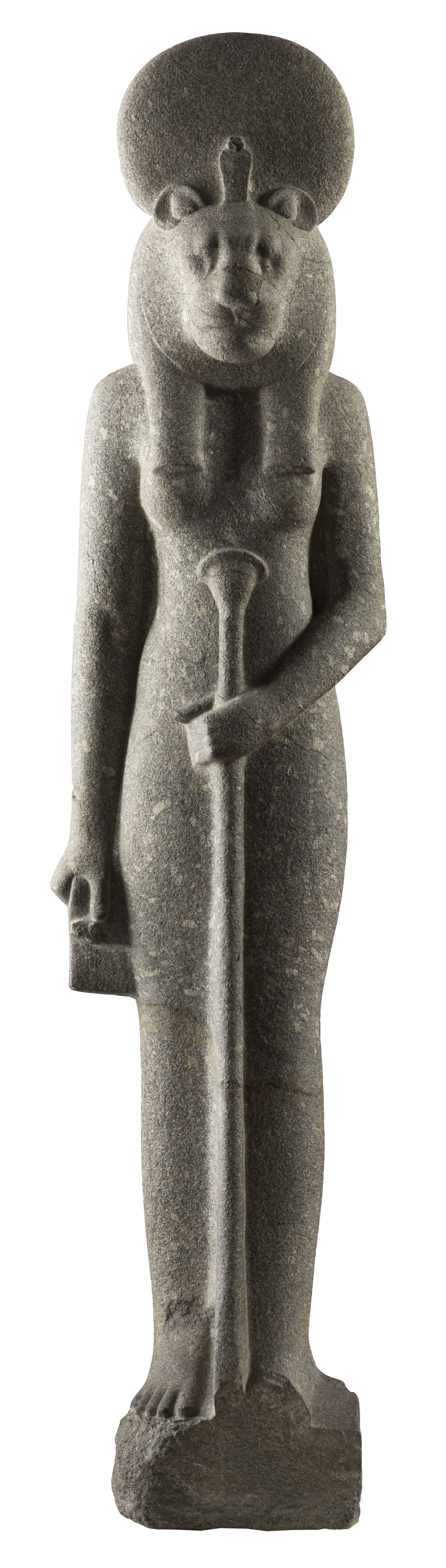
The gazelle-goddess Anuket (or Anukis) was the goddess of the first Nile cataract, centered at Elephantine (modern Aswan). She was depicted as a woman wearing a crown of ostrich feathers and associated with the Nile’s first cataract, the speed of its water, and the grace of the gazelle. At Elephantine she formed a triad with the ram-headed god Khnum and the goddess Satet. Erik Hornung’s Conceptions of God in Ancient Egypt (Cornell, 1982) documents her role in the broader Egyptian theological system. Anuket’s cult is attested from at least the Middle Kingdom (c. 2055–1650 BCE) and she appears in temple inscriptions at Elephantine through the Ptolemaic period.
The gazelle-antelope speed and grace qualities that the modern pop-spiritual reading attributes to antelopes generally are specifically encoded in Anuket’s iconography at Elephantine, one of the relatively rare cases where an observed animal quality translates directly and documentably into religious imagery.
Bamana Chi Wara
The Chi Wara (or Tyi Wara) carved-wood antelope headdresses of the Bamana people of Mali are among the most recognizable of all West African sculptural traditions. The headdresses are worn in agricultural initiation dances, and the narrative behind them attributes the invention of agriculture to a supernatural antelope-being named Chi Wara, who taught humans to plant. Pascal Imperato’s “The Dance of the Tyi Wara” (African Arts 4:1, 1970) is the foundational English-language treatment; Patrick McNaughton’s The Mande Blacksmiths (Indiana University Press, 1988) provides the broader cultural context.
Chi Wara headdresses come in distinct regional styles (vertical, horizontal, and roan-antelope variants) and they represent one of the best-documented cases of an animal serving as a specific civilizational-gift donor: the antelope that gave humans their primary survival skill.
Andrews 1993
Andrews reads grace, speed, and heightened awareness, the quality of moving through the world quickly and lightly. These are real observations about antelope behavior. The animal’s speed and alert responsiveness are genuinely remarkable. But they are biological observations, not tradition. The San, Egyptian, and Bamana traditions above give the antelope specific cosmological and agricultural roles that carry considerably more weight than “fast and graceful.”
Across traditions
San Bushmen (eland, Taurotragus oryx)
Across southern African San rock art (estimated 75,000 South African sites spanning 27,000 years), the eland (Taurotragus oryx) is the most frequently depicted single animal species, appearing as the central figure of trance-rain-making ritual. David Lewis-Williams's Believing and Seeing (Academic Press, 1981) and The Mind in the Cave (Thames & Hudson, 2002) argue, based on Lorna Marshall's !Kung ethnography and Bleek-Lloyd /Xam archive, that the eland's centrality reflects its role as the primary 'rain animal' whose ritual-hunt produced rain.
Megan Biesele's Women Like Meat (Witwatersrand University Press, 1993) documents contemporary Ju/'hoansi eland-and-girls initiation rites. The tradition is one of the oldest continuously-documented human-animal spiritual traditions on earth.
- PEER-REVIEWED David Lewis-Williams, Believing and Seeing — Academic Press, 1981.
- PEER-REVIEWED David Lewis-Williams, The Mind in the Cave — Thames & Hudson, 2002.
- PEER-REVIEWED Megan Biesele, Women Like Meat — Witwatersrand University Press, 1993.
- ARCHIVE Bleek-Lloyd Archive, /Xam narratives on eland
Egyptian (Anuket, gazelle-goddess of the cataract)
Anuket is the Egyptian gazelle-goddess of the first cataract of the Nile at Elephantine, attested from the Old Kingdom onward. She forms a triad with Khnum and Satet at the Elephantine sanctuary. Her iconography is consistently a woman with a tall plumed headdress; the gazelle-animal form appears in some contexts. Erik Hornung's Conceptions of God in Ancient Egypt (Cornell University Press, 1982) treats the triad context.
- PEER-REVIEWED Erik Hornung, Conceptions of God in Ancient Egypt — Cornell University Press, 1982.
- MUSEUM Elephantine Temple of Khnum (Aswan)
Bamana (Chi Wara, the agricultural antelope)
The Chi Wara (also Ciwara, N'Gonzon Koun) is a Bamana/Bambara initiation-society figure of Mali, represented in elaborate carved wooden headdresses depicting an antelope (typically roan antelope, Hippotragus equinus) and often paired male-and-female. The Chi Wara narrative credits a mythical half-antelope-half-human being with teaching agriculture to the Bamana. The headdresses are worn in dance performances at the end of planting and at harvest.
Patrick McNaughton's The Mande Blacksmiths (Indiana University Press, 1988) and Pascal James Imperato's The Dance of the Tyi Wara (African Arts 4:1, 1970) are standard scholarly treatments. Chi Wara headdresses are in major museum collections including the Metropolitan Museum of Art, the Brooklyn Museum, and the Musée du quai Branly in Paris.
- PEER-REVIEWED Patrick R. McNaughton, The Mande Blacksmiths — Indiana University Press, 1988.
- PEER-REVIEWED Pascal James Imperato, 'The Dance of the Tyi Wara' — African Arts 4:1, 1970.
- MUSEUM Metropolitan Museum of Art, Chi Wara headdress collection
Ted Andrews (1993)
Andrews's 1993 antelope is the grace-speed-alertness figure drawn generically from observable biology. The San eland tradition, the Egyptian Anuket, and the Bamana Chi Wara are absent.
- REFERENCE Ted Andrews, Animal Speak — Llewellyn, September 1993.
Frequently asked
- What does an antelope symbolize spiritually?
- In modern pop usage, grace, speed, and alertness. The deeper traditions are primarily African. The San eland is the central animal of southern African rock-art trance-rain-making ritual. The Egyptian gazelle-goddess Anuket forms a triad at Elephantine. The Bamana Chi Wara of Mali is a carved-headdress initiation figure crediting an antelope-being with teaching agriculture.
- Why is the eland central to San rock art?
- Because the eland (Taurotragus oryx) functions as the primary 'rain animal' in San trance-ritual cosmology, whose ritual-hunt produced rain. David Lewis-Williams's Believing and Seeing (1981) and The Mind in the Cave (2002) build this argument from Lorna Marshall's !Kung ethnography and the Bleek-Lloyd /Xam archive. The tradition is one of the oldest continuously-documented human-animal spiritual traditions on earth.
- What is a Chi Wara headdress?
- A Chi Wara is an elaborate carved wooden headdress depicting a roan antelope, worn in Bamana (Mali) agricultural initiation-society dances at the end of planting and at harvest. The Chi Wara narrative credits a mythical half-antelope-half-human being with teaching agriculture to the Bamana people. Patrick McNaughton's The Mande Blacksmiths (Indiana University Press, 1988) is the standard scholarly treatment.
Sources
- PEER-REVIEWEDDavid Lewis-Williams, Believing and Seeing — Academic Press, 1981.
- PEER-REVIEWEDDavid Lewis-Williams, The Mind in the Cave — Thames & Hudson, 2002.
- PEER-REVIEWEDMegan Biesele, Women Like Meat — Witwatersrand University Press, 1993.
- ARCHIVEBleek-Lloyd Archive
- PEER-REVIEWEDErik Hornung, Conceptions of God in Ancient Egypt — Cornell, 1982.
- PEER-REVIEWEDPatrick McNaughton, The Mande Blacksmiths — Indiana University Press, 1988.
- PEER-REVIEWEDPascal Imperato, 'The Dance of the Tyi Wara' — African Arts 4:1, 1970.
- REFERENCETed Andrews, Animal Speak — Llewellyn, September 1993.